

10 Sunny Yellow Bedroom Ideas

Sunny yellow bedroom ideas have become widely searched on Pinterest because they introduce warmth, brightness, and visual energy into interior spaces while maintaining a welcoming atmosphere. Yellow is often associated with sunlight and natural warmth, which makes it especially suitable for bedroom environments that aim to feel comfortable and uplifting. In interior design, color plays a functional role beyond decoration. It influences how a space feels and how light interacts with surfaces throughout the day. Sunny yellow tones can reflect natural light effectively, making bedrooms appear larger and more open. When used carefully, yellow also works well with neutral tones such as white, beige, gray, and natural wood. These combinations allow the room to remain balanced rather than visually overwhelming. Pinterest inspiration frequently highlights bedrooms that integrate yellow through textiles, wall accents, furniture pieces, and decorative details. The goal is not to fill the room entirely with bright color but to distribute yellow strategically so that it enhances the overall design. This guide explains ten creative sunny yellow bedroom ideas with practical instructions, clear materials, and beginner-friendly methods to help transform an ordinary bedroom into a bright and inviting space.
Why Sunny Yellow Bedrooms Are Trending in Modern Home Decor
Sunny yellow bedrooms have become a popular category of Pinterest ideas because the color offers both aesthetic and functional advantages in home decor. Yellow reflects light effectively, which helps brighten rooms that receive limited natural daylight. Bedrooms with yellow accents often appear more open and energetic compared to spaces dominated by darker tones. This visual brightness makes yellow particularly suitable for modern design styles that emphasize clean, airy interiors. The color also integrates well with other popular design trends such as Scandinavian decor, minimalist style, and contemporary home decoration. In these styles, yellow often appears as an accent color rather than a dominant shade. For example, gray walls combined with yellow pillows or white bedding paired with yellow curtains create balanced interiors that remain visually calm. Another reason for the popularity of sunny yellow bedrooms is the versatility of yellow shades. Soft pastel yellow can create a gentle and relaxing environment, while mustard yellow introduces deeper warmth and character. Pinterest platforms highlight these variations through photography that demonstrates how different shades of yellow interact with natural lighting, textures, and furniture materials. Because the color adapts well to both modern and classic interiors, it remains a reliable option for creative bedroom decoration projects.
Preparing Materials and Planning a Yellow Bedroom Layout
Before starting a sunny yellow bedroom project, proper preparation ensures that the final design feels organized and balanced. The first step involves determining how yellow will appear in the room. Yellow can function as a dominant wall color, a decorative accent, or a textile highlight. Most modern bedrooms benefit from using yellow as an accent rather than covering every surface. This approach keeps the space visually calm while still introducing warmth. Materials for a yellow bedroom project typically include paint, bedding textiles, decorative cushions, curtains, wall art, or small furniture items. When selecting these materials, it is important to maintain consistency in color tones. For example, pastel yellow fabrics should not be mixed with extremely bright neon shades. Neutral materials such as white bedding, light wood furniture, or gray rugs help stabilize the yellow color palette. Lighting conditions should also be evaluated during preparation. Natural light affects how yellow tones appear during different times of the day. Testing paint samples or fabric swatches in the room allows accurate color selection before making permanent changes. Furniture placement planning also helps distribute color evenly across the space. This preparation stage supports a cohesive design that integrates yellow naturally within the bedroom environment.
Soft Yellow Accent Wall Behind the Bed
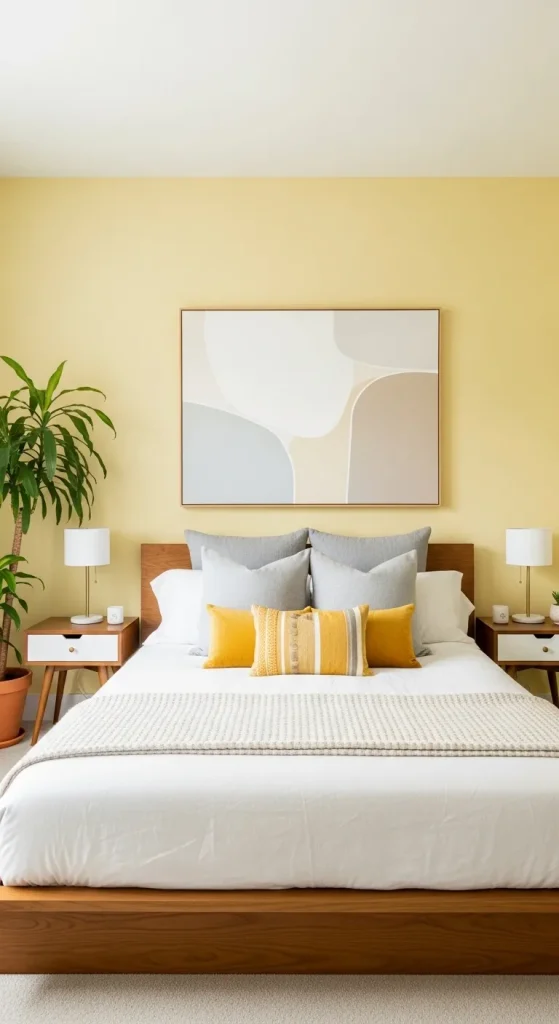
How to Create a Balanced Feature Wall
A soft yellow accent wall provides a simple and effective way to introduce sunny color into a bedroom without overwhelming the space. This method focuses attention on one wall while keeping the remaining surfaces neutral. Begin by selecting the wall behind the bed as the focal point. This location naturally draws attention and helps anchor the room’s design. Choose a soft yellow paint tone rather than an extremely bright shade to maintain visual comfort. The remaining walls should remain white or light gray to balance the brightness. Before painting, clean the wall surface and apply painter’s tape to protect edges and trim. Apply two even coats of paint to ensure consistent color coverage. Once the wall dries, the bed becomes the central decorative element in front of the yellow background. Neutral bedding such as white sheets or gray blankets prevents excessive color layering. Decorative pillows may include subtle yellow patterns that connect the bedding with the wall color. Simple bedside tables and warm lighting help maintain a calm atmosphere. This accent wall technique introduces sunny brightness while preserving the organized structure typical of modern bedroom decor.
Yellow Bedding as the Central Design Element
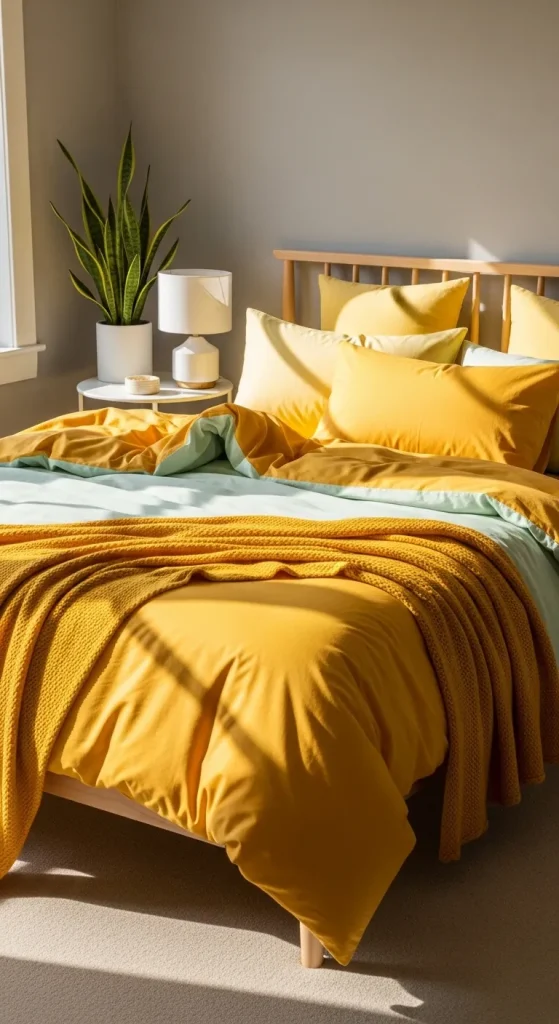
Step-by-Step Guide to Styling Bright Textiles
Yellow bedding can transform the appearance of a bedroom without requiring permanent changes such as wall painting. This approach allows color to appear through textiles that can easily be updated or replaced. Begin with a neutral bedroom base, including white or light gray walls and simple furniture. The bed then becomes the central decorative focus. Select yellow bedding such as a duvet cover, comforter, or quilt in a warm sunny shade. Cotton or linen fabrics work well because they provide texture without appearing overly decorative. Once the bedding is placed, balance the bright color with neutral elements. White sheets and pillowcases help soften the yellow tone. Two or three decorative pillows in neutral or patterned fabrics can add visual depth without creating clutter. Bedside accessories such as lamps or small plants should remain minimal so the bedding remains the focal point. Curtains or rugs may include subtle yellow details to maintain color consistency. This setup works well as a beginner-friendly DIY project because it requires only textile changes rather than structural modifications to the room.
Yellow Curtains for Natural Light Enhancement

Execution Process for Window-Based Color Accents
Curtains provide a strategic opportunity to introduce sunny yellow into bedroom decor while also enhancing natural light distribution. Window treatments influence how daylight enters the room and how colors appear throughout the day. Begin by selecting yellow curtains made from lightweight fabric that allows sunlight to pass through gently. Sheer or semi-sheer materials often work best because they create a soft glow rather than blocking natural light completely. The curtain length should extend from the curtain rod to the floor to maintain a clean and modern vertical line. Installation begins by securing a sturdy curtain rod above the window frame. Once the curtains are hung, the yellow fabric will frame the window and draw attention to natural light. The surrounding interior should remain neutral so the curtains become a balanced accent rather than a dominant feature. Bedding, furniture, and wall colors should remain within white, gray, or natural wood tones. This arrangement distributes yellow color across the room in a subtle and functional way. Curtains can easily be replaced in the future, making this method flexible for seasonal updates or design changes.
Yellow and White Layered Bedding Arrangement
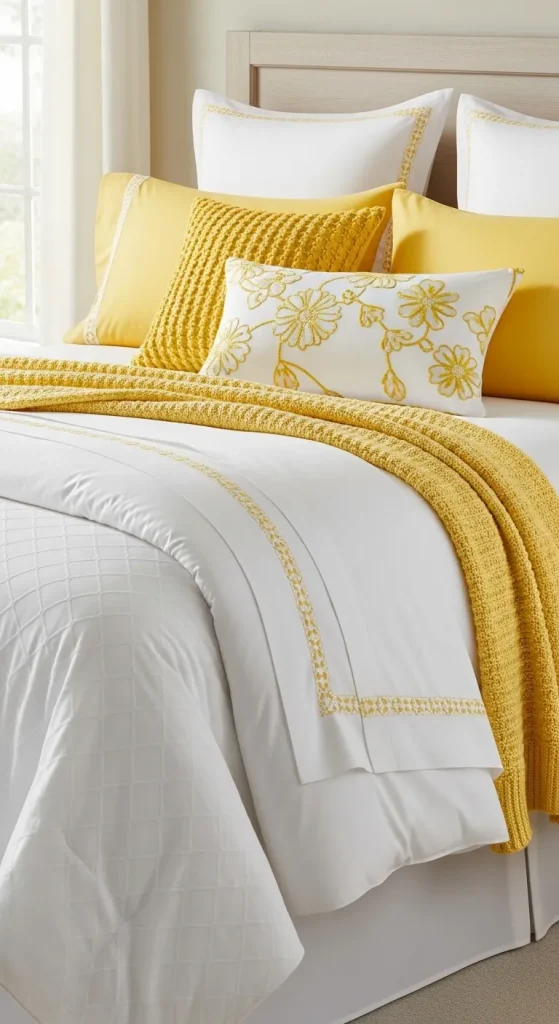
Setup Method for a Soft Color Balance
Combining yellow and white textiles creates a balanced bedroom environment that feels bright yet calm. White provides a clean background while yellow introduces warmth and visual interest. To create this arrangement, begin with white base bedding such as cotton sheets and pillowcases. White surfaces help reflect light and keep the room feeling open. A yellow duvet cover or quilt can then be layered on top to introduce the primary color element. Additional layers may include a folded yellow throw blanket or decorative pillows placed near the headboard. The layering process should remain organized and minimal. Two or three pillows are usually sufficient to maintain visual balance. Furniture and walls should remain neutral to prevent excessive color saturation. A light wood bed frame or gray bedside tables work well alongside yellow and white bedding. Lighting should remain warm and soft to enhance the cozy atmosphere. This textile layering technique demonstrates how color balance can be achieved through simple arrangement rather than extensive decoration. The combination of yellow and white creates a cheerful bedroom environment that still feels structured and calm.
Mustard Yellow Headboard as a Focal Point
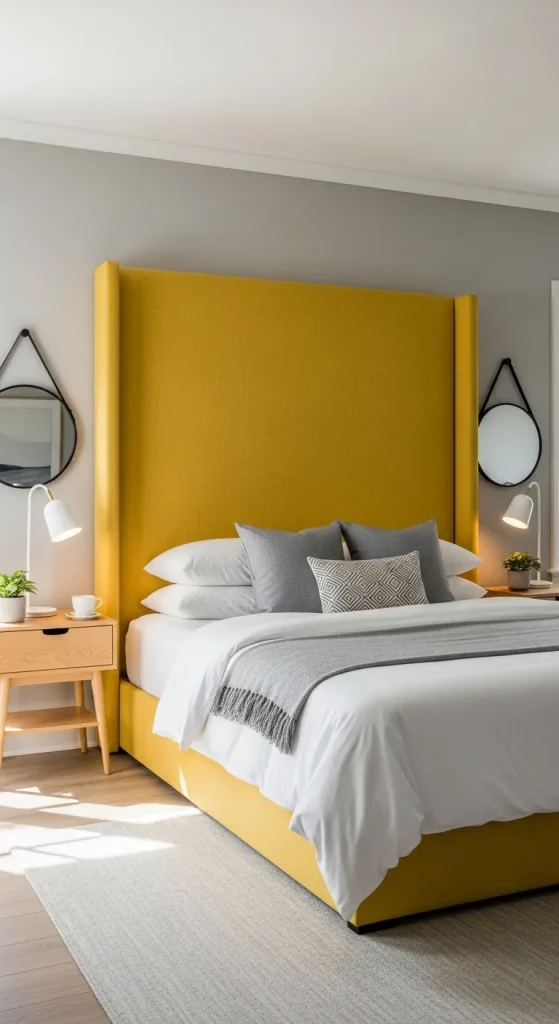
How to Create a Statement Bed Feature
A mustard yellow headboard can serve as a strong focal point in a bedroom while maintaining overall design balance. Mustard yellow is deeper than pastel shades, which allows it to stand out without appearing overly bright. Begin by selecting an upholstered headboard covered in mustard yellow fabric. The headboard should be positioned against neutral walls such as white, beige, or light gray. This contrast highlights the bed area without overwhelming the room. Bedding should remain simple so the headboard remains the primary decorative element. White sheets, light gray blankets, or neutral pillowcases work well in this arrangement. Decorative pillows may include subtle yellow accents to connect with the headboard color. Bedside furniture should remain understated, preferably using wood or neutral finishes. Lighting fixtures with warm bulbs can enhance the mustard tone and create a comfortable bedroom atmosphere. This design method focuses attention on a single bold element rather than spreading bright color across multiple surfaces. The headboard becomes a visual anchor that defines the sunny yellow theme of the room.
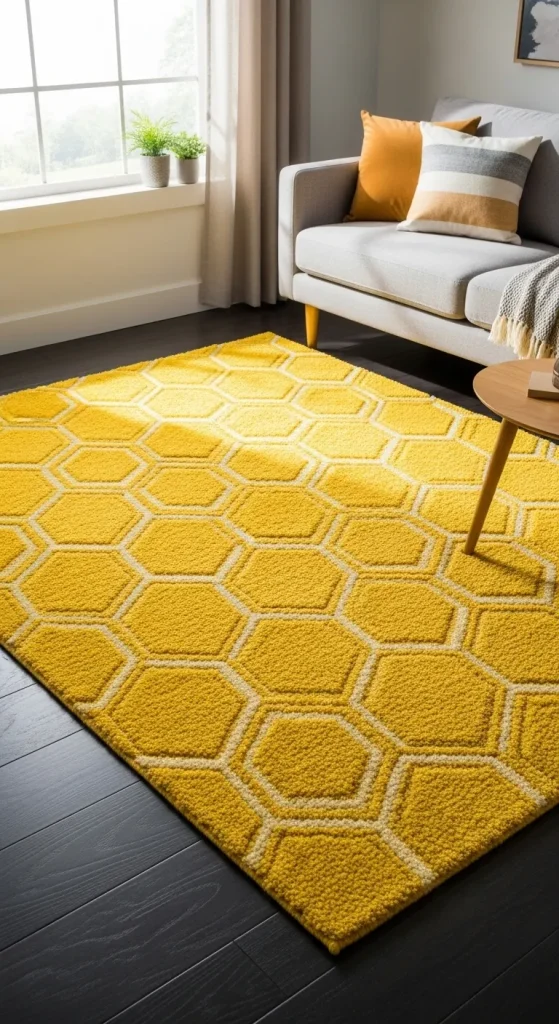
Yellow Area Rug for Warm Floor Contrast
Step-by-Step Guide to Adding a Color Base
An area rug can introduce yellow into a bedroom while also improving comfort and floor texture. Rugs influence the visual structure of a room because they define the central floor area. Begin by selecting a yellow rug made from woven fabric, cotton, or textured materials. The rug should be large enough to extend slightly beyond the sides of the bed so that the color remains visible. Position the rug beneath the lower half of the bed or in the center of the room depending on the layout. Once placed, the rug creates a warm color base that complements neutral walls and furniture. Additional yellow accents should remain minimal to prevent color overload. A pillow or small decorative object may reinforce the theme while maintaining balance. Gray, white, or wood furniture pairs well with a yellow rug because these tones stabilize the color palette. Rugs also add practical benefits such as warmth and noise reduction. This method allows homeowners to introduce sunny yellow color without painting walls or replacing major furniture pieces.
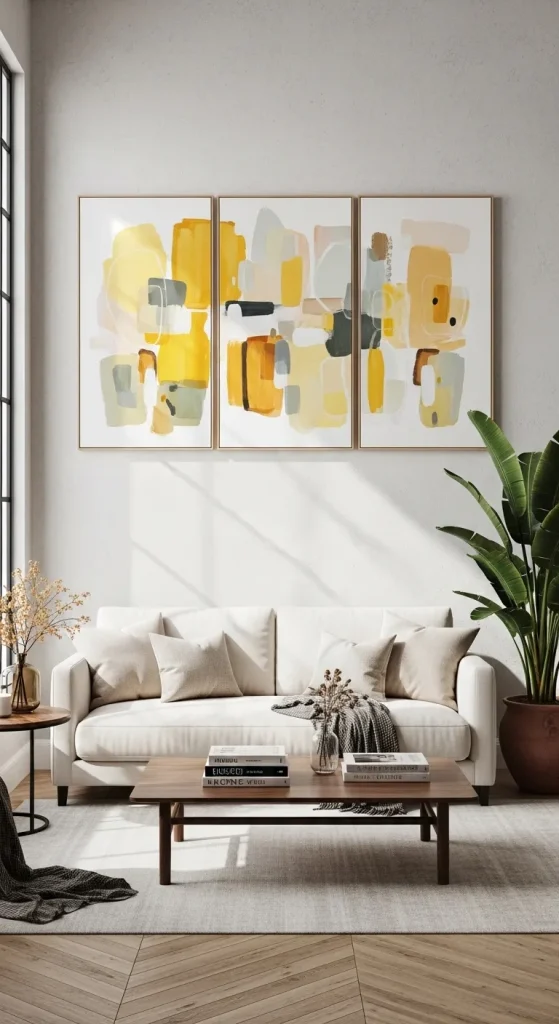
Yellow Artwork as a Subtle Decorative Highlight
How to Create an Artistic Accent
Artwork provides a controlled method for introducing yellow into bedroom decor without altering large surfaces. This technique works well in minimalist or modern bedrooms where decoration should remain limited. Begin by selecting artwork that contains yellow elements such as abstract designs, landscape prints, or geometric patterns. The artwork should include neutral tones alongside yellow so that it integrates naturally with the room’s color scheme. Choose a simple frame in wood, white, or black to maintain a clean aesthetic. Placement plays an important role in achieving balance. Hanging the artwork above the bed or on a central wall allows it to become a subtle focal point. The surrounding decor should remain minimal so the artwork stands out clearly. Bedding and furniture should remain neutral to prevent visual competition with the artwork. A small decorative pillow or vase with yellow tones can reinforce the theme. This method demonstrates how color can be introduced through creative design rather than structural changes. Artwork remains flexible because it can easily be replaced if the room design evolves over time.
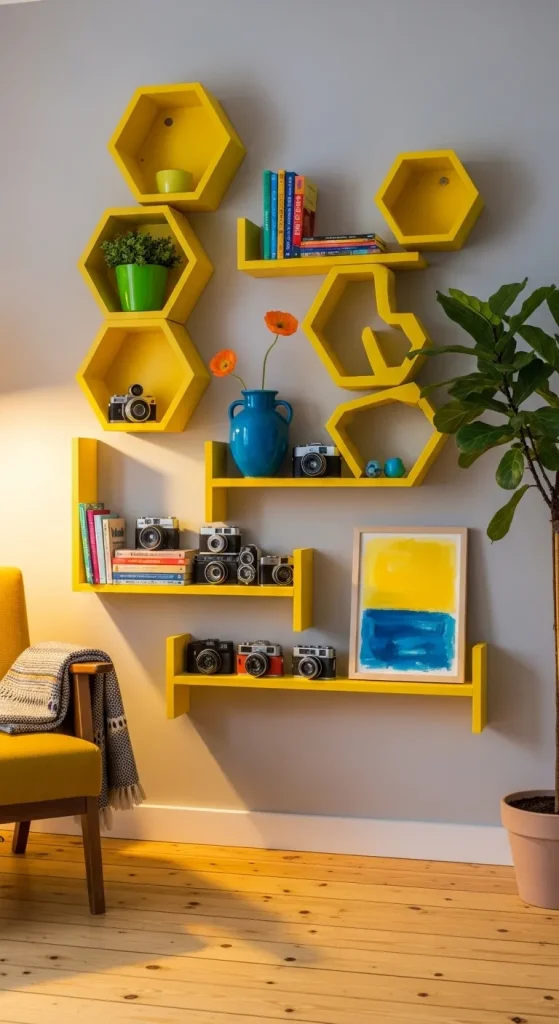
Yellow Decorative Shelving for Functional Color
Execution Process for Storage and Display
Decorative shelving painted in yellow combines organization with visual design. Shelves provide storage space while also allowing color to appear within the room. Begin by installing floating shelves on a neutral wall. The shelves should be simple in shape and size to maintain a modern appearance. Once installed, paint the shelf surfaces in a sunny yellow tone that contrasts gently with the wall color. Allow the paint to dry completely before placing decorative items on the shelves. Objects displayed on the shelves should remain minimal to preserve the clean aesthetic. Books, small plants, or framed photos can create a balanced arrangement. Items should follow the same color palette, using white, gray, or natural materials alongside yellow. Maintaining empty space between objects prevents the shelf from appearing cluttered. Floating shelves also improve room organization by providing additional storage without occupying floor space. This design method demonstrates how functional furniture elements can contribute to the color scheme while supporting practical bedroom organization.
Yellow and Gray Pillow Arrangement

Setup Method for a Simple Accent Combination
A pillow arrangement using yellow and gray tones offers an easy way to incorporate sunny color without altering walls or furniture. Pillows can be rearranged or replaced easily, making them ideal for flexible decoration. Begin with neutral bedding such as white or light gray sheets. Place two gray sleeping pillows against the headboard as the base layer. Add one or two yellow decorative pillows in front of them to introduce the accent color. The pillow covers may include subtle patterns or textures that combine both yellow and gray. Maintaining symmetry helps create a structured appearance. Avoid using too many decorative pillows because excessive layering can create clutter. Bedside accessories should remain simple so the pillow arrangement remains the visual highlight. A folded gray blanket or neutral rug may complement the color combination. This approach works particularly well for small bedrooms where major design changes may not be practical. The pillow arrangement introduces warmth while preserving the calm environment associated with modern bedroom decor.
Yellow Throw Blankets for Layered Texture

How to Create Cozy Textile Layers
Throw blankets provide another flexible way to introduce sunny yellow color into bedroom decor. These textiles add warmth and texture while remaining easy to adjust or replace. Begin with neutral bedding as the foundation. A yellow throw blanket can then be folded neatly across the foot of the bed or draped over a chair. Cotton or knitted fabrics often work well because they create visual texture without appearing overly decorative. The blanket should complement existing bedding rather than compete with it. If the bedding already includes patterns, choose a solid yellow blanket to maintain balance. If the bedding is plain, a subtle patterned blanket may introduce additional visual interest. The surrounding room decor should remain simple so the blanket remains noticeable without dominating the space. Curtains, rugs, and furniture should remain neutral. This layering method adds depth to the bedroom design while maintaining the cheerful atmosphere created by sunny yellow accents.
Common Beginner Mistakes When Decorating with Yellow
One common mistake when designing a yellow bedroom is using too many bright shades simultaneously. Excessive brightness can create visual fatigue rather than a welcoming environment. Selecting one consistent shade of yellow helps maintain harmony. Another frequent error involves covering every wall with yellow paint. This approach can make the room appear smaller or overly intense. Limiting yellow to accent areas such as one wall or decorative elements usually produces better balance. Poor color coordination also affects the final result. Mixing incompatible tones of yellow with clashing furniture colors can disrupt the design. Neutral tones such as white, gray, or natural wood help stabilize the palette. Lighting conditions must also be considered because artificial lighting can alter how yellow appears. Warm lighting usually enhances yellow tones while harsh lighting may make them appear too bright. Understanding these mistakes helps ensure that sunny yellow bedroom ideas remain visually balanced and comfortable.
Practical Strategies for Achieving a Balanced Yellow Bedroom
Creating a well-designed yellow bedroom requires careful color distribution. One effective strategy is the accent rule, where yellow appears in selected areas while neutral tones dominate the majority of the room. This balance prevents color overload while maintaining brightness. Repeating yellow accents throughout the room can also create visual continuity. For example, a pillow, curtain detail, and artwork element may all contain similar yellow tones. Texture layering improves the final appearance as well. Combining smooth bedding with woven rugs or knitted blankets adds depth without requiring additional colors. Maintaining organized surfaces helps preserve