
10 Small Balcony Ideas
In modern homes—especially apartments—space is a precious resource. While square footage indoors often takes priority, the small balcony is one of the most underestimated areas of a home. It may be narrow, shallow, or awkwardly shaped, but it represents something rare: private access to the outdoors. Fresh air, sunlight, a change in perspective—these are things that deeply affect well-being, yet they are often overlooked when a balcony is left unused.
A small balcony is not meant to compete with a garden or patio. Its value lies in intimacy. It is a place for pause rather than activity, for moments rather than gatherings. When designed intentionally, a small balcony can become a morning ritual space, an evening wind-down spot, a quiet reading corner, or a miniature garden that reconnects you with nature.

The key to designing a small balcony is not squeezing in more, but choosing better. Every piece must earn its place. Furniture, plants, lighting, and layout must work together to support a clear purpose. When this happens, even the tiniest balcony can feel inviting, functional, and emotionally satisfying.
The following ten small balcony ideas focus on purpose-driven design, comfort, and simplicity. These ideas are not about trends or perfection, but about creating a space that fits naturally into daily life—proving that small balconies can have a big impact.
1. Create a One-Person Comfort Zone
One of the biggest mistakes in small balcony design is trying to accommodate multiple people. When space is limited, designing for one person often results in greater comfort and usability.
Instead of forcing in a table-and-chairs set, choose a single comfortable chair, a slim bench, or a floor cushion arrangement. Add a small side table or ledge for a drink, book, or plant. This setup feels intentional rather than crowded and encourages actual use.
By embracing the idea that the balcony is a personal retreat, you remove the pressure to make it multifunctional. The space becomes calmer, more inviting, and easier to maintain.
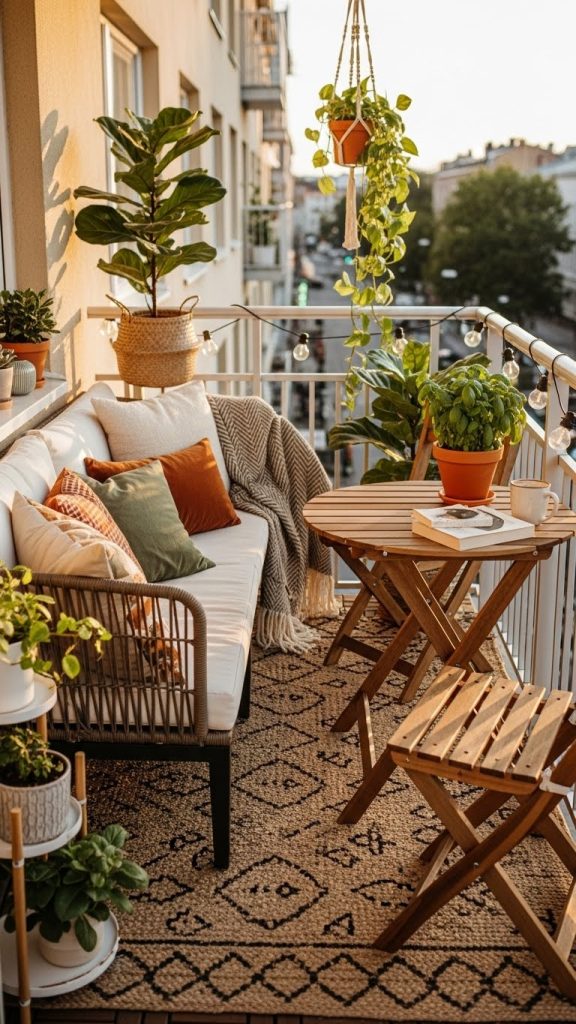
2. Define the Floor to Create a Sense of Room
Balcony floors are often plain concrete or tile, which can make the space feel unfinished and cold. Defining the floor is one of the fastest ways to make a small balcony feel like an outdoor room rather than an afterthought.
Outdoor rugs soften the space visually and physically, making it more comfortable underfoot. Interlocking deck tiles create a more permanent, structured feel and can visually elevate even the smallest balcony.
When the floor is defined, everything else feels more intentional. The balcony becomes a place rather than a surface.
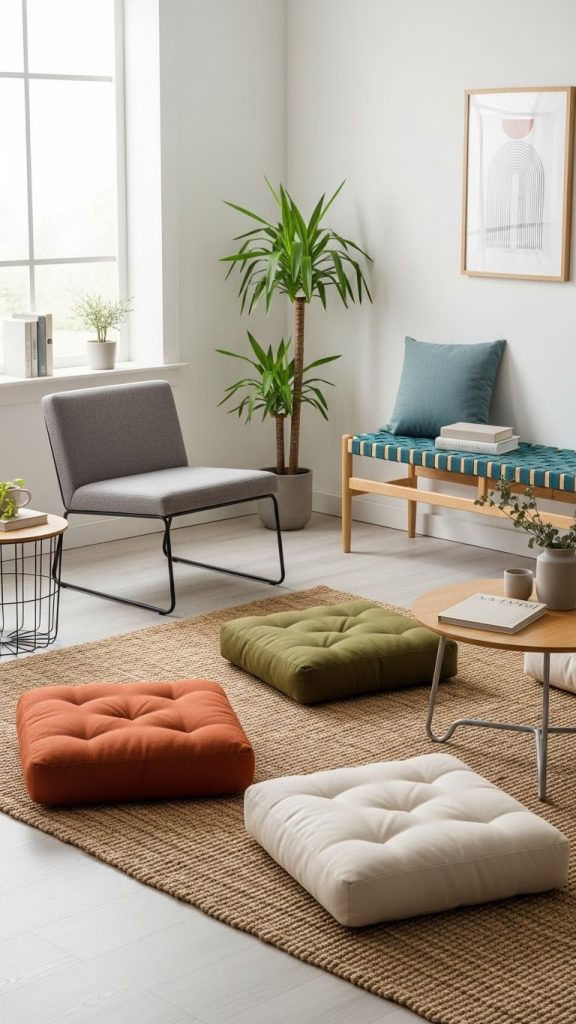
3. Use Vertical Space Instead of Floor Space
In small balconies, floor space disappears quickly. Vertical space, however, is often underutilized. Thinking upward allows you to add function and beauty without restricting movement.
Wall-mounted planters, hanging pots, railing planters, and narrow shelving units keep the floor clear while adding greenery and storage. Vertical gardens, even simple ones, create a lush feeling that makes the balcony feel fuller and more immersive.
Using vertical space also draws the eye upward, which helps the balcony feel taller and more spacious than it actually is.

4. Turn the Balcony into a Mini Garden
A small balcony can still support plant life—and even a few plants can dramatically change the mood of the space. Greenery adds softness, movement, and a sense of calm that no decorative object can replicate.
Choose plants based on light exposure and maintenance level. Compact plants, trailing vines, herbs, and small shrubs work especially well in limited space. Group plants in varying heights rather than lining them up evenly to create depth.
A mini garden does not need to be dense to be effective. Even a handful of well-placed plants can make the balcony feel alive and nurturing.
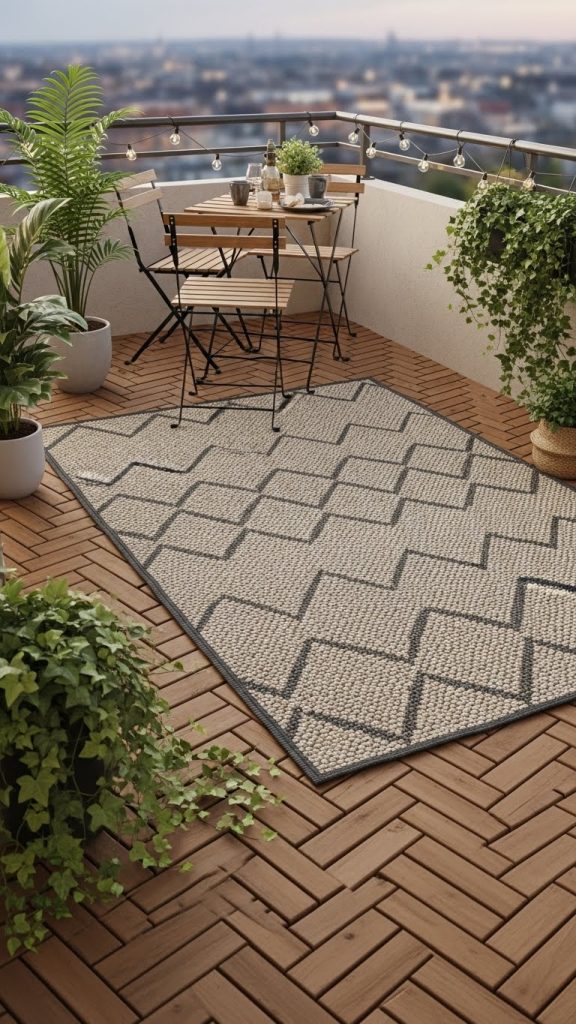
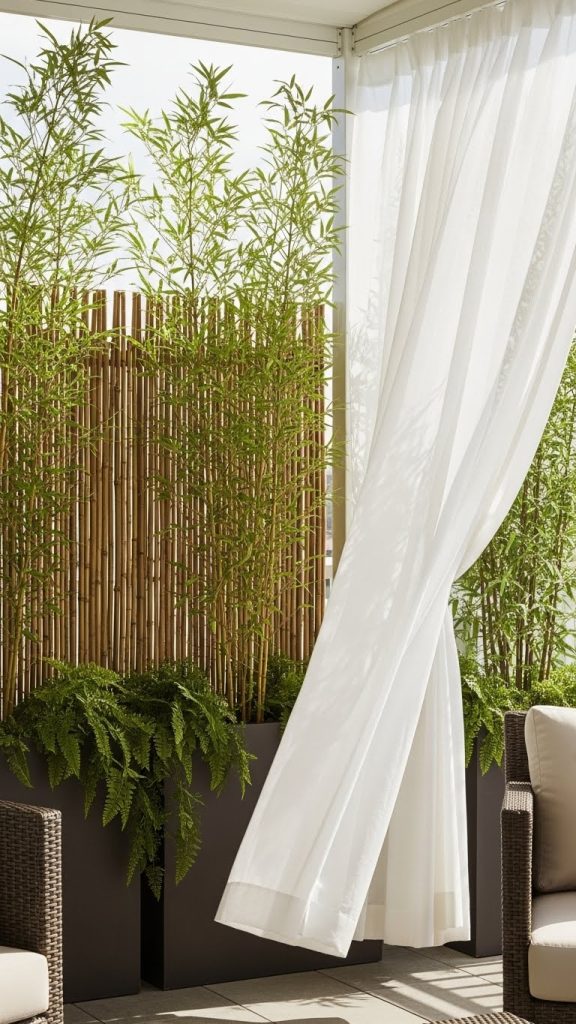
5. Add Privacy Without Blocking Light
Privacy is a common concern for small balconies, particularly in urban environments. However, heavy screens or solid barriers can make a small space feel boxed in and claustrophobic.
Instead, use partial or layered solutions. Tall plants, slatted wood screens, bamboo panels, or fabric curtains allow light and air to pass through while providing visual separation. These elements soften the space rather than enclosing it.
Privacy should enhance comfort, not limit openness. When done thoughtfully, it makes the balcony feel like a personal sanctuary rather than an exposed ledge.

6. Design Around a Clear Purpose
Small spaces work best when they have a single, clear purpose. Trying to make a small balcony serve too many functions often results in clutter and underuse.
Ask yourself what you truly want from the space. Is it a place to drink coffee in the morning? A quiet spot to read? A green escape from city life? A place to unwind at night?
Once the purpose is clear, design choices become easier. Furniture, lighting, and décor can all support that one intention, making the balcony feel focused rather than confused.
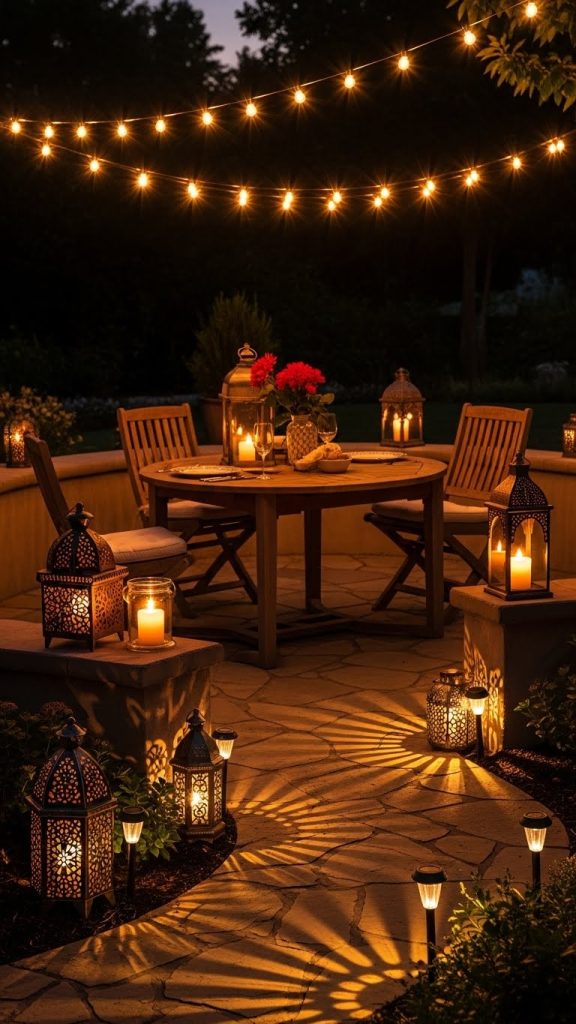
7. Use Lighting to Extend Usability
Without lighting, a balcony is often only usable during the day. Adding even simple lighting dramatically extends its usefulness and enhances atmosphere.
String lights, solar lanterns, LED candles, or small wall-mounted fixtures create a warm, inviting glow. Warm light is especially important—it encourages relaxation and makes the space feel cozy rather than harsh.
Lighting transforms the balcony into an evening retreat, allowing it to become part of your daily rhythm rather than a daylight-only space.
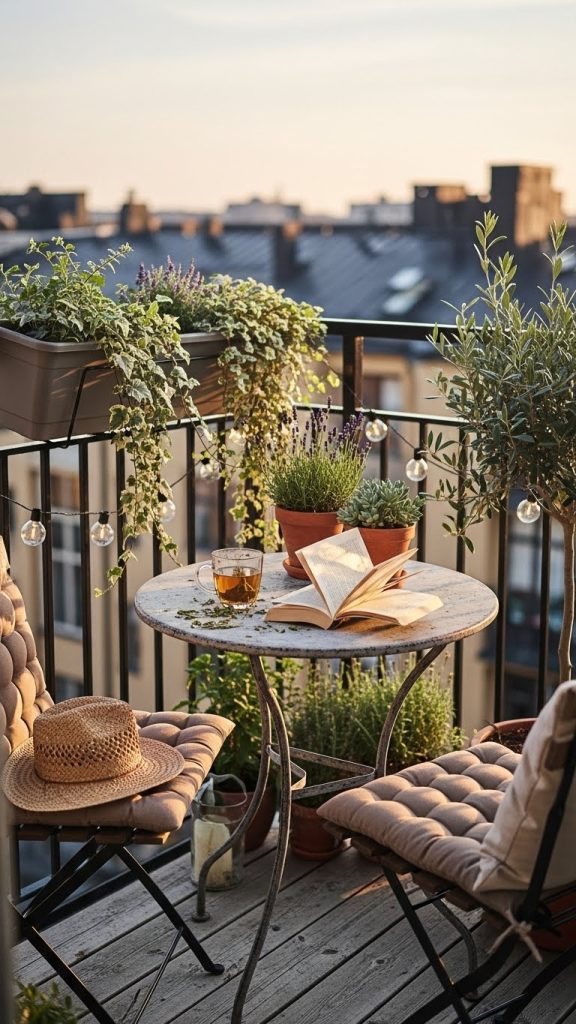
8. Keep Furniture Slim and Flexible
Furniture selection is critical on a small balcony. Bulky or heavy pieces quickly overwhelm the space.
Look for slim-profile furniture, folding chairs, stackable stools, or benches with storage. Pieces that can be easily moved or tucked away allow the balcony to adapt to different needs without feeling crowded.
Visual lightness matters as much as physical size. Furniture with open frames or legs feels less imposing and keeps the balcony feeling open.

9. Use Color and Texture with Restraint
Color has a powerful impact in small spaces. Too much can feel chaotic, while too little can feel flat.
Stick to a neutral base—soft grays, warm beiges, natural wood tones—and introduce one or two accent colors through cushions, planters, or textiles. Texture becomes especially important outdoors, adding depth without visual noise.
Natural materials tend to age better and blend more easily with outdoor environments. When color and texture are used intentionally, the balcony feels cohesive and calm.
10. Keep It Simple for Long-Term Enjoyment
The most successful small balconies are easy to live with. If a space requires constant rearranging, cleaning, or maintenance, it quickly becomes unused.
Choose durable, weather-resistant materials and plants that suit your lifestyle. Leave enough open space to move comfortably. Avoid overcrowding surfaces or railings.
Simplicity ensures longevity. A balcony that is easy to enjoy will be used more often, becoming a natural extension of daily life rather than a seasonal novelty.
Conclusion: Small Balcony, Meaningful Space
A small balcony may be limited in size, but it holds immense emotional value. When designed with intention, it becomes a place of pause, reflection, and connection to the outdoors—something increasingly precious in modern living.
The key is not doing more, but doing better. By focusing on comfort, purpose, and simplicity, even the smallest balcony can feel like a retreat. It does not need to impress; it needs to serve you.
In the end, a well-designed small balcony is not about square footage. It is about creating a moment of calm just beyond your door—a space where fresh air, light, and stillness are always within reach.