

10 Minimalist Bedroom Ideas

Minimalist bedroom design focuses on simplicity, clarity, and purposeful organization. Instead of filling the room with numerous decorative elements, minimalist design uses a small number of carefully chosen pieces that contribute to comfort and functionality. A minimalist bedroom typically emphasizes open space, neutral color palettes, clean surfaces, and practical furniture.
This approach supports both visual calmness and easier room maintenance. Many Pinterest users search for minimalist bedroom inspiration because the style works well in small spaces, apartments, and modern homes where clutter reduction improves daily living. A well-planned minimalist bedroom also encourages better sleep by reducing visual noise and unnecessary distractions. When designing a minimalist bedroom, each element should have a clear purpose, whether it provides storage, improves lighting, or adds subtle visual interest. Furniture placement, material selection, and lighting all play a significant role in shaping the overall atmosphere.
The goal is not to create an empty room but to build a balanced environment that feels calm, organized, and comfortable. This article explores ten creative minimalist bedroom ideas with step-by-step explanations and practical preparation details to help beginners create a modern, aesthetic bedroom space that reflects simplicity and thoughtful design.
Why Minimalist Bedrooms Are Trending in Modern Home Design
Minimalist bedroom ideas have become widely popular on Pinterest because they offer practical solutions for modern living environments. Many homes and apartments now have limited square footage, which requires efficient space planning. Minimalist bedroom layouts address this challenge by prioritizing essential furniture and reducing unnecessary decorative elements. This approach allows small rooms to feel more open and breathable. Another reason for the growing popularity of minimalist bedrooms is the increasing interest in mental wellness and calm living spaces. A cluttered environment often creates visual stress, while minimalist spaces encourage relaxation and focus. Clean surfaces, simple furniture lines, and neutral color schemes help create a peaceful atmosphere that supports better sleep and relaxation. Additionally, minimalist design aligns well with modern interior trends such as Scandinavian decor, Japanese-inspired interiors, and contemporary architecture. These styles emphasize natural materials, soft lighting, and balanced proportions. Social media platforms like Pinterest also contribute to the trend by showcasing clean, organized bedroom setups that appear visually appealing and easy to maintain. Minimalist bedrooms are also budget-friendly because they require fewer decorative items. Instead of purchasing many small accessories, the design relies on quality materials, thoughtful arrangement, and intentional styling. This combination of practicality, aesthetics, and simplicity continues to drive the popularity of minimalist bedroom inspiration online.
Materials and Preparation for a Minimalist Bedroom Setup
Creating a minimalist bedroom begins with careful planning and material selection. The first step is evaluating the room size, existing furniture, and available storage. This assessment helps determine which items should remain in the space and which ones can be removed to reduce clutter. Minimalist bedrooms generally rely on a small number of functional furniture pieces such as a simple bed frame, a bedside table, and a compact storage unit. Neutral color palettes are commonly used, including shades of white, beige, gray, and soft earth tones. These colors reflect light well and make the room appear larger. Materials often include natural wood, linen fabrics, cotton bedding, and matte finishes that contribute to a calm and natural atmosphere. Lighting preparation is also important. Soft ambient lighting, bedside lamps, and natural daylight help maintain a balanced environment without harsh brightness. Wall decoration should remain minimal, often limited to a single framed artwork or a subtle wall texture. Storage planning is essential to maintain the minimalist look. Hidden storage solutions such as under-bed drawers, built-in shelves, or simple storage baskets help keep belongings organized without creating visual clutter. Before starting any minimalist bedroom project, it is useful to gather basic materials such as neutral bedding, simple decor pieces, wall hooks, storage boxes, and lighting fixtures that support the overall design theme.
Low Platform Bed Setup
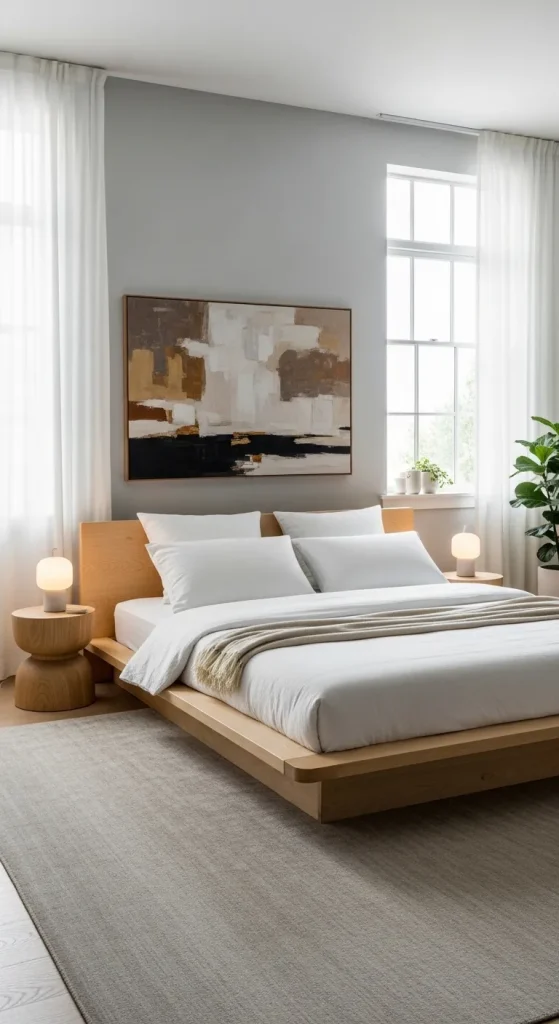
How to Create a Minimalist Platform Bed Arrangement
A low platform bed is one of the most recognizable elements in minimalist bedroom design. This furniture style creates a grounded and spacious appearance because the bed sits closer to the floor than traditional bed frames. The design often features simple wooden frames with straight lines and minimal decorative details. To create this setup, begin by selecting a platform bed made from natural wood or a matte neutral finish. Position the bed against the longest wall in the room to create a balanced focal point. The bedding should remain simple and uncluttered, typically using neutral colored sheets and a lightweight duvet. Linen or cotton bedding materials work well because they provide texture without overwhelming the design. Instead of placing multiple decorative pillows, use two or three functional pillows to maintain a clean arrangement. Bedside tables should be small and practical, preferably with hidden storage or a simple open shelf. Lighting can be added through wall-mounted lamps or small bedside lights to maintain visual simplicity. The platform bed arrangement helps the room feel more open because it reduces bulky furniture elements. This setup works especially well in modern apartments where maximizing space and maintaining a clean aesthetic are important design goals.
Neutral Color Layering Design

Step-by-Step Guide to Building a Balanced Neutral Palette
Neutral color layering is a key technique used in minimalist bedroom decoration. Instead of relying on bright colors or strong contrasts, minimalist spaces build depth through subtle variations of neutral tones. The process begins by selecting a primary base color for the room, usually white, off-white, or light beige. Walls, ceilings, and large surfaces should maintain this base tone to create a clean foundation. Once the base color is established, secondary neutral tones can be introduced through bedding, curtains, rugs, and furniture. Soft gray, warm sand, and muted taupe are common choices that add visual interest while maintaining simplicity. Textures play a significant role in this process. A linen duvet, cotton pillowcases, and a woven rug can add depth without requiring bold patterns or bright colors. When layering neutral shades, it is important to keep contrast subtle so the room maintains a calm appearance. Too many contrasting tones can disrupt the minimalist effect. Wooden furniture or small decor pieces can introduce natural warmth to the palette. The goal of neutral layering is to create a visually cohesive environment where each color supports the overall design rather than dominating it. This method helps maintain the calm and organized appearance that defines minimalist bedroom inspiration.
Floating Nightstand Arrangement

Execution Process for a Space-Saving Bedside Setup
Floating nightstands are an effective solution for maintaining a minimalist bedroom layout while preserving essential functionality. Unlike traditional bedside tables that sit on the floor, floating nightstands are mounted directly onto the wall. This design keeps the floor area open, which visually expands the room and makes cleaning easier. To create this setup, start by selecting a compact wall-mounted shelf or drawer unit made from wood or a matte neutral material. Install the unit at mattress height so that it remains convenient for daily use. The nightstand should only hold essential items such as a small lamp, a book, or a minimal decorative object. Avoid placing too many items on the surface because clutter can quickly disrupt the minimalist aesthetic. Wall-mounted lighting works especially well with floating nightstands because it eliminates the need for bulky table lamps. A simple adjustable wall lamp provides focused lighting for reading while maintaining the clean design. The floating nightstand arrangement also allows space underneath for storage baskets or decorative floor elements if needed. This setup works particularly well in small bedrooms where floor space is limited. The combination of practical storage and open visual space supports the overall minimalist interior design concept.
Simple Wall Art Focus

How to Create a Minimalist Artwork Feature
Minimalist bedrooms typically avoid crowded gallery walls or heavy decorative displays. Instead, a single carefully selected artwork can become a subtle focal point that enhances the room’s visual balance. The first step is choosing artwork that reflects the minimalist aesthetic. Abstract shapes, monochrome prints, soft landscape photography, or simple line drawings work well within this style. The artwork should maintain a limited color palette that complements the room’s neutral tones. Once the artwork is selected, placement becomes important. Hanging the piece above the bed or on the main wall of the room allows it to serve as a visual anchor without overwhelming the space. Use a thin frame in wood, black metal, or white to maintain a clean and understated appearance. The scale of the artwork should match the wall size. A single larger piece often works better than multiple small frames in minimalist design. Proper spacing around the artwork helps maintain the sense of openness that minimalist rooms require. This approach allows the decorative element to stand out without creating visual clutter. A well-placed artwork feature adds personality and aesthetic value while preserving the simplicity that defines minimalist bedroom decor.
Under-Bed Storage Organization

Setup Method for Hidden Storage Solutions
Maintaining a minimalist bedroom requires efficient storage systems that keep belongings out of sight. Under-bed storage is one of the most practical solutions for achieving this goal. This method uses the unused space beneath the bed frame to store clothing, bedding, or seasonal items without adding extra furniture to the room. To create this setup, begin by selecting storage containers or drawers that fit easily under the bed frame. Flat storage boxes with lids or rolling drawers work well because they allow easy access when needed. Organizing items by category helps maintain efficiency. For example, one container can hold winter clothing while another stores spare bedding. Labeling storage containers can also help identify contents quickly. The storage units should remain simple and neutral in color so they blend with the room’s design. Avoid transparent containers that reveal clutter. Using fabric storage boxes or wooden drawers maintains the minimalist aesthetic. This hidden storage system helps keep wardrobes and surfaces uncluttered. By storing rarely used items under the bed, the visible area of the bedroom remains clean and spacious. Effective storage planning is essential for sustaining a minimalist lifestyle and preventing the gradual accumulation of unnecessary items.
Soft Lighting Layer Design

How to Create Balanced Minimalist Bedroom Lighting
Lighting plays a crucial role in shaping the atmosphere of a minimalist bedroom. Harsh overhead lighting can disrupt the calm environment, while layered soft lighting creates a more relaxing ambiance. The process begins by selecting a primary light source, such as a simple ceiling fixture with a warm white bulb. This light provides general illumination when needed. Secondary lighting layers can then be introduced through bedside lamps, wall-mounted lights, or floor lamps. Warm lighting tones are recommended because they produce a softer glow that supports relaxation and sleep preparation. Minimalist lighting fixtures often feature simple shapes, matte finishes, and neutral colors that blend with the room’s design. Instead of large decorative chandeliers, minimalist bedrooms rely on subtle lighting elements that maintain visual simplicity. Adjustable bedside lighting can be useful for reading without illuminating the entire room. Curtains and window placement also influence lighting conditions. Sheer curtains allow natural daylight to enter while maintaining privacy. Combining natural daylight with soft artificial lighting creates a balanced environment that changes naturally throughout the day. Proper lighting design improves both functionality and aesthetic quality, helping the bedroom feel comfortable and visually harmonious.
Minimalist Plant Corner
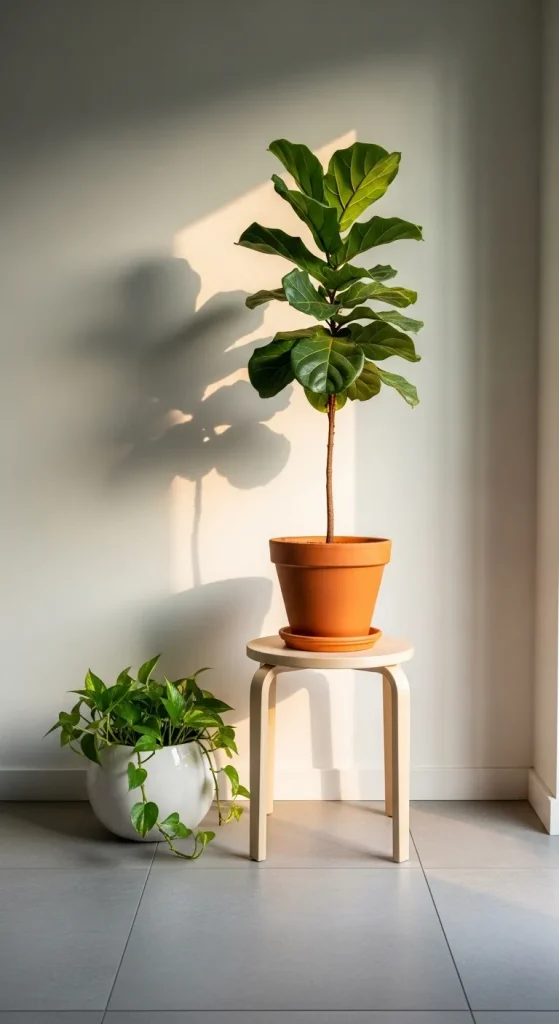
Step-by-Step Guide to Adding Natural Elements
Introducing a small plant corner is a simple way to add life and freshness to a minimalist bedroom without disrupting its clean design. Plants contribute natural color and texture while maintaining the calm atmosphere of the room. The first step is selecting plant varieties that are easy to maintain indoors. Plants with simple shapes and moderate leaf density work best because they complement minimalist aesthetics. Choose one or two plants rather than filling the room with multiple pots. Placement should focus on natural light availability. Corners near windows are ideal because they provide sufficient sunlight while keeping the plant arrangement unobtrusive. Use neutral planters made from ceramic, clay, or matte materials that match the room’s color palette. Elevated plant stands or floor placement can add subtle variation in height. Avoid overly decorative pots or bright colors that disrupt the minimalist theme. The plant corner should feel integrated with the room rather than appearing as a separate decorative display. Regular care, such as watering and trimming leaves, helps maintain a neat appearance. The presence of greenery can also improve indoor air quality and create a more calming environment, supporting the restful purpose of the bedroom space.
Simple Open Shelf Display

How to Create an Organized Minimal Shelf Feature
Open shelving can serve both decorative and practical purposes in a minimalist bedroom when used carefully. The key principle is limiting the number of items displayed on the shelf so the arrangement remains clean and balanced. Begin by installing a narrow floating shelf on an empty wall or above a desk area. The shelf should match the room’s material palette, such as natural wood or matte white. Once installed, select a small number of objects to display. These items may include a book stack, a small ceramic object, or a minimal decorative piece. The arrangement should follow a balanced composition where empty space remains visible between objects. Avoid overcrowding the shelf with multiple accessories because this quickly creates visual clutter. Books can be stacked horizontally or vertically depending on the available space. Maintaining symmetry or subtle asymmetry helps create a visually pleasing display. Open shelves also provide convenient storage for frequently used items without requiring additional furniture. Regularly reviewing the shelf contents helps prevent unnecessary accumulation. This approach ensures that the shelf remains organized and visually aligned with the minimalist bedroom concept.
Neutral Textile Layering

Execution Process for Cozy Minimalist Bedding
Textiles are essential for creating comfort within a minimalist bedroom while maintaining a simple visual structure. Neutral textile layering focuses on combining fabrics with different textures rather than introducing strong colors or patterns. Begin with a base layer of high-quality cotton sheets in a neutral shade such as white or light gray. The next layer can include a linen duvet cover or a lightweight blanket that adds texture without overwhelming the design. Throw blankets can be folded neatly at the end of the bed to create visual structure. Pillow selection should remain minimal, usually two sleeping pillows and one decorative pillow if desired. The fabrics should emphasize natural materials such as cotton, linen, or wool because these materials create subtle visual variation through texture. Avoid highly patterned fabrics or strong color contrasts that disrupt the minimalist aesthetic. Curtains, rugs, and upholstery should also follow the neutral palette to maintain consistency. Textile layering helps the bedroom feel comfortable and inviting while preserving the calm and uncluttered appearance that minimalist interior design promotes.
Decluttered Wardrobe Organization

Setup Method for Maintaining a Minimalist Clothing System
A minimalist bedroom requires an organized wardrobe system that prevents clothing from accumulating unnecessarily. The process begins by evaluating existing clothing items and removing pieces that are rarely used or no longer fit. This initial decluttering step reduces wardrobe volume and simplifies daily clothing selection. After decluttering, clothing should be organized by category, such as shirts, pants, and seasonal items. Using uniform hangers helps maintain a visually clean wardrobe appearance. Drawer dividers can help separate smaller clothing items like socks and accessories. Storage boxes may also be used for seasonal garments that are not currently needed. The wardrobe should prioritize accessibility and visibility so clothing can be easily located. Avoid overcrowding the closet because it creates visual clutter and makes organization difficult. Minimalist wardrobes often emphasize versatile clothing pieces that can be combined easily. This approach reduces the total number of items needed while supporting a simple lifestyle. Maintaining this system requires periodic review to ensure new purchases do not create unnecessary accumulation. A decluttered wardrobe contributes significantly to the overall cleanliness and simplicity of a minimalist bedroom environment.
Common Beginner Mistakes in Minimalist Bedroom Design
One of the most common mistakes when creating a minimalist bedroom is confusing minimalism with emptiness. Removing too many items from the room can make the space feel cold or unfinished rather than calm and balanced. Minimalist design should still include comfortable textiles, functional furniture, and subtle decorative elements that support the room’s purpose. Another frequent mistake is using too many decorative accessories while attempting to follow minimalist inspiration. Multiple small decor pieces can quickly create clutter and disrupt the clean aesthetic. Choosing a few meaningful elements instead of numerous small items maintains visual clarity. Incorrect color choices also affect the final result. Introducing bright or contrasting colors without careful planning can break the neutral harmony that minimalist spaces rely on. Storage planning is another area where beginners often struggle. Without hidden storage solutions, everyday items such as clothing, books, or electronics may remain visible and create disorganization. Furniture scale also plays a significant role. Large bulky furniture pieces can overwhelm a minimalist room and reduce open space. Selecting appropriately sized furniture helps maintain balance. Understanding these common mistakes allows beginners to create a minimalist bedroom that feels comfortable, organized, and visually calm.
Practical Tips for Achieving Better Minimalist Bedroom Results
Achieving a successful minimalist bedroom requires attention to both organization and visual balance. One effective approach is adopting a “one purpose per item” rule. Each object in the room should serve a clear functional or aesthetic purpose. This guideline prevents unnecessary accumulation and supports intentional design choices. Regular decluttering sessions help maintain the minimalist environment over time. Small items tend to accumulate gradually, so reviewing room contents every few months can help maintain simplicity. Lighting adjustments can also improve the final atmosphere. Using warm lighting tones and layered lighting sources helps create a relaxing environment that supports the bedroom’s primary purpose. Furniture spacing should remain generous to preserve open floor areas. Leaving empty space between furniture pieces enhances the feeling of calmness. Another useful strategy is focusing on quality materials rather than quantity. Durable fabrics, natural wood furniture, and simple design elements often create stronger visual impact than multiple inexpensive decorations. Keeping surfaces clear also improves the minimalist effect. Bedside tables, shelves, and desks should hold only necessary items. These practical strategies help transform minimalist bedroom inspiration into a realistic and maintainable home design approach.
Styling and Presentation for a Balanced Minimalist Bedroom
Styling a minimalist bedroom involves carefully arranging elements so the room appears balanced and harmonious. Visual symmetry often plays an important role in achieving this effect. For example, placing identical bedside lamps on each side of the bed can create a balanced focal point. However, subtle asymmetry can also add interest when used carefully. A single plant placed near a window or a simple chair placed in one corner can create visual movement without overwhelming the design. Bedding presentation also contributes to the overall appearance. Smoothly arranged sheets, neatly folded blankets, and aligned pillows help maintain the clean aesthetic associated with minimalist interiors. Curtains should remain light and simple so they complement the room without drawing excessive attention. Floor space should remain largely open to preserve the feeling of spaciousness. Decorative elements should be arranged with intention rather than randomly placed. Each piece should appear integrated with the overall layout. This careful styling approach ensures that the bedroom maintains a calm, organized, and visually pleasing atmosphere consistent with minimalist design principles.
Budget and Time Planning for a Minimalist Bedroom Project
Minimalist bedroom projects can be completed gradually without requiring large upfront expenses. The first step is identifying which elements already exist in the room and can be reused. Many minimalist designs rely on simple furniture and neutral colors that can be achieved by rearranging existing items rather than purchasing new ones. Decluttering is often the most significant step and requires time rather than financial investment. Removing unnecessary items immediately improves the room’s visual clarity. Furniture upgrades can be planned over time. Replacing bulky furniture with simpler pieces may require saving or gradual replacement. Textiles such as bedding, curtains, and rugs can also be updated step by step to align with the minimalist aesthetic. DIY projects such as floating shelves or simple wall art can reduce costs while adding personalized elements. Time planning is equally important. Completing the bedroom transformation in stages helps maintain organization and prevents rushed decisions. For example, the first week may focus on decluttering and cleaning, while later weeks involve adjusting lighting or adding small decor elements. This gradual approach allows the design to evolve naturally while maintaining careful attention to detail and budget limitations.
Creative Expansion and Advanced Minimalist Inspiration
Once the basic minimalist bedroom design is established, additional creative ideas can enhance the space while maintaining simplicity. One option is incorporating subtle architectural elements such as textured wall panels or simple wood slats that add depth without clutter. Another advanced idea involves integrating built-in storage solutions that blend seamlessly with the room’s structure. Built-in wardrobes, recessed shelves, or hidden cabinets maintain the minimalist appearance while providing additional storage capacity. Smart lighting systems can also enhance the bedroom environment by allowing adjustable brightness and lighting temperature throughout the day. Natural materials such as stone, wood, or woven fabrics can introduce organic texture that enriches the minimalist design. Another creative expansion involves introducing subtle seasonal adjustments. For example, heavier blankets and warmer textile tones may be used during colder months, while lighter fabrics maintain freshness during warmer seasons. These changes allow the bedroom to evolve without disrupting its minimalist foundation. Exploring these advanced design ideas helps transform a simple bedroom setup into a refined and adaptable living space that continues to reflect minimalist principles over time.