
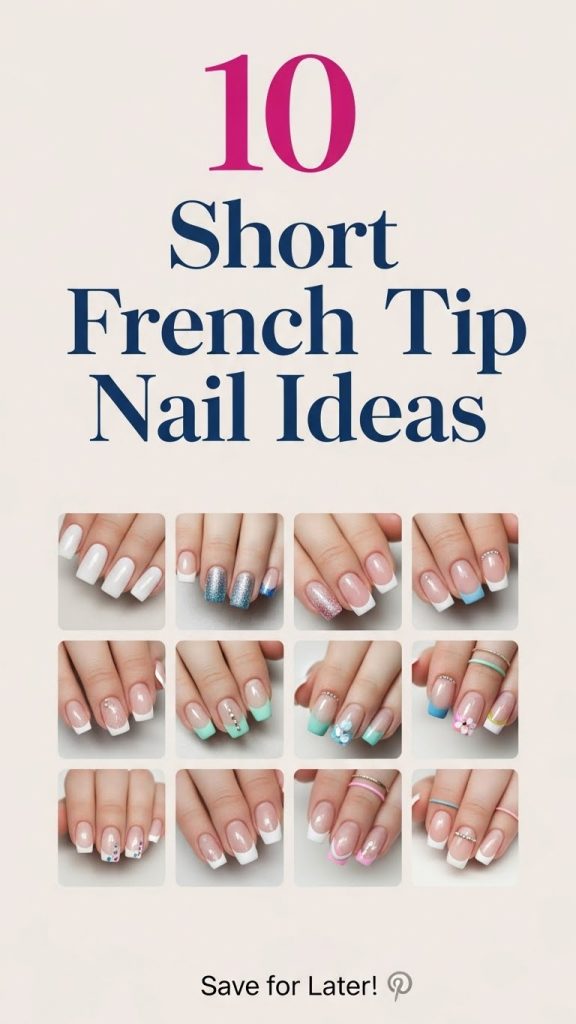
10 Short French Tip Nail Ideas
The French manicure is one of the most recognizable nail designs in the world. Instantly associated with cleanliness, polish, and elegance, it has transcended decades, trends, and cultural shifts. Yet despite its popularity, the French tip has often been misunderstood — dismissed as outdated, overly safe, or lacking creativity.
What many overlook is that the French manicure is not a static design. It is a framework. And like all great frameworks, its power lies in adaptability.
Short nails have played a major role in the French tip’s modern resurgence. While long nails often turn French tips into bold statements, short nails return the design to its original strength: precision, balance, and restraint. On a short nail, every millimeter matters. The width of the tip, the tone of the base, the curve of the smile line — all become intentional design decisions rather than defaults.
Short French tip nails feel grounded in real life. They work in professional settings, casual routines, and formal moments without adjustment. They don’t overpower the hand or demand attention. Instead, they reward close observation. They signal care, discipline, and quiet confidence.
This essay explores ten short French tip nail ideas that show how this classic design continues to evolve. Each idea focuses on subtle variation, proportion, and mood, demonstrating how small changes can transform a familiar look into something fresh, modern, and deeply wearable.
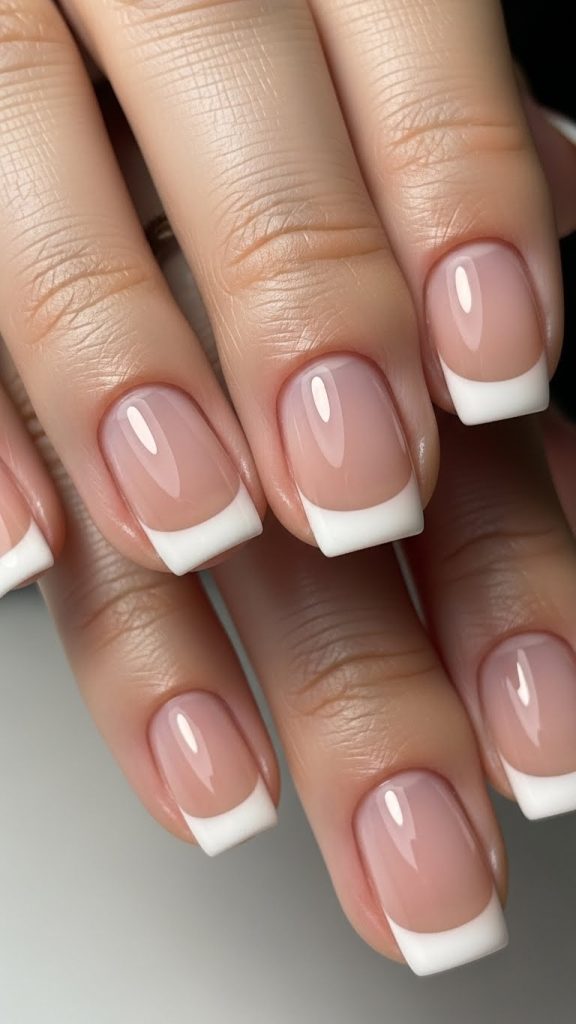
1. Classic White French Tip on Short Nails
The classic white French tip is the foundation from which all variations emerge.
On short nails, the white tip must be thin and precise. A heavy or thick line can make the nail appear stubby, while a fine, well-balanced tip enhances the nail’s natural shape. The base is typically a sheer pink or nude that mimics a healthy nail bed.
This design emphasizes cleanliness and structure. It does not rely on trend or embellishment — only on execution. When done well, it feels timeless rather than dated.
Short classic French tips communicate polish, professionalism, and care. They are understated, but never invisible.

2. Micro French Tip for Ultra-Minimal Style
The micro French tip takes minimalism to its logical conclusion.
Here, the tip is reduced to the thinnest possible line — sometimes barely visible. The result is subtle contrast rather than decoration. The nail looks enhanced rather than designed.
On short nails, micro French tips are especially effective. They elongate the nail visually while maintaining a natural appearance. The base remains sheer or softly nude, ensuring harmony.
This style appeals to those who value restraint, modern aesthetics, and effortless elegance.
3. Soft Nude-on-Nude French Tips
Nude-on-nude French tips replace stark contrast with tonal harmony.
Instead of white tips, a slightly deeper nude or beige tone defines the edge of the nail. The base remains sheer or pale nude, creating a gentle gradient.
On short nails, this approach feels cohesive and refined. The design is visible without being obvious, offering sophistication through subtlety.
This variation works beautifully for those who prefer neutral palettes and quiet luxury.
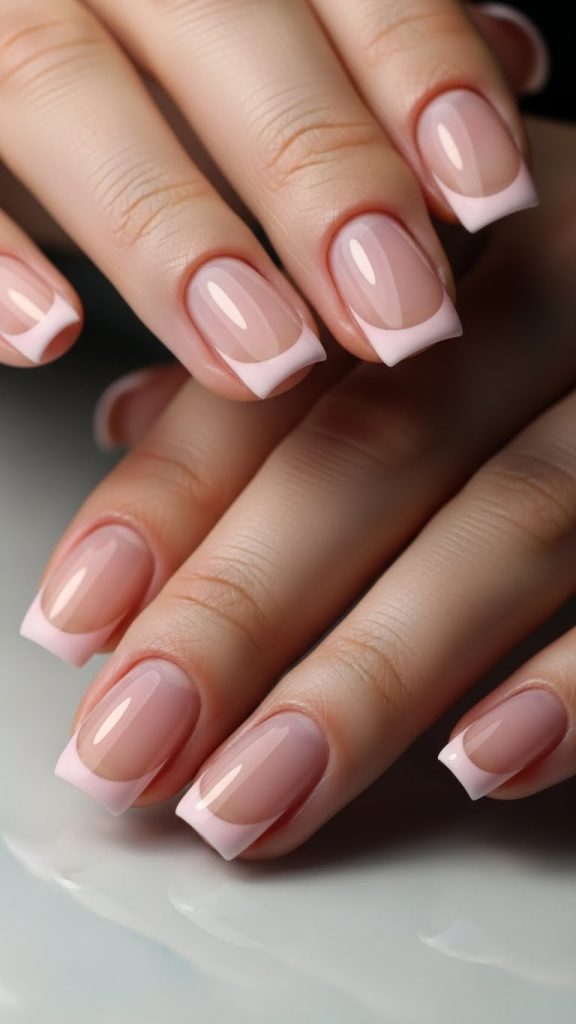
4. Pink French Tip for Soft Expression
Pink French tips introduce warmth and femininity without excess.
Rather than bright or bubblegum pink, modern designs favor blush, dusty rose, or soft baby pink tones. The tip remains thin, preserving balance.
On short nails, pink tips feel gentle and modern. They soften the structured nature of the French manicure without undermining its elegance.
This style is ideal for everyday wear, blending seamlessly into both casual and polished looks.
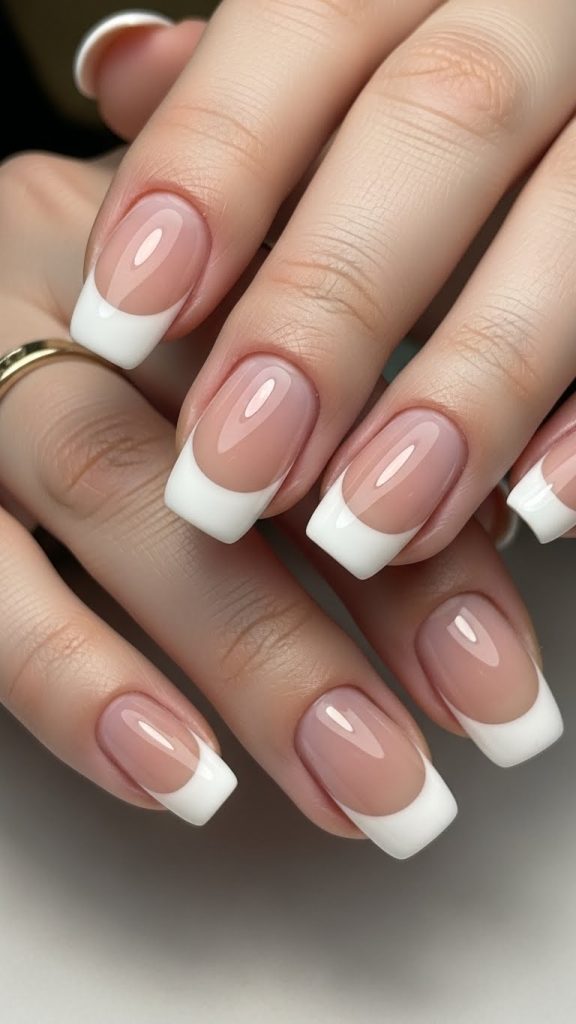
5. Squoval Short Nails With Refined French Tips
The shape of the nail plays a crucial role in French tip design.
Squoval — a soft square with rounded edges — is particularly flattering for short French tips. It provides structure while avoiding harsh angles.
On squoval nails, the French tip follows the natural curve of the edge, creating a balanced and modern appearance. The shape supports thin, precise tips beautifully.
This combination feels contemporary, clean, and highly wearable.
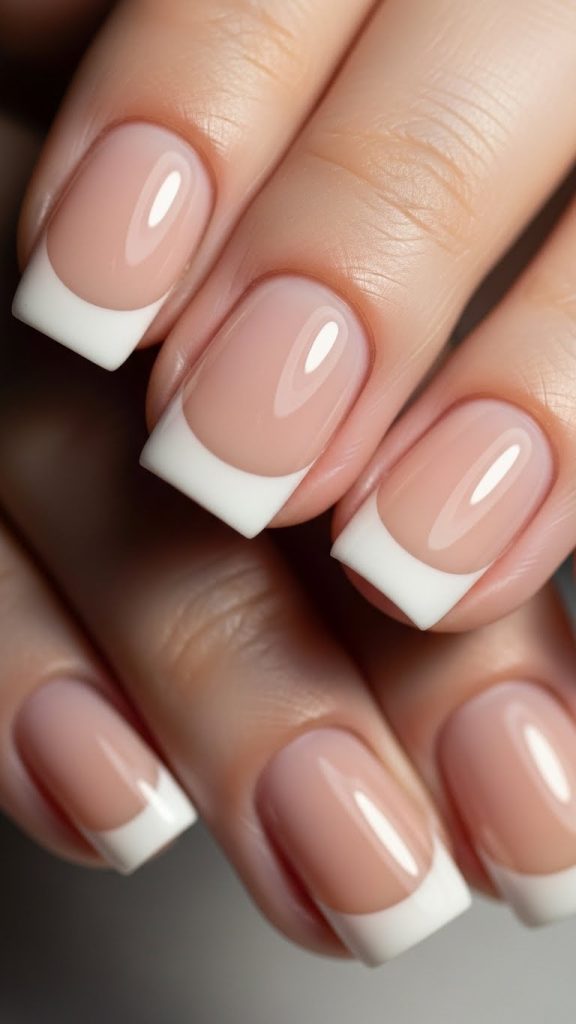
6. Matte Base With Glossy French Tip Contrast
Texture contrast introduces modern interest without color change.
In this variation, the base of the nail is matte while the French tip remains glossy — or vice versa. The difference in finish creates visual depth through light reflection rather than pigment.
On short nails, this contrast feels intentional and architectural. It rewards close attention without overwhelming the design.
This style suits those who appreciate subtle innovation and modern design principles.
7. Colored French Tips on Short Nails
Colored French tips offer creative freedom while preserving structure.
Instead of white, the tip may appear in muted colors such as sage green, soft blue, taupe, terracotta, or charcoal. The base remains neutral to maintain balance.
On short nails, muted tones work best. They add personality without overpowering the small canvas.
This approach allows for seasonal or personal expression while respecting the elegance of the French framework.
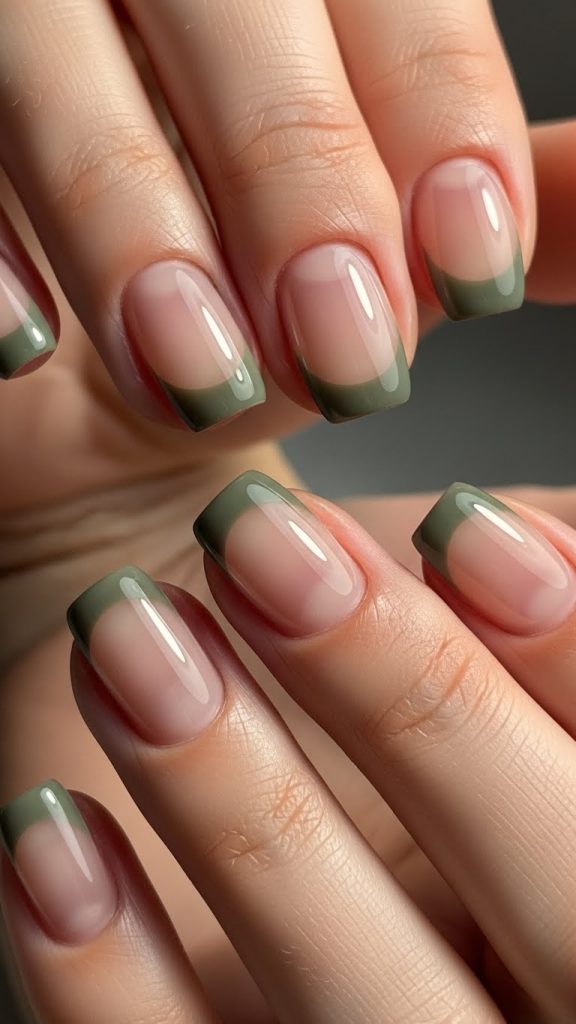
8. Short French Tips With Rounded Smile Line
The curve of the French tip — known as the smile line — dramatically affects the mood of the manicure.
A softly rounded smile line feels gentle and organic. On short nails, this curve enhances natural shape and avoids harshness.
This design works particularly well with sheer bases and thin tips, creating a seamless, fluid look.
Rounded French tips feel approachable and timeless, making them ideal for daily wear.

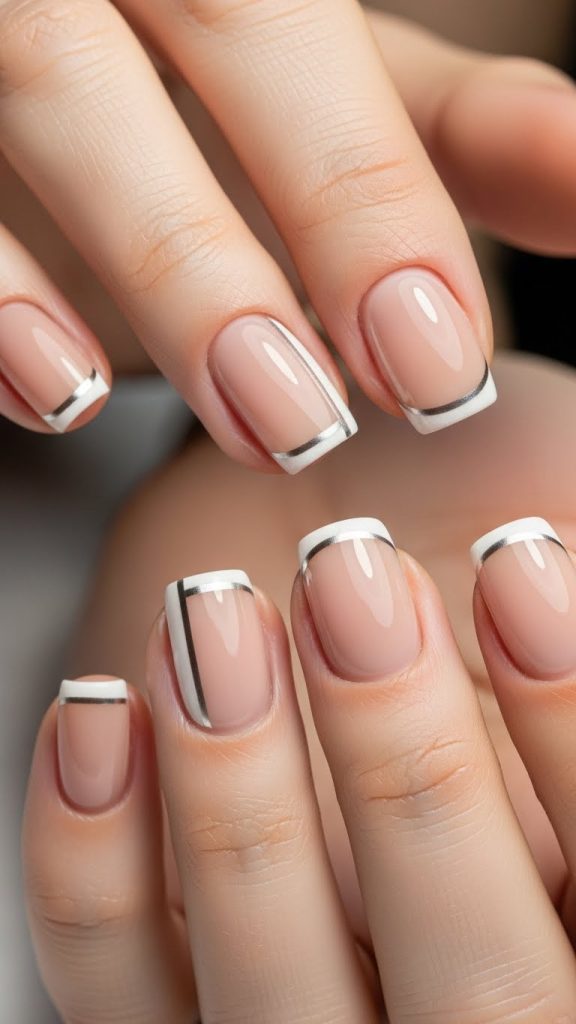
9. Short French Tips With Minimal Accent Detail
Adding a subtle accent introduces individuality without disrupting balance.
A tiny dot, fine line, or delicate metallic detail on one nail adds interest while preserving cohesion. The rest of the nails remain classic French.
On short nails, accents must be small and intentional. Precision matters more than creativity here.
This variation suits those who enjoy personalization but value elegance above novelty.

10. Modern Reverse French on Short Nails
The reverse French manicure shifts focus from the tip to the cuticle.
On short nails, a thin line of color or metallic detail near the base of the nail creates a subtle yet modern effect. The rest of the nail remains neutral or sheer.
This design feels architectural and contemporary. It respects the nail’s proportions while offering a fresh interpretation of tradition.
When executed with restraint, reverse French tips feel innovative rather than experimental.
Conclusion: Why Short French Tip Nails Endure
Short French tip nails endure because they balance discipline and creativity. They respect the natural nail while offering space for expression. They adapt without losing identity.
In a beauty culture often driven by extremes, the French tip remains steady. It evolves quietly, guided by proportion, precision, and intention.
Short nails amplify this strength. They force the design to be thoughtful. There is no room for excess, no space to hide behind length.
Ultimately, short French tip nails are not about nostalgia. They are about clarity. And clarity, when paired with care, is always beautiful.