
10 Accent Wall With Shelves Ideas
Accent walls with shelves have become one of the most practical Pinterest ideas for combining decoration, storage, and modern design in a single creative project. An accent wall is defined as a single wall intentionally designed to stand out through color, texture, structure, or decorative elements, while shelves add function by creating usable vertical space. This combination works well because it transforms an empty surface into a visually organized area that supports everyday living. In many homes, walls remain underused, and shelves allow homeowners to display decor, organize essentials, and introduce aesthetic balance without adding bulky furniture. Pinterest users frequently search for DIY accent wall tutorials because they provide clear, step-by-step solutions that are beginner friendly and adaptable to different room sizes. The appeal lies in the ability to personalize layouts, materials, and styling according to modern or minimalist preferences. A well-planned accent wall with shelves improves visual flow, helps define zones within a room, and supports practical organization. Whether used in living rooms, bedrooms, offices, or entryways, this design method offers flexibility and long-term usability. The following guide explores creative ideas, materials, and execution processes that turn simple walls into structured and inspiring focal points while maintaining strong functionality and aesthetic clarity.
Why Accent Wall Shelf Designs Are Trending and Highly Useful
The rising popularity of accent walls with shelves comes from a shift toward multifunctional interiors where decoration also serves a practical purpose. Modern living spaces increasingly prioritize organization, efficient storage, and minimalist style, which makes shelf-based accent walls an ideal solution. Pinterest trends show strong interest in easy project ideas that improve visual appeal without major renovation, and shelves meet this requirement because they are simple to install and highly customizable. These designs also align with budget ideas since many projects can be completed using affordable materials and basic tools. Another reason they are trending is their adaptability to changing needs. Shelves can display books, plants, framed artwork, or everyday items, allowing homeowners to refresh the look without redesigning the entire space. From a design perspective, accent walls create depth and structure, helping rooms feel more intentional and balanced. They are especially useful in small spaces where floor area is limited but vertical storage is available. The combination of creative ideas and practical organization makes these projects attractive to beginners seeking clear tutorials and achievable results. As a result, accent wall shelf designs continue to dominate Pinterest inspiration boards because they blend DIY creativity, aesthetic presentation, and practical home improvement into one cohesive concept.
Materials and Preparation for a Successful DIY Accent Wall Project
Proper preparation ensures that an accent wall with shelves remains safe, functional, and visually balanced. The first step is selecting the wall based on visibility, lighting, and room purpose. Walls behind sofas, beds, desks, or dining areas usually work best because they naturally become focal points. Measuring the wall accurately is essential for planning shelf spacing and symmetry. Common materials include wooden boards, metal brackets, floating shelf hardware, wall anchors, screws, paint, and finishing tools such as sandpaper and levels. Choosing materials should depend on weight requirements and the overall style, whether modern design, rustic, or minimalist style. Before installation, walls should be cleaned and inspected to locate studs for secure mounting. Painting or finishing the wall before attaching shelves saves time and creates a cleaner final appearance. Planning layout using paper templates or tape helps visualize spacing and prevents overcrowding. Beginners should focus on even alignment and consistent distances between shelves to maintain an organized look. Safety preparation is also important; using proper anchors prevents sagging or accidents. With careful planning, materials selection, and layout testing, the DIY process becomes smoother and more predictable, ensuring that the final creative project looks intentional and professionally finished while remaining achievable for first-time makers.
Floating Minimalist Shelf Wall
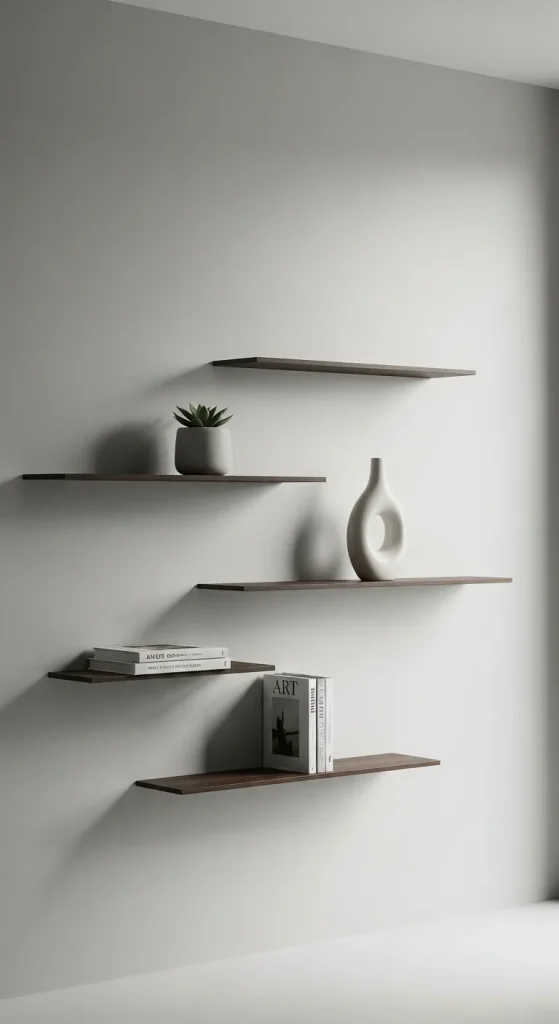
How to Create
A floating shelf accent wall emphasizes clean lines and minimalist style, making it one of the most popular Pinterest ideas for modern interiors. Floating shelves are designed without visible brackets, which creates the illusion that they are attached directly to the wall. This design works best when spacing is intentional and objects displayed are limited to avoid visual clutter. Begin by measuring equal distances between shelves and marking positions using a level. Secure hidden mounting brackets into wall studs or strong anchors to ensure stability. Once installed, slide the shelves onto the hardware and confirm alignment. The aesthetic success of this design depends on balanced decoration, so choose a small number of items such as books, neutral vases, or framed prints. The goal is to maintain open space between objects, allowing the wall color and shelf structure to remain visible. This easy project suits living rooms, bedrooms, or home offices where calm visual organization is desired. Floating shelves also make cleaning easier since there are no visible supports. For beginners, starting with two or three shelves creates a manageable layout. This design demonstrates how simple execution combined with thoughtful styling can produce a professional and highly aesthetic result that fits modern Pinterest inspiration trends.
Grid-Style Shelf Accent Wall
Step-by-Step Guide
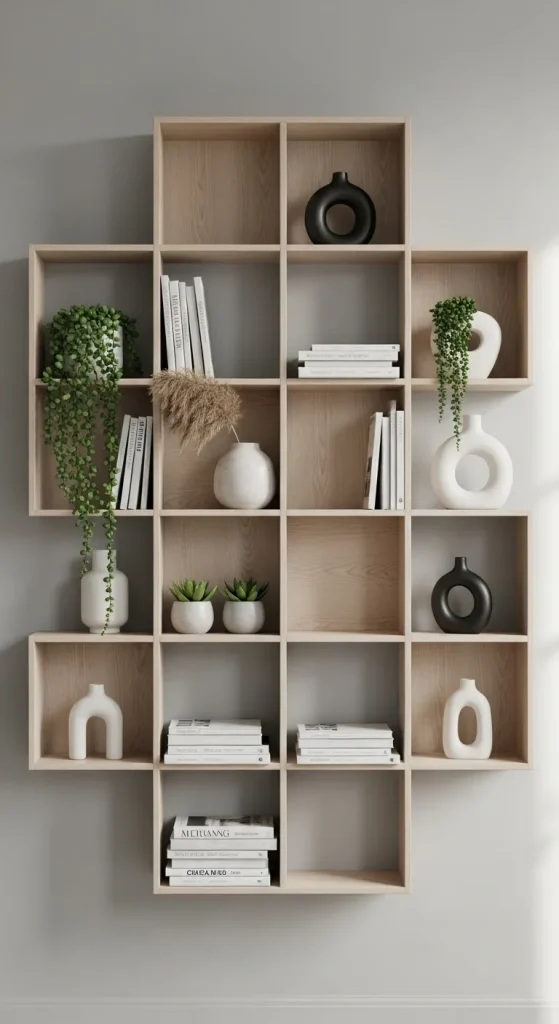
A grid-style shelf arrangement creates structure and symmetry, making it ideal for organization and decorative display. This approach involves installing shelves in a balanced pattern that resembles a geometric grid, often using equal spacing horizontally and vertically. Start by drawing a layout plan on paper and transferring measurements onto the wall using painter’s tape to preview placement. The key principle is consistency, as uneven spacing disrupts the visual rhythm. Install sturdy brackets or modular shelves that align perfectly across rows. This setup works well for displaying books, storage boxes, and decorative pieces because each section functions like an individual frame. The grid method is particularly effective in offices or study areas where organization is important. It also supports minimalist style because structured repetition creates calm visual order. Beginners should focus on accurate measuring and use a level for every shelf to avoid misalignment. Once installed, arrange objects by size and color to maintain harmony. This creative project combines practical storage with decorative appeal, turning a plain wall into an organized display zone. The grid design is popular among Pinterest users because it looks intentional, supports planning, and offers endless opportunities for aesthetic customization without requiring advanced construction skills.
Wood Slat Accent Wall With Integrated Shelves
Execution Process

A wood slat accent wall introduces texture and depth while allowing shelves to blend naturally into the structure. This design starts by attaching evenly spaced vertical wooden slats across the wall, creating a warm and modern backdrop. Once the slats are installed, shelves can be mounted across selected sections, appearing integrated rather than separate. The process begins with measuring equal gaps between slats and securing them firmly using nails or screws. Painting or staining beforehand helps maintain consistent finishing. Shelves should be positioned where they align visually with the slat pattern to preserve continuity. This approach works especially well in living rooms or bedrooms where natural materials enhance comfort and aesthetic appeal. The combination of vertical lines and horizontal shelves creates visual balance, making rooms feel taller and more structured. Beginners should keep shelf placement minimal to avoid overwhelming the design. Decor items like plants or neutral accessories complement the wood texture effectively. This DIY tutorial approach demonstrates how layering materials can elevate a simple wall into a modern design statement. The final result feels architectural while remaining achievable with basic tools, making it a strong source of Pinterest inspiration for homeowners seeking a handcrafted yet professional appearance.
Corner Accent Wall Shelving
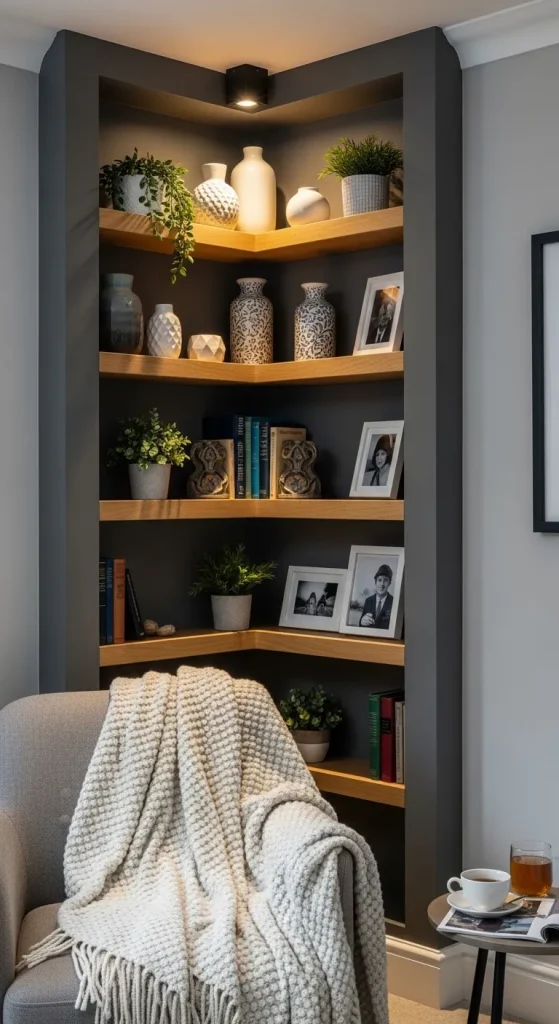
Setup Method
Corner accent walls with shelves maximize unused space and provide practical organization in smaller rooms. Instead of focusing on a flat surface, this design uses intersecting walls to create depth and function. Begin by identifying a corner that needs storage or decorative enhancement, such as near a reading chair or workspace. Install shelves that wrap around the corner, ensuring both sides align at the same height for a seamless look. L-shaped or custom-cut boards work well for maintaining continuity. The main advantage of this design is efficient space usage, as corners often remain empty. Shelves can hold books, small plants, or storage baskets without crowding the room. From a visual perspective, the wraparound effect adds dimension and guides the eye smoothly across the space. Beginners should install fewer shelves initially and test spacing before final attachment. Using consistent materials keeps the design cohesive and modern. This easy project aligns with Pinterest trends focused on smart organization and creative ideas for small homes. By transforming a neglected corner into a functional accent wall, this setup proves that practical planning and simple execution can significantly improve both aesthetics and usability.
Painted Accent Wall With Contrasting Shelves
How to Make

Combining a painted accent wall with contrasting shelves creates strong visual impact while remaining beginner friendly. Start by selecting a wall color that differs from surrounding walls but still fits the overall room palette. Darker shades often highlight shelves effectively, while lighter colors create an airy aesthetic. Once the paint dries completely, install shelves in a contrasting finish, such as natural wood against dark paint or white shelves against bold colors. This contrast defines the shelving structure and enhances decorative items placed on it. The process requires careful measurement to ensure shelves remain centered and balanced within the painted area. This design is popular on Pinterest because it delivers dramatic transformation with minimal construction. It also allows flexibility, since repainting can refresh the look without changing the shelves. For best results, limit decorative objects to a few coordinated pieces to prevent visual clutter. Beginners benefit from this method because painting is straightforward and shelf installation follows standard DIY steps. The combination of color and structure makes the wall feel intentional and modern, demonstrating how simple materials and clear planning can produce an aesthetic focal point suitable for many interior styles.
Ladder-Style Shelf Accent Wall

Step-by-Step Guide
A ladder-style shelf accent wall introduces vertical movement and a casual, modern design suitable for minimalist or Scandinavian-inspired interiors. This concept uses shelves that gradually decrease or increase in length as they move upward, resembling a ladder shape. Begin by marking a central vertical line on the wall to maintain alignment. Install the lowest shelf first, ensuring it is level, then continue upward with adjusted lengths. This arrangement naturally draws the eye upward, making ceilings appear higher. The ladder format works well for displaying lightweight decor, books, or plants while maintaining open space. Beginners should use consistent spacing between levels to preserve visual balance. Materials can include simple wood boards with hidden brackets or visible supports depending on preference. The design remains practical because each shelf provides storage while contributing to overall structure. Pinterest users often favor this style due to its clean aesthetic and easy customization. The ladder layout also allows gradual expansion; additional shelves can be added later without redesigning the entire wall. This creative project demonstrates how vertical planning and simple execution create a unique accent wall that feels both functional and artistic.
Gallery Shelf Accent Wall

How to Create
A gallery shelf accent wall combines picture display with functional shelving, making it ideal for showcasing personal decor in an organized way. Unlike traditional gallery walls that require many nail holes, this approach uses long, narrow shelves to support frames and decorative pieces. Start by installing one or more slim shelves at eye level, ensuring strong support since frames can add weight. Arrange artwork by layering larger pieces at the back and smaller items in front to create depth. This method allows easy rearrangement without additional wall damage, making it a flexible creative project. The gallery shelf style suits living rooms, hallways, or bedrooms where visual storytelling is desired. Beginners should focus on maintaining color consistency among frames and spacing to avoid a chaotic look. Neutral tones or coordinated themes help achieve an aesthetic result. The shelves themselves become part of the design, framing the displayed items while keeping the wall organized. This Pinterest-inspired idea is especially useful for renters or those who like to update decor frequently. By combining decoration and practicality, gallery shelves provide a modern solution that balances creativity with simplicity.
Industrial Pipe Shelf Accent Wall

Execution Process
Industrial pipe shelves bring a structured, urban aesthetic to accent walls while offering strong durability. This design uses metal pipes as visible supports combined with wooden boards for shelves. Begin by planning the layout carefully, since pipe systems require precise measurements to align correctly. Attach flanges securely into wall studs to support heavier weight. Once pipes are assembled, place and secure wooden shelves on top. The exposed hardware becomes a design feature, creating contrast between raw materials and decorative items. This style works well in home offices, kitchens, or loft-inspired spaces where functionality is emphasized. Beginners should pre-assemble pipe sections on the floor to ensure proper fit before installation. The industrial look pairs well with minimalist decor, books, or storage containers. One advantage of this method is strength; shelves can hold heavier objects compared to floating designs. Pinterest users appreciate industrial shelves because they combine DIY creativity with practical durability. The final result feels intentional and modern while remaining achievable with basic tools and careful planning, proving that structural elements can also serve as decorative features.
Built-In Look Shelf Accent Wall

How to Make
Creating a built-in look without major construction is a popular Pinterest tutorial idea because it gives a custom appearance at lower cost. This design involves installing shelves from wall to wall or floor to ceiling to mimic permanent cabinetry. Start by measuring the full width of the wall and cutting shelves to fit precisely. Use brackets or hidden supports that allow shelves to sit flush against side walls. Painting shelves the same color as the wall helps blend them visually, enhancing the built-in illusion. This setup is ideal for libraries, living rooms, or workspaces where extensive organization is needed. Beginners should prioritize accurate measurements and level installation since mistakes become more visible in large layouts. The built-in style supports both decoration and storage, allowing books, baskets, and decorative objects to coexist. Maintaining consistent spacing ensures a clean, professional finish. This creative project demonstrates how planning and precision can transform a basic wall into a highly functional feature that looks custom designed. The result is a timeless accent wall that balances aesthetic presentation with everyday practicality.
Asymmetrical Modern Shelf Accent Wall
Step-by-Step Guide
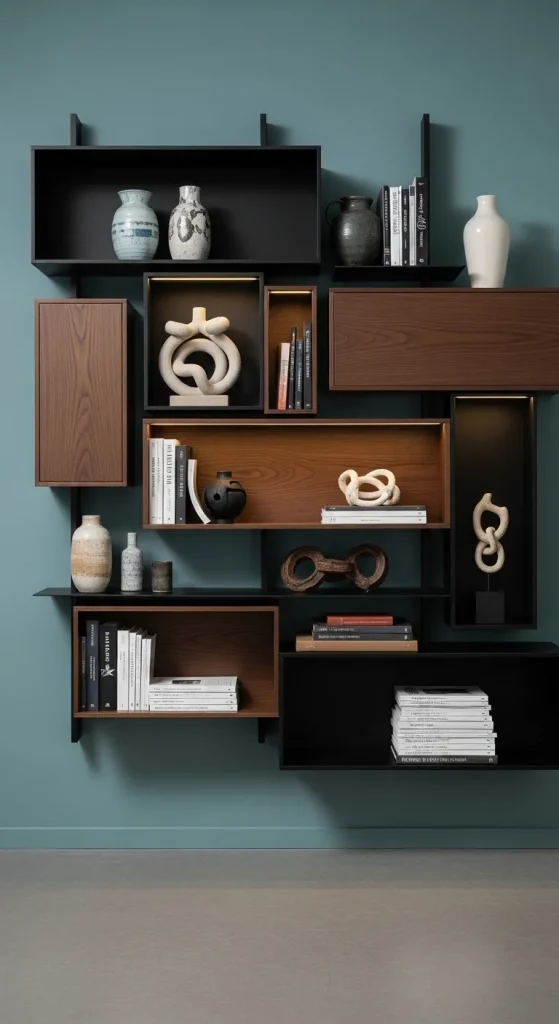
An asymmetrical shelf arrangement creates dynamic visual interest while maintaining modern design principles. Unlike symmetrical layouts, this style intentionally varies shelf lengths and positions to achieve a balanced but unconventional composition. Begin by sketching several layout options before installation to ensure visual harmony. Place larger shelves first as anchor points, then fill gaps with smaller shelves to create movement across the wall. The key is balance rather than equality; visual weight should feel distributed even when spacing differs. This design works well for displaying varied decor, combining books, plants, and decorative objects. Beginners should limit the number of shelves to prevent chaos and maintain clear negative space. Using consistent materials helps unify the design despite irregular placement. Asymmetrical layouts are popular Pinterest inspiration because they look creative and personalized while remaining practical. The final result feels artistic and modern, offering flexibility for future adjustments. This approach proves that structured creativity can produce a unique accent wall that stands out without overwhelming the room.
Common Beginner Mistakes and How to Avoid Them
One frequent mistake in DIY accent wall projects is poor measurement, which leads to uneven shelves and visual imbalance. Always measure multiple times and use a level during installation. Another issue is overdecorating shelves, which reduces functionality and creates clutter instead of aesthetic organization. Beginners often ignore wall support strength, resulting in sagging shelves; using proper anchors or studs prevents this problem. Choosing mismatched materials can also disrupt design consistency, so selecting a clear style direction before starting is essential. Rushing installation without planning layout frequently causes spacing problems that are difficult to correct later. Taking time to test positions with tape helps avoid permanent errors. Finally, ignoring lighting can reduce the impact of the accent wall. Proper placement near natural or artificial light enhances texture and depth. Avoiding these mistakes ensures smoother execution and more professional results.
Practical Tips for Better Results
Successful accent wall projects rely on planning, patience, and thoughtful styling. Start with fewer shelves and expand later if needed. Maintain consistent spacing for a clean appearance. Use lightweight decor to avoid overloading shelves. Group objects in odd numbers for visual balance. Keep color palettes simple to support minimalist style. Regularly step back during installation to check alignment from a distance. These small practices significantly improve the final aesthetic and help beginners achieve Pinterest-worthy results.
Styling and Organization Ideas for a Balanced Look
Styling shelves effectively requires balancing decoration and empty space. Combine functional items like books or storage boxes with decorative pieces such as plants or framed art. Vary object heights to create visual rhythm while maintaining overall harmony. Use neutral tones for a modern design or subtle color accents for personality. Rotating seasonal decor keeps the wall fresh without major changes. Organized styling enhances both practicality and aesthetic value.
Budget and Time Planning for DIY Accent Walls
Budget planning begins with measuring accurately to avoid material waste. Simple wooden shelves and basic hardware keep costs manageable while still delivering strong results. Painting before installation reduces future labor. Most beginner projects can be completed over a weekend with proper preparation. Allocating time for planning, measuring, and finishing ensures smoother execution and prevents costly mistakes. Careful planning makes this creative project accessible even for those with limited resources.
Creative Expansion Ideas and Advanced Inspiration
Once the basic accent wall is complete, creative expansion can include adding lighting, integrating storage baskets, or combining shelves with decorative panels. Advanced DIY ideas may involve mixing textures, adding hidden storage, or extending shelves across multiple walls for continuity. Experimenting gradually allows the design to evolve without losing balance. These expansion ideas keep the project adaptable and ensure the accent wall remains functional and visually engaging over time.