

10 Kitchen Nook 70s Ideas
The 1970s was a decade that understood something many modern interiors forget: comfort is a form of beauty. Homes of the era were not designed to impress from a distance; they were designed to be lived in. Kitchens, in particular, were not isolated work zones but social centers. And within them, the kitchen nook emerged as a beloved feature — a small, informal gathering place where coffee lingered, conversations wandered, and time slowed down.
Unlike formal dining rooms, the kitchen nook was intimate. It welcomed mismatched chairs, padded benches, warm wood tones, and upholstery that encouraged lingering. It was where kids did homework, adults read the paper, and guests leaned in for conversation. The design was human-scaled, emotionally warm, and unapologetically cozy.
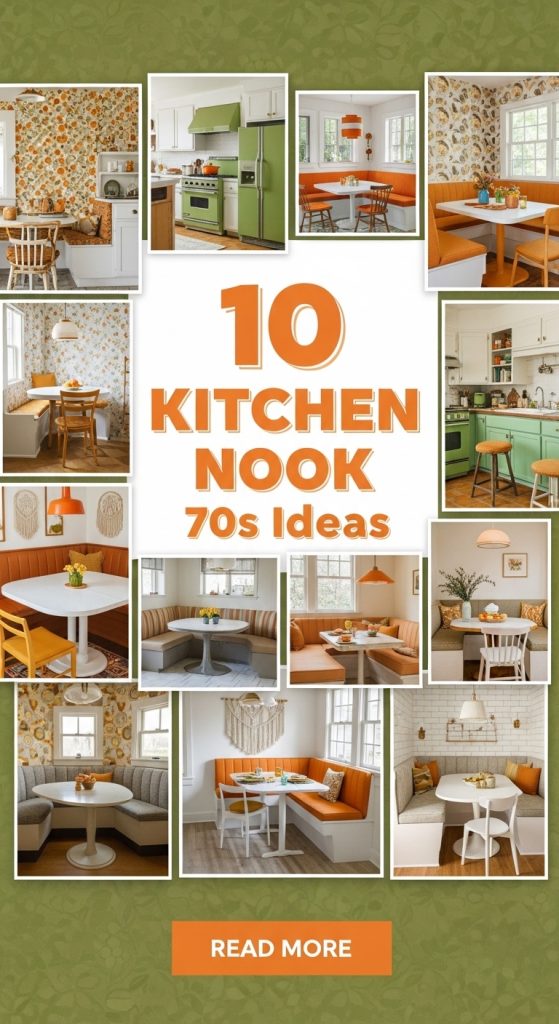
The 1970s aesthetic leaned into earthiness. Colors were drawn from nature — avocado green, burnt orange, mustard yellow, chocolate brown. Materials were tactile and honest: wood paneling, brick, ceramic tile, woven textiles. Light was warm and often low. Nothing was overly polished, and that was the point.
Today, the 70s kitchen nook feels newly relevant. As people seek slower living, authenticity, and emotional comfort in their homes, the principles behind these spaces resonate deeply. A 70s-inspired nook is not about recreating a retro set piece. It’s about capturing the spirit of warmth, ease, and togetherness — and translating it into modern life.
This essay explores ten kitchen nook ideas inspired by the 1970s. Each idea focuses on atmosphere, proportion, and lived-in charm rather than novelty. Together, they show how the humble nook can once again become the emotional heart of the kitchen.
1. Built-In Bench Seating With Upholstery
One of the most iconic features of a 1970s kitchen nook is built-in bench seating. These benches wrapped around corners, maximizing space while creating enclosure and comfort.
Upholstery was key. Vinyl, corduroy, or textured fabric in warm tones made seating feel soft and inviting. Cushions were thick, often slightly overstuffed, encouraging people to stay longer than planned.
The bench created a sense of permanence — the nook felt intentional, not temporary. It belonged to the house.
In a modern interpretation, the bench can be simplified in form but retain the softness and warmth that defined the original.

2. Earth-Tone Color Palettes
Color defined the 1970s more than almost any other decade, and kitchen nooks were no exception.
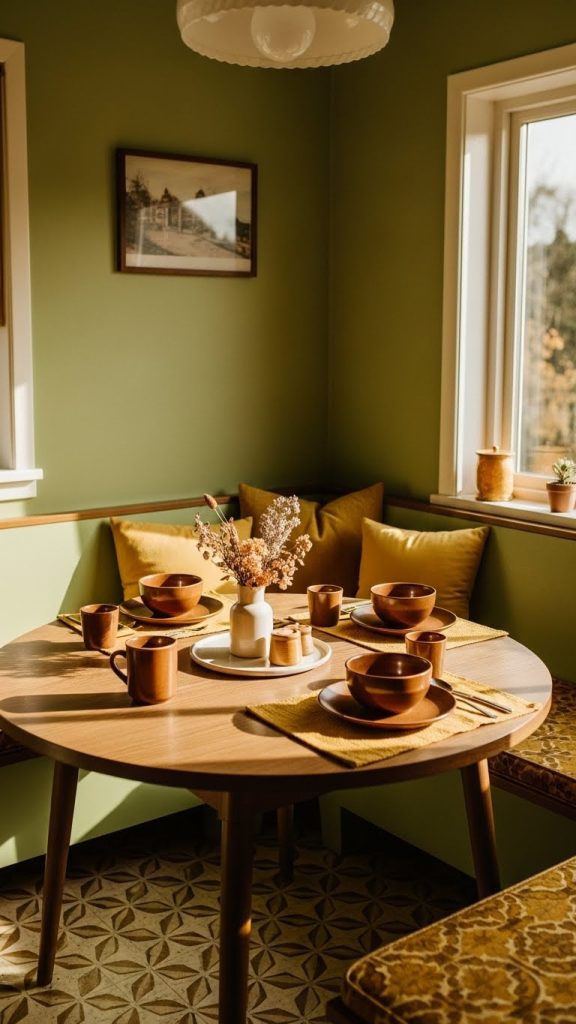
Walls, upholstery, and accessories leaned heavily into earth tones: rust, ochre, olive, sienna, caramel, and deep browns. These colors created psychological warmth and a sense of grounding.
Rather than contrast, 70s palettes emphasized harmony. Colors blended into one another, creating a cocooning effect.
In today’s kitchens, using these tones thoughtfully — perhaps softened or muted — can recreate that comforting atmosphere without feeling dated.
3. Wood Paneling or Wood Accents
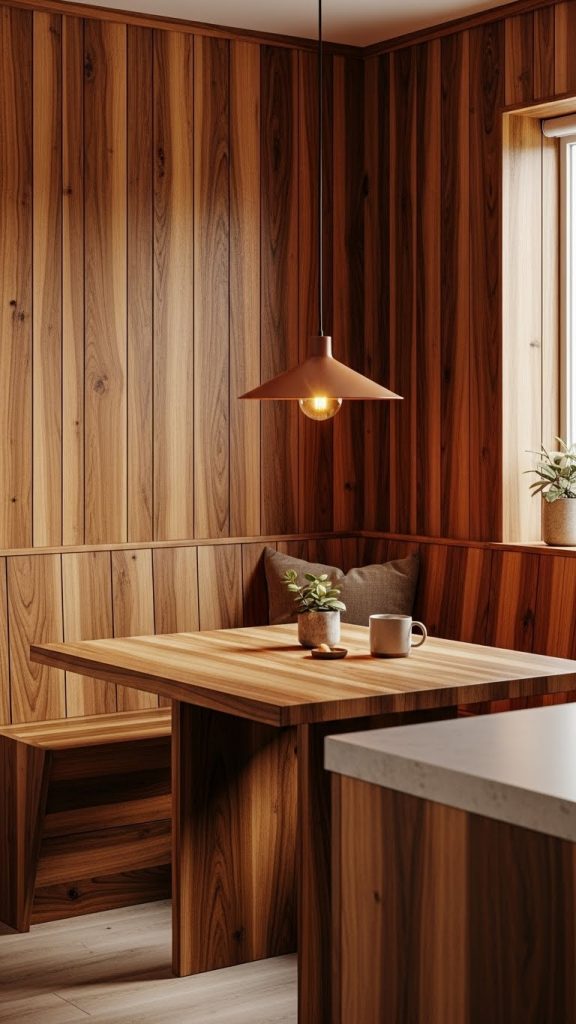
Wood was everywhere in 1970s interiors, and kitchen nooks often featured paneling or heavy wood trim.
This wasn’t about luxury — it was about warmth. The grain of the wood added texture, depth, and a sense of shelter. It absorbed light rather than reflecting it, making spaces feel intimate.
Even when full paneling isn’t practical today, wood can still play a central role through benches, tables, shelving, or wall accents.
The key is honesty of material. The wood should feel real, tactile, and substantial.
4. Round or Oval Dining Tables
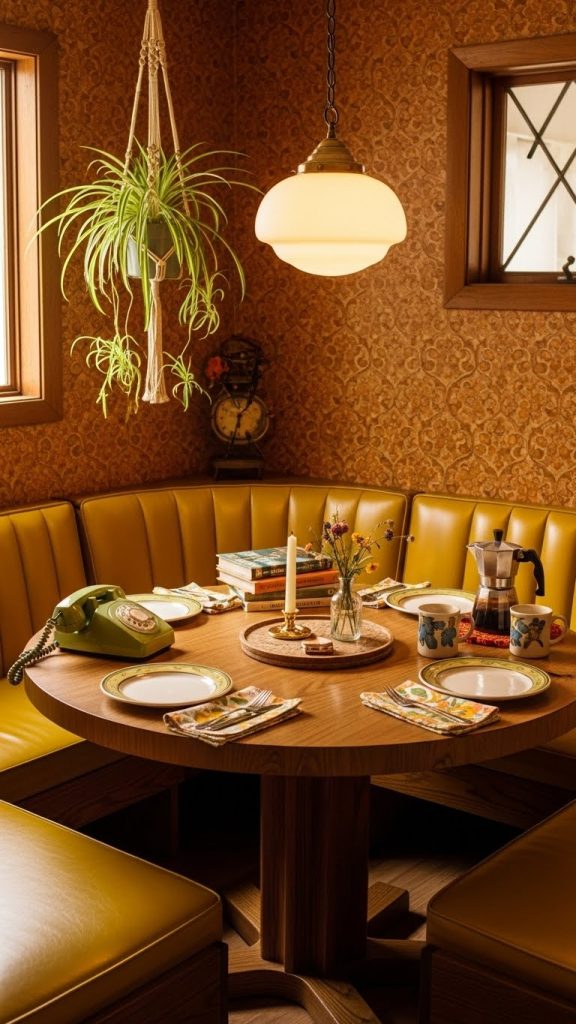
The shape of the table mattered in a 70s kitchen nook. Round or oval tables were preferred because they encouraged conversation and equality — no “head” of the table, no hierarchy.
These tables often had thick pedestal bases and solid tops, reinforcing their physical presence. They were meant to withstand daily use, spills, and family life.
The rounded shape softened the nook visually and physically, making the space feel more welcoming.
Modern versions can keep the same principle while refining scale and finish.
5. Low, Warm Lighting
Lighting in 1970s kitchen nooks was deliberately warm and often low.
Pendant lights hung close to the table, creating pools of light that defined the nook as its own zone. Lampshades were made of glass, fabric, or textured materials that diffused light gently.
Bright overhead lighting was avoided in favor of mood. The goal was comfort, not efficiency.
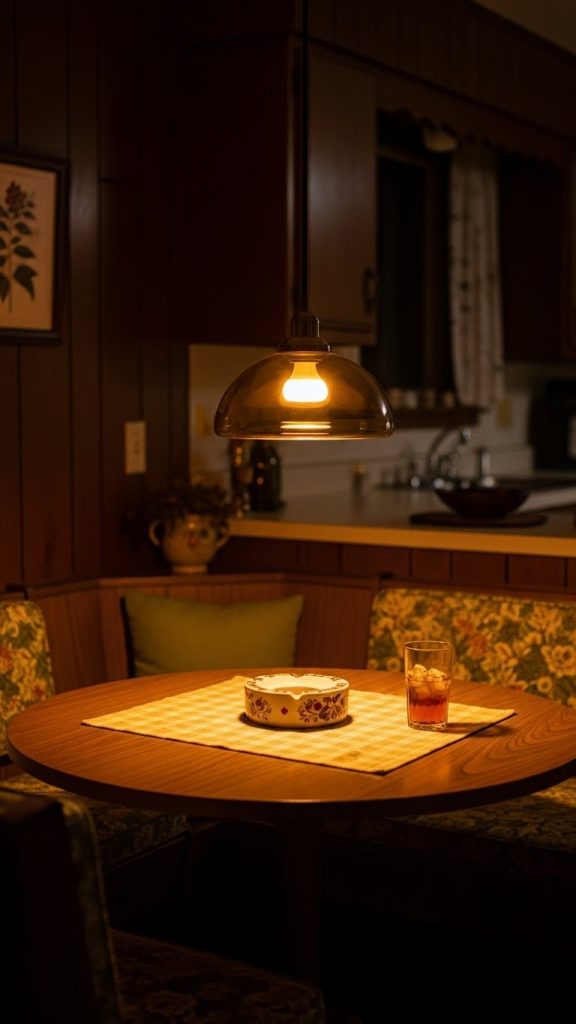
Reintroducing this kind of lighting today can instantly shift a kitchen nook from functional to emotional.
6. Textured Fabrics and Patterns
Texture played a major role in 70s design. Kitchen nooks embraced patterned fabrics, woven materials, and tactile surfaces.
Seat cushions might feature subtle geometric prints, stripes, or organic motifs. Curtains or wall hangings added softness and visual interest.
The patterns were bold but not sharp — rounded forms, repeating motifs, and earthy colors dominated.

In a contemporary setting, even a single patterned element can echo this richness without overwhelming the space.
7. Ceramic Tile and Brick Backdrops
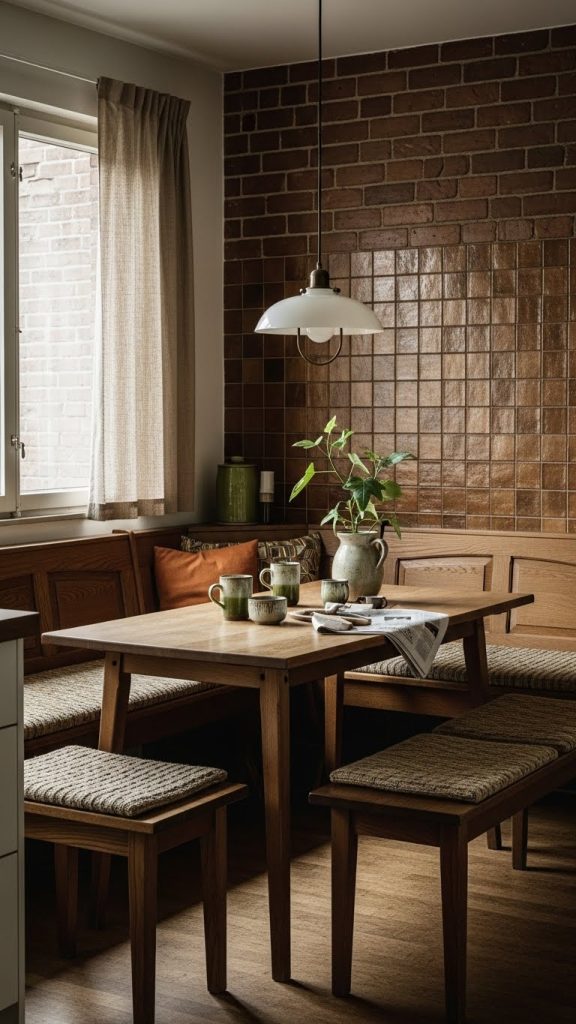
Many 1970s kitchen nooks were backed by brick walls, tiled surfaces, or textured masonry.
These materials added visual weight and grounded the space architecturally. Brick, in particular, contributed warmth and a sense of permanence.
Ceramic tiles often appeared in warm hues with slightly irregular finishes, adding handmade character.
Today, these materials can be referenced through accent walls, backsplashes, or flooring near the nook.
8. Integrated Storage and Display
Kitchen nooks of the 70s often included built-in shelves or cabinets nearby, blurring the line between dining and storage.
Cookbooks, ceramics, plants, and everyday objects were visible and accessible. This made the nook feel lived-in rather than styled.
Nothing was hidden for the sake of minimalism. Life was allowed to show.
In modern homes, open shelving near a nook can recreate this feeling of casual abundance.

9. Casual, Family-Oriented Layouts
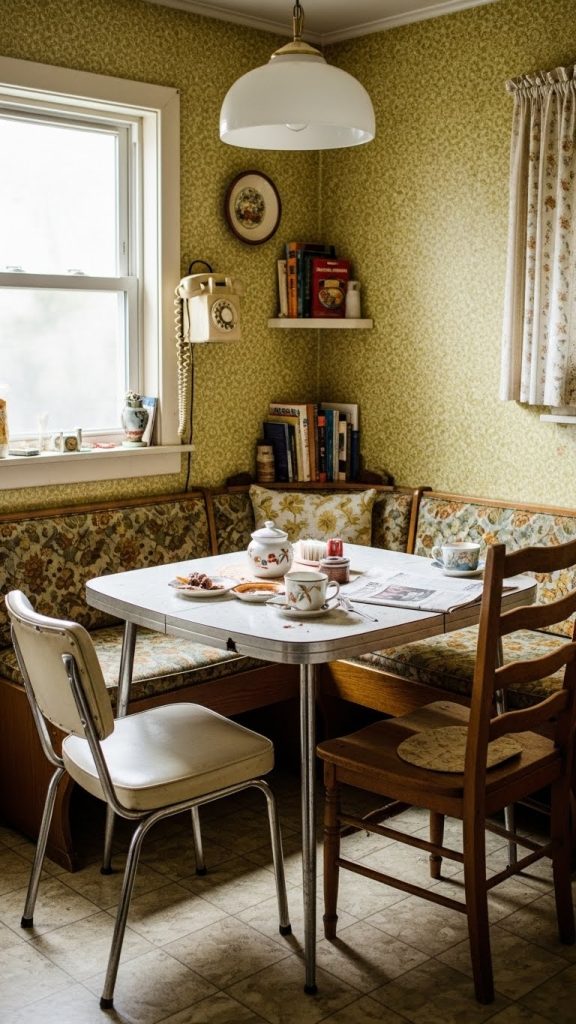
The 1970s kitchen nook was unapologetically informal. Chairs didn’t always match. Cushions were slightly worn. The space felt forgiving.
Layouts prioritized closeness rather than spaciousness. The nook often tucked into a corner, embraced by walls or windows.
This intimacy is what made the space special. It encouraged shared meals, long conversations, and everyday rituals.
Designing with this mindset today means choosing comfort over perfection.
10. A Sense of Everyday Ritual
Perhaps the most important aspect of the 1970s kitchen nook wasn’t visual at all — it was emotional.
These spaces were designed for repetition: morning coffee, afternoon snacks, late-night talks. They supported routine without monotony.
The décor didn’t change often, and that stability created comfort. The nook became part of daily life, not a backdrop for special occasions only.
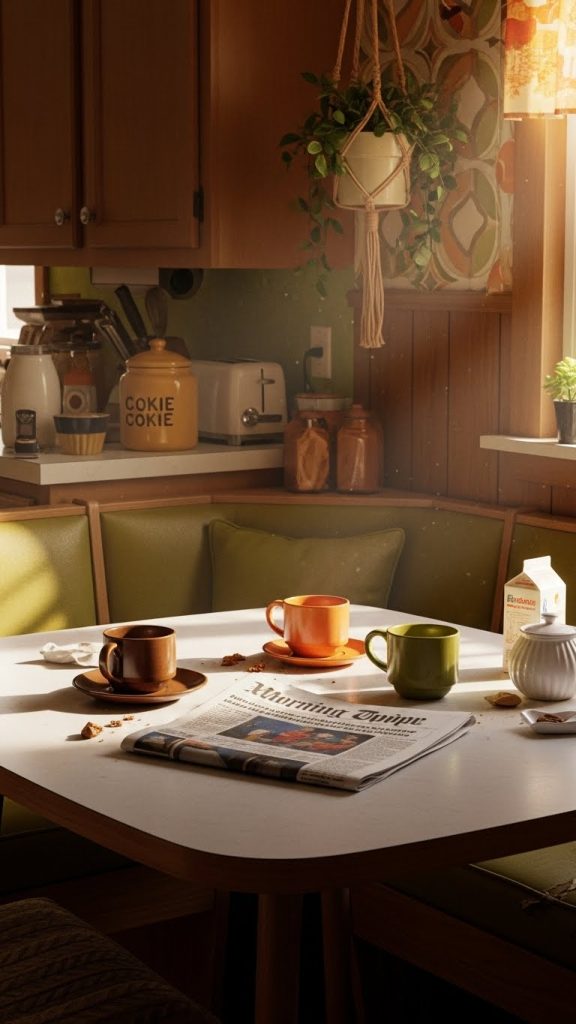
Recreating this today means designing for use, not display.
Conclusion: The Return of the Warm Corner
The 1970s kitchen nook reminds us that good design doesn’t need to shout. It needs to support life.
In an era of open plans and visual minimalism, the nook offers something quietly radical: enclosure, warmth, and permission to linger. It values comfort over perfection, texture over polish, and connection over display.
Reimagined thoughtfully, the 70s kitchen nook doesn’t feel retro. It feels human.
It is a place where mornings slow down, conversations stretch, and the kitchen becomes not just a workspace — but a shared corner of life.