
10 Monochromatic Single-Color Bud Vase Centerpiece Ideas
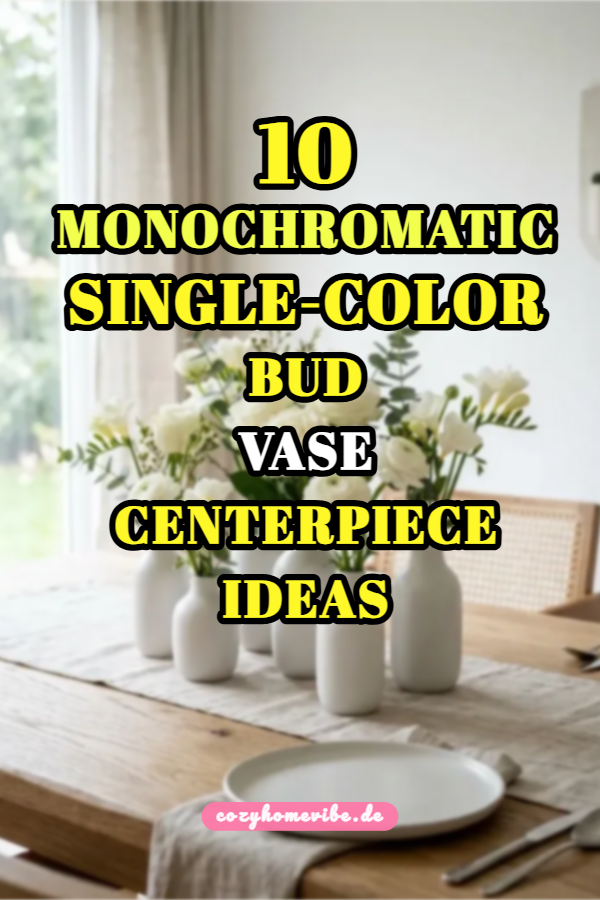
Single-color flower arrangements featuring small glass vessels bring a crisp, elevated aesthetic into contemporary home decor settings. Utilizing a single hue across multiple vessels creates a refined visual impact that elevates dining spaces, entryways, and event tables without overwhelming the room. Readers exploring this tutorial will discover how to select precise color palettes, arrange glass containers of varying heights, and prepare fresh stems for long-lasting display. Mastering this specific centerpiece concept offers practical benefits for homeowners, event planners, and craft enthusiasts seeking high-impact styling techniques on reasonable budgets. The approach simplifies flower selection by focusing on texture, stem length, and tonal variations within one distinct color family. Readers will learn practical methods for establishing balance, maintaining spatial proportions, and using repetition to transform simple blooms into professional-quality arrangements. Understanding these fundamental design rules enables decorators to adapt single-color concepts across changing seasons and diverse interior styles smoothly.
Monochromatic vessel displays rank highly among trending ideas on online inspiration boards due to their minimal complexity and high visual value. The design relevance stems from its ability to complement modern minimalist style, Scandinavian interiors, and classic rustic setups with equal elegance. DIY enthusiasts favor this approach because it eliminates the complex color-matching skills typically required for traditional multi-color floral arrangements. Accessibility remains a key advantage for beginners, as single-color bunches are readily available at local markets and grocery stores. The practical value of using small individual vessels lies in their versatility; individual containers can be repositioned easily to fit round, square, or long rectangular dining tables. This flexibility makes the concept an ideal easy project for last-minute dinner parties or seasonal home updates. Incorporating single-color styling allows homeowners to experiment with bold hues like deep burgundy or serene tones like pure white without cluttering the visual field.
Successful preparation for a single-color vase project requires assembling basic tools, selecting suitable vessels, and preparing fresh floral stems correctly. Necessary materials include a collection of five to nine small glass or ceramic vessels, sharp floral shears, clean water, floral preservative powder, and a soft lint-free drying cloth. Choose vessels that share a uniform finish, such as clear glass, matte white ceramic, or colored tinted glass, while varying slightly in height and silhouette. Planning steps begin with measuring the table surface to determine the ideal length and density of the central arrangement line. Wash all vessels thoroughly with warm soapy water to remove dust and bacteria that could shorten the lifespan of fresh cut stems. Trim all stem bases at a forty-five-degree angle under running water, removing lower leaves that would otherwise sit below the waterline inside the vessels. Grouping stems by shade and bloom size prior to assembly streamlines the final arrangement process significantly.
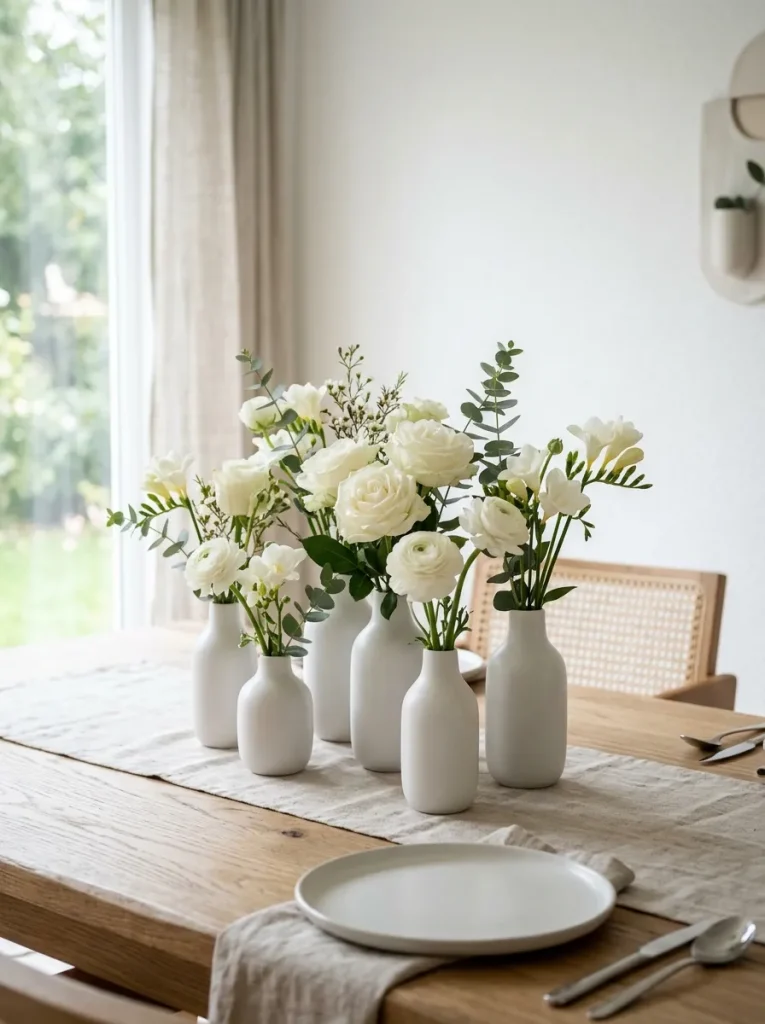
1. Pure White Porcelain Cluster Display
Concept and Aesthetics
A pure white porcelain arrangement offers a crisp, timeless look that fits seamlessly into modern minimalist style dining rooms. This concept relies on combining different white blooms, such as roses, ranunculus, and freesias, set within opaque white ceramic vessels. The opaque white surfaces hide stems beneath the waterline, directing complete visual attention upward toward the delicate petal textures and shapes. Combining varying flower structures within a single hue creates a rich, layered look without introducing visual clutter or color chaos. Light reflects softly off the smooth porcelain surfaces, brightening the dining area and creating a clean, serene environment suitable for formal or casual dining. The uniform color base anchors the centerpiece while allowing subtle organic variations in petal shapes to stand out gracefully.
Execution Process
Begin by gathering seven white porcelain vessels ranging from three to six inches in height with narrow top openings. Fill each vessel halfway with room-temperature water mixed with standard floral food according to package directions. Select fresh white stems featuring different petal forms, such as layered garden roses, ruffled carnations, and single-stem freesias. Trim each stem to allow the lowest petals to hover one to two inches above the rim of its respective vessel. Insert one to three stems per container, ensuring the blooms fit snugly without crowding or crushing the fragile petals. Position the tallest vessel in the physical center of the table layout, arranging the shorter containers around it in an organic oval shape. Adjust individual stem angles so the flower heads face outward toward seated guests, creating a cohesive white dome effect across the cluster.
2. Deep Crimson Velvet Glass Row
Concept and Aesthetics
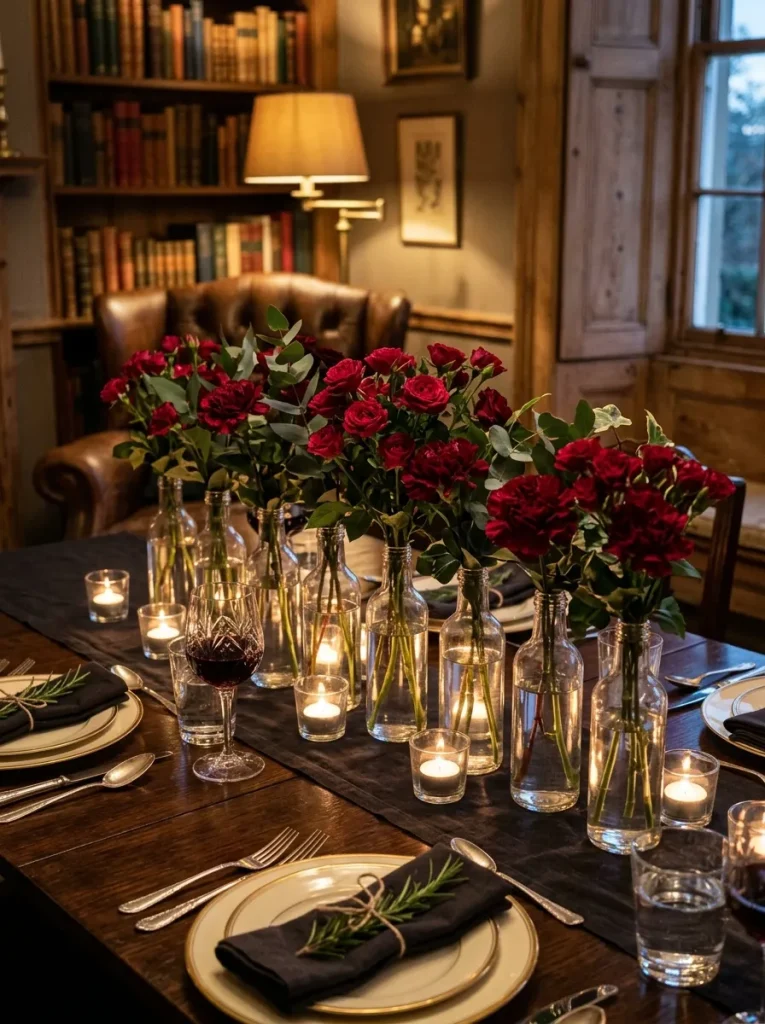
Deep crimson arrangements bring rich drama and warmth to dining tables, making them ideal for fall and winter gatherings. This concept utilizes dark red blooms, such as spray roses, carnations, and deep dahlias, arranged in a straight, structured line down the center of the table. Using clear or amber-tinted glass vessels lets light pass through, highlighting the rich burgundy tones of the flower petals and stems. The bold color creates a strong focal point against neutral wood or linen tablecloths, establishing an intimate mood for evening dinners. Aligning the vessels in a clean row creates a modern, linear geometry that elongates long rectangular dining surfaces effectively. The deep velvet textures of the petals absorb light, adding depth and luxurious warmth to the overall home decor layout.
Execution Process
Select five to eight narrow-necked clear glass bottles of uniform height to construct a streamlined linear arrangement. Fill each bottle two-thirds full with fresh water and place them in a straight line along the center axis of your table. Measure eight-inch intervals between each bottle to maintain consistent spacing and balanced visual weight along the table runner. Cut dark crimson spray roses and carnations so that each stem stands roughly twice as tall as the vessel holding it. Place two stems into each glass bottle, angling one stem slightly left and the second slightly right for subtle symmetry. Inspect the alignment from the end of the table, making small adjustments to keep the line crisp, straight, and centered. Add small tealight candles between the glass bottles to cast a warm glow through the deep red petals.
3. Sunny Yellow Glass Cylinder Ensemble
Concept and Aesthetics
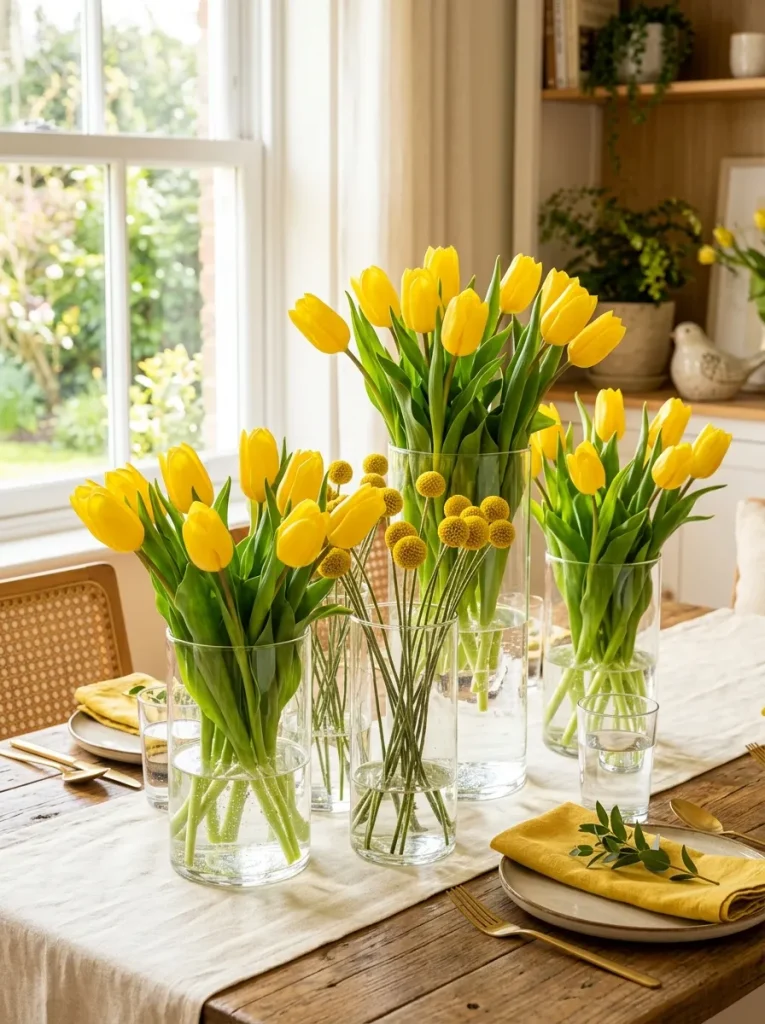
Bright yellow flower arrangements instantly energize dining spaces, bringing a cheerful, radiant atmosphere to spring and summer tables. This idea combines vibrant yellow blooms like Billy buttons, tulips, and mini daffodils inside simple clear glass cylinder containers. The transparent glass exposes the clean green stems, adding a natural dual-tone effect that anchors the bright yellow floral heads above. Using simple geometric cylinders keeps the design clean and modern, preventing bright yellow hues from feeling overly country-style or dated. The uniform yellow tone draws the eye instantly, making it a powerful centerpiece for outdoor lunches, morning brunches, or bright kitchen nooks. The smooth glass surfaces bounce natural sunlight through the water, creating a sparkling effect across the entire table setup.
Execution Process
Gather six clear glass cylinder vessels measuring between four and eight inches tall with two-inch diameters. Wash the glass cylinders with glass cleaner to remove fingerprints and water spots before filling them with clean water. Trim bright yellow tulip stems and Billy button stems to varying lengths, matching stem heights to vessel proportions. Place three to four Billy button stems in the taller cylinders to establish structured height at key points in the arrangement. Insert three yellow tulips into the shorter cylinders, allowing the natural curve of the tulip stems to spill over the rims gently. Arrange the filled cylinders in two staggered rows down the table center, overlapping the glass bases slightly for a woven effect. Ensure every vessel receives direct natural light to accentuate the cheerful yellow tones and crystal-clear water presentation.
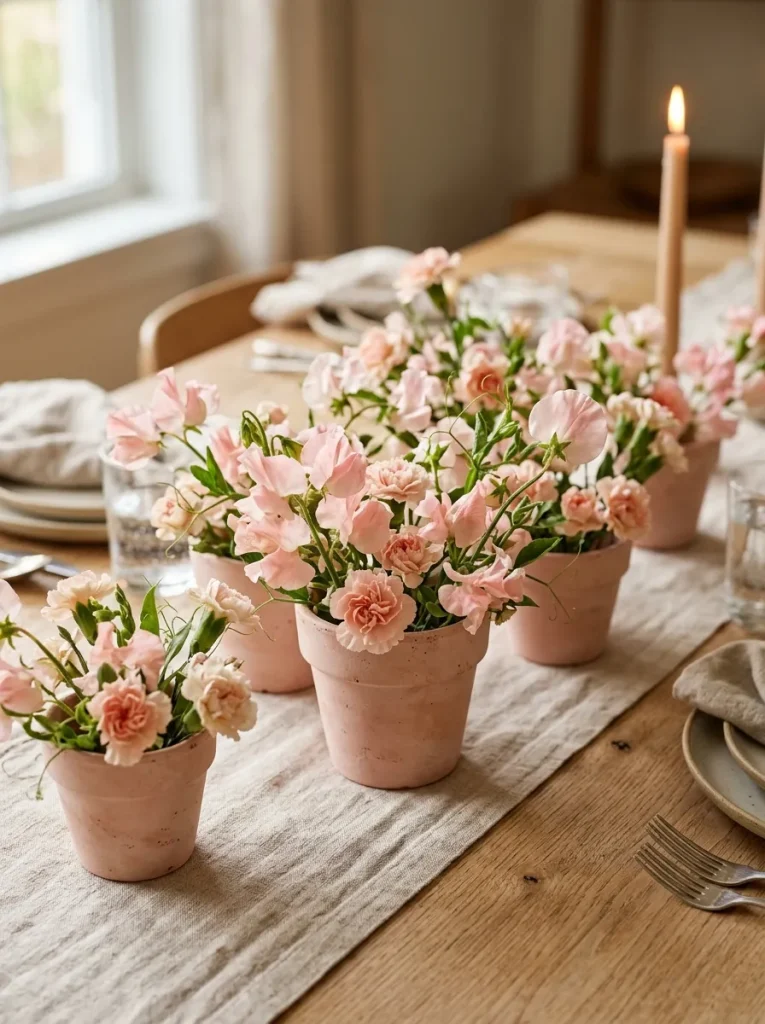
4. Soft Blush Pink Terracotta Array
Concept and Aesthetics
Soft blush pink arrangements introduce a gentle, romantic aesthetic that pairs beautifully with earthy textures and light wood tones. This concept pairs soft pink blooms, including spray carnations, sweet peas, and ranunculus, with small unglazed blush terracotta vessels. The matte clay surface absorbs light, providing a soft background that enhances the delicate, airy quality of pale pink petals. Using subtle tonal shifts between pale blush and muted rose adds depth while maintaining a clean monochromatic feel. This low-profile setup keeps sightlines clear across the table, making it ideal for encouraging open conversation during dinner. The combination of raw earthenware and delicate petals offers a balanced blend of rustic charm and modern elegance.
Execution Process
Collect five small blush-colored terracotta or matte ceramic pots equipped with internal waterproof sealant layers. Fill each pot halfway with lukewarm water mixed with cut flower preservative powder to nourish the delicate stems. Select soft pink sweet peas and spray carnations, stripping off all leaves from the lower two-thirds of each stem. Trim the stems short so the flower heads rest near the top rim of the matte terracotta pots once inserted. Group three to four stems together per pot, creating dense, pillow-like clusters of soft pink petals across every vessel. Space the terracotta pots evenly down the center of the table, placing the largest pot directly in the middle position. Scatter a few loose blush petals around the base of the pots to soften the transition to the tabletop surface.
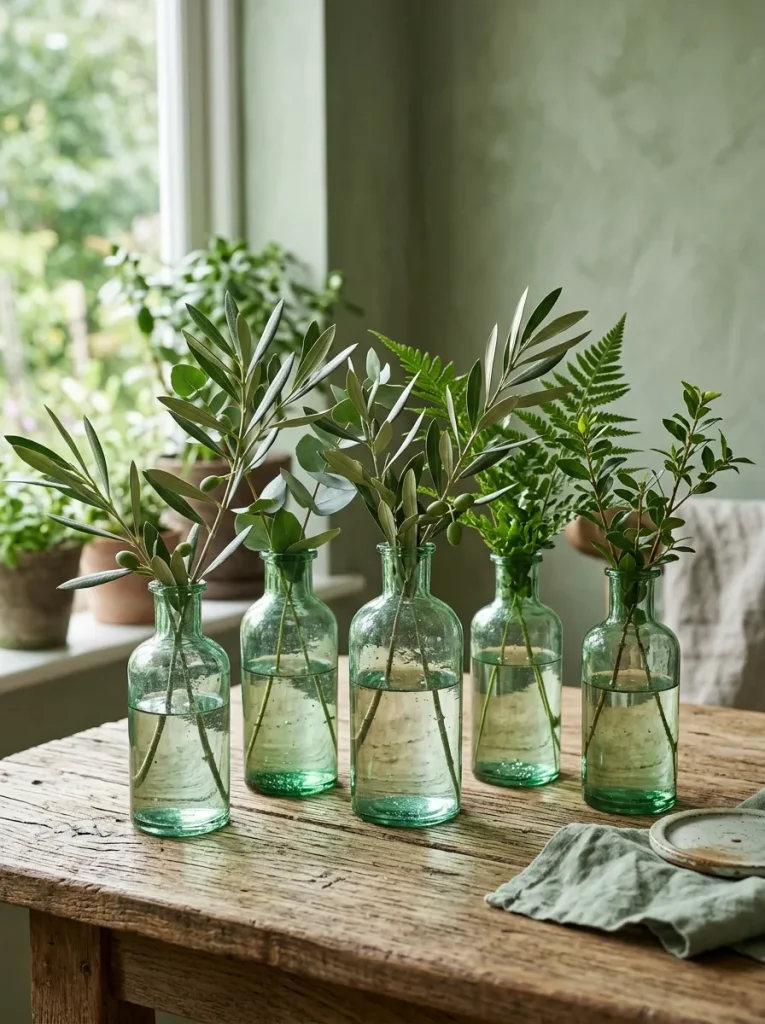
5. Muted Olive Botanical Vials
Concept and Aesthetics
Focusing on monochromatic foliage creates a sophisticated, green display that celebrates organic textures and leaf shapes. This botanical concept uses green foliage stems, such as olive branches, ruscus, and green trick carnations, housed in green tint glass vials. The varying shades of sage, olive, and forest green provide a calming visual rest that blends with modern minimalist decor. Green glass vessels enhance the monochromatic theme, making the entire display feel like an extension of indoor houseplant styling. This long-lasting alternative to traditional flower displays remains fresh for weeks with simple water changes. The varied leaf structures add rich texture, creating an effortless, garden-inspired centerpiece that suits daily meals and formal events alike.
Execution Process
Gather eight narrow green glass chemist vials or potion bottles ranging from four to seven inches in total height. Fill each green vial two-thirds full with fresh cold water to keep foliage stems hydrated and firm. Cut fresh olive branch cuttings and Italian ruscus stems into eight-inch sections using sharp, clean bypass pruning shears. Strip the bottom leaves off each branch segment to ensure no foliage rests below the waterline inside the vials. Place one sturdy foliage stem into each green vial, allowing the leaves to fan out naturally in different directions. Arrange the vials in an irregular zigzag pattern down the center of your table to mimic natural garden growth. mist the leaves lightly with fresh water every morning to preserve their green color and crisp texture.
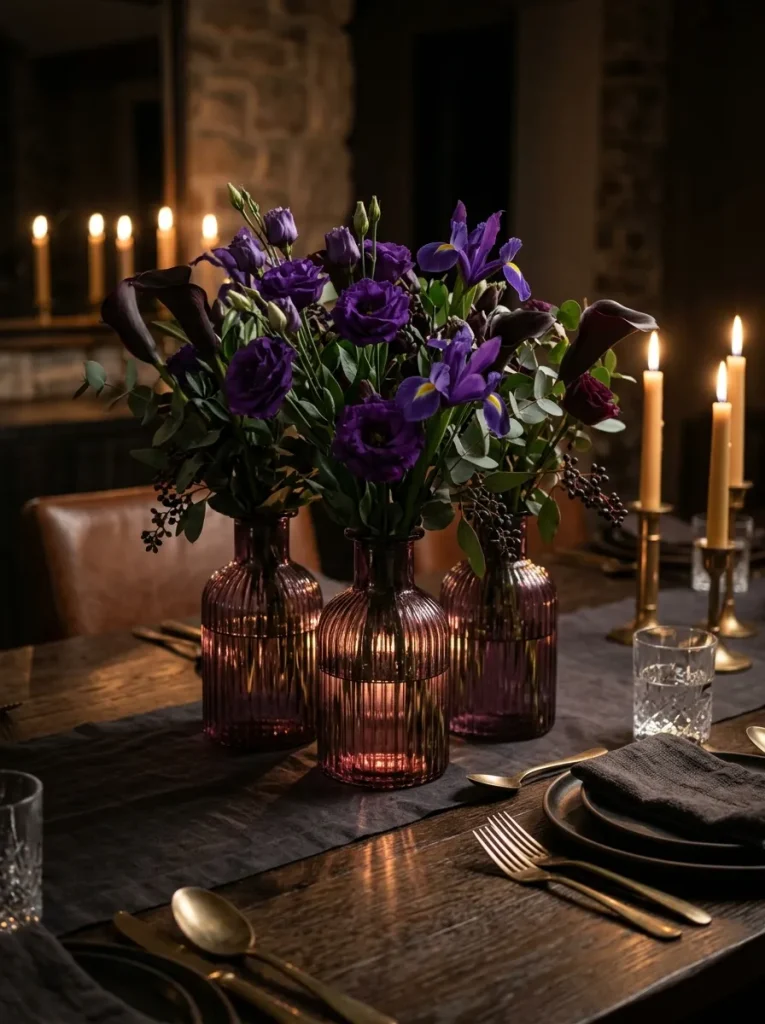
6. Royal Violet Ribbed Flask Grouping
Concept and Aesthetics
Royal violet arrangements create a luxurious focal point using rich purple blooms set in textured purple glass flasks. This design combines deep purple lisianthus, iris, and mini calla lilies to produce a regal, dramatic aesthetic across the table. Ribbed glass surfaces catch overhead lighting, creating vertical shadows that emphasize the height and elegant curves of the vessels. The deep violet tones pair exceptionally well with metallic brass cutlery, dark wood finishes, and neutral table linens. Using a single deep purple shade ensures the strong hue remains tasteful and modern rather than chaotic. The varied forms of purple flowers give the centerpiece an artful, curated feel suitable for evening dinner parties and formal events.
Execution Process
Obtain six ribbed purple glass flasks featuring narrow spouts and wide rounded bases for maximum stability on the table. Fill the flasks two-thirds full with fresh water mixed with flower food to support the dense purple blooms. Cut deep violet lisianthus stems and mini calla lilies at sharp angles to encourage maximum water absorption after cutting. Insert one mini calla lily into three of the flasks, letting its smooth stem curve gracefully outward from the neck. Place two lisianthus stems into the remaining three flasks, allowing the open purple blossoms to fill out the upper space. Cluster the six flasks in the middle of the table, mixing tall and short vessels together for dynamic balance. Turn the ribbed glass details toward incoming light sources to highlight the rich purple reflections across the table.
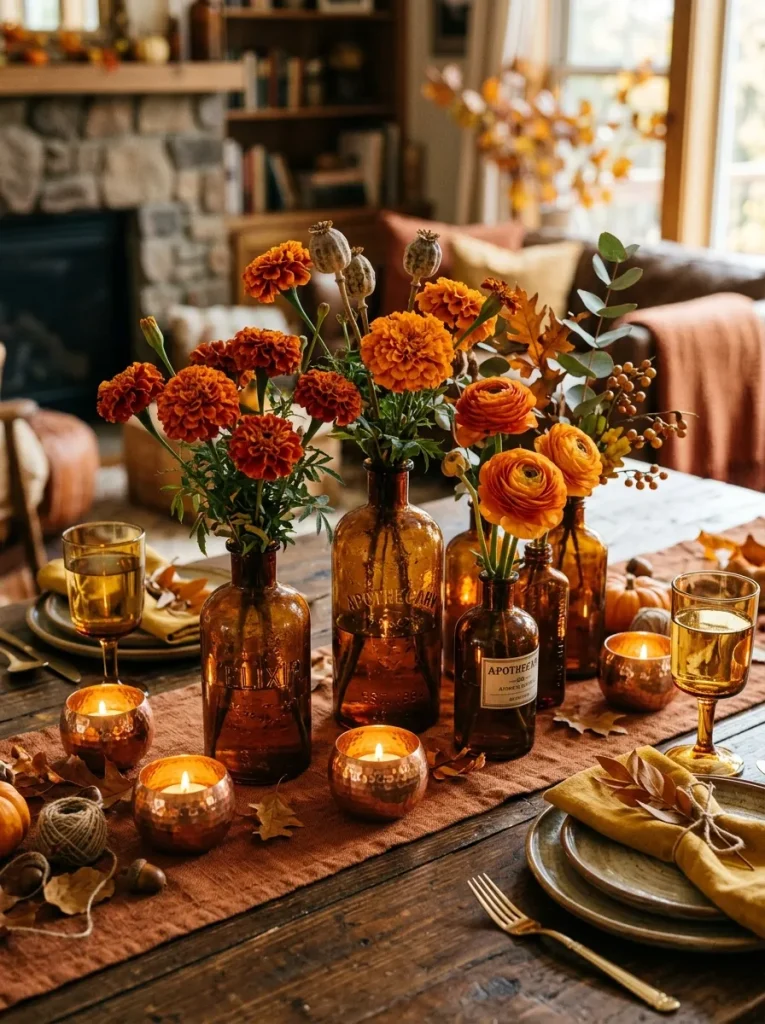
7. Burnt Orange Amber Bottle Lineup
Concept and Aesthetics
Burnt orange flower displays bring a warm, inviting energy to fall tables and rustic dining settings. This concept uses terracotta-toned flowers, including marigolds, orange ranunculus, and dried lantern blooms, set within vintage amber glass medicine bottles. The warm amber glass magnifies the orange hues, creating a glowing effect when ambient light or candlelight shines through. The cozy, autumn-inspired palette complements rich wood tables, woven placemats, and warm metallic accents like copper or bronze. Aligning these warm-hued bottles creates a clean, continuous line that draws guests together and adds seasonal comfort. The mix of fresh petals and structured glass bottles produces an authentic, handcrafted feel that enhances casual home gatherings.
Execution Process
Source seven vintage-style amber glass medicine bottles of varying widths and heights between three and six inches. Wash the amber bottles inside and out, allowing them to dry completely before filling them with clean water. Trim burnt orange ranunculus and marigold stems so the blooms sit just above the narrow openings of the amber bottles. Place a single large marigold bloom into each wider bottle, allowing the rounded flower head to cap the bottle neck. Insert two slender ranunculus stems into the narrower amber bottles, letting the whimsical stems bend naturally in different directions. Line up the amber bottles down the center of the table, alternating tall and short sizes to build rhythm. Place warm copper votive holders alongside the amber bottles to cast golden light through the orange glass display.
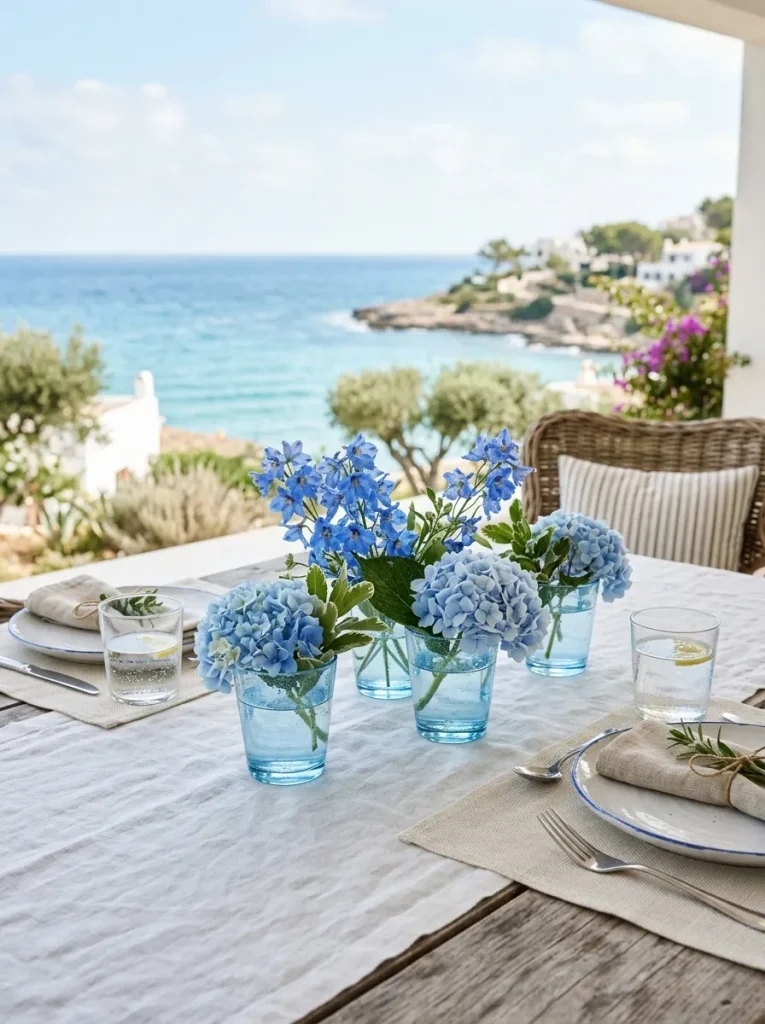
8. Sky Blue Tinted Votive Symphony
Concept and Aesthetics
Sky blue flower centerpieces bring a tranquil, coastal-inspired ambiance that feels light, airy, and refreshing. This idea uses soft blue flowers, such as delphinium florets, grape hyacinths, and blue hydrangeas, placed inside light blue tinted glass votives. The pale blue glass softens incoming light, creating a soothing color cloud that brightens light-colored dining spaces effortless. Using small votive cups creates a low-profile arrangement that keeps views completely open across the table for easy conversation. The delicate blue tones pair beautifully with white linen runners, silver flatware, and light oak dining surfaces. This gentle monochromatic setup brings a breezy, relaxed feel to summer dinner parties, coastal homes, or weekend family brunches.
Execution Process
Collect eight light blue tinted glass votive cups, checking each container for cracks or chips before filling with water. Fill each votive cup three-quarters full with cold water to support short, delicate flower stem cuts properly. Cut individual blue hydrangea floret clusters and short grape hyacinth stems to a brief length of two to three inches. Float or submerge the lower stem of each blue flower cluster into the votive cups, keeping petals above water. Cluster the blue votive cups in a tight, cloud-like shape directly in the physical center of the dining table. Intermingle small clear glass marbles inside the votives to anchor short stems securely in an upright position if needed. Ensure the delicate blue blooms remain away from direct heating vents to maintain their fresh color throughout dinner.
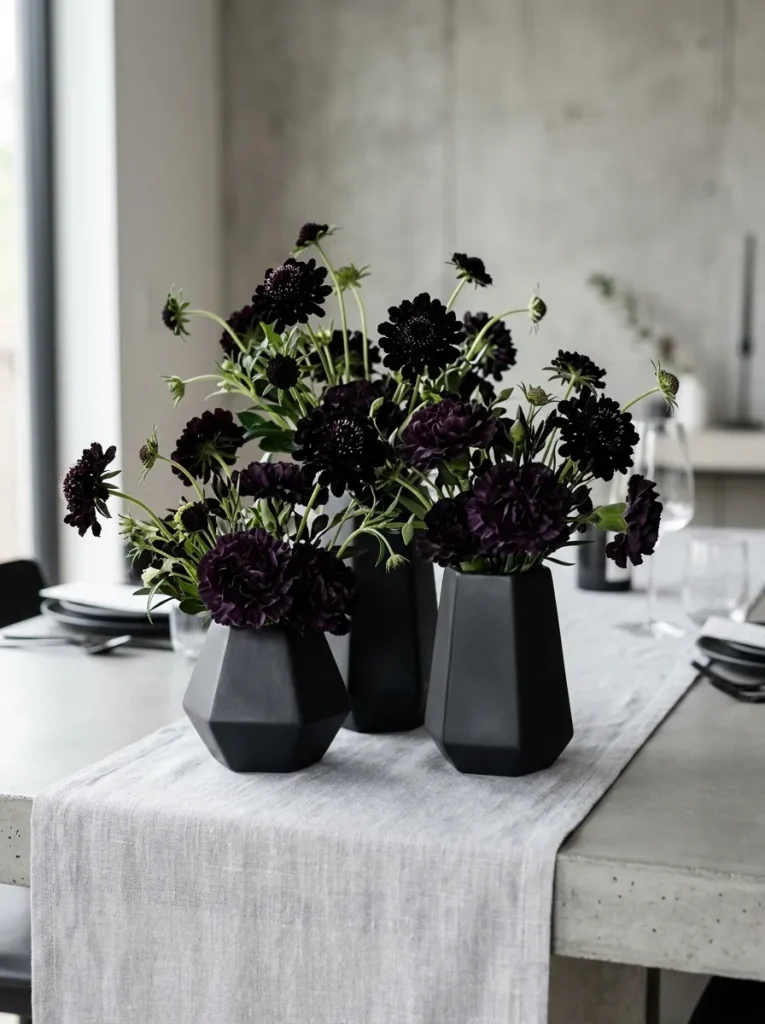
9. Matte Black Ceramic Midnight Trio
Concept and Aesthetics
A matte black floral arrangement offers a bold, modern look that makes a dramatic statement in contemporary dining spaces. This dramatic concept pairs dark, moody flowers like black scabiosa, dark calla lilies, and deep purple-black carnations with matte black ceramic vessels. The non-reflective black surfaces create high contrast against white or light gray table runners, establishing an artistic, gallery-like feel. The dark blooms blend with the matte black bases, creating a seamless silhouette that appears almost sculptural on the table. This understated style suits modern industrial rooms, minimalist dining spaces, and formal evening dinner parties. The rich, shadowy tones add mystery and modern elegance while keeping the overall centerpiece clean and organized.
Execution Process
Select three minimalist matte black ceramic vessels possessing clean geometric silhouettes such as cylinders or soft spheres. Fill each black ceramic vessel halfway with fresh water treated with floral preservative to extend bloom life. Cut deep dark scabiosa stems and dark carnations to varying lengths, maintaining a clean contrast between tall and short stems. Insert three dark scabiosa stems into the tallest black vessel, allowing their natural, wiry stems to create height. Group four dark carnations tightly into the shorter sphere vessel, forming a dense, velvety dome of dark petals. Position the three matte black vessels off-center on a light gray table runner to create a stylish, asymmetrical focal point. Keep surrounding table accessories simple to allow the bold black ceramic layout to remain the clear visual focus.
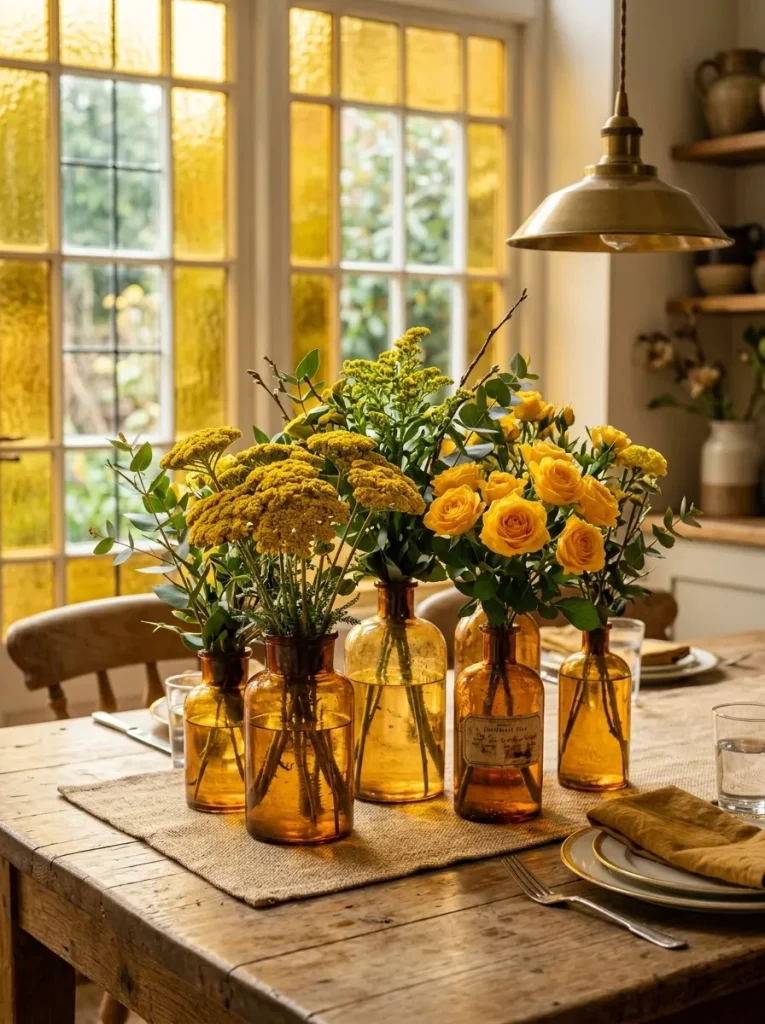
10. Golden Honey Ochre Stem Collection
Concept and Aesthetics
Golden honey arrangements bring a warm, luminous quality that brightens neutral dining spaces with rich golden tones. This concept uses ochre flowers, including mustard yarrow, golden spray roses, and dried Craspedia, paired with honey-tinted glass vessels. The golden glass filters natural light, casting warm reflections across the tabletop that enhance wood grains and linen fabrics. Using a spectrum of warm yellow-gold and mustard tones creates a rich look that feels cozy and sophisticated. This long-lasting setup works exceptionally well for transitional seasons, bridging summer warmth and autumn richness seamlessly. The warm ochre hues elevate simple dining setups, creating an inviting, comfortable space for family meals and relaxed hosting.
Execution Process
Gather six honey-tinted glass bottles featuring warm yellow-gold coloration and varied vintage shapes across the set. Fill each honey bottle two-thirds full with fresh water mixed with flower food to keep the yellow blooms vibrant. Trim mustard yarrow heads and golden spray roses to lengths matching the proportions of each specific bottle size. Place one wide mustard yarrow head into three of the bottles, letting the flat flower top rest near the rim. Insert two golden spray rose stems into the remaining honey bottles, allowing the small buds to stand slightly higher. Arrange the honey-tinted bottles in an organic cluster along the center of the table, leaving space between vessels for light flow. Position nearby light sources so light passes through the honey glass, illuminating the golden petals from behind.
Common Beginner Mistakes and How to Avoid Them
Creating single-color vase displays often involves small setup errors that can disrupt the visual balance or shorten flower life. A frequent mistake is using stems cut to the exact same height, which creates a flat, monotonous look across the vessels. Avoid this by trimming stems to varying heights, creating natural layers that guide the eye smoothly across the display. Another common error is overcrowding small vessels with too many thick stems, which damages flower tissue and restricts water uptake. Limit each narrow vessel to one or three stems, ensuring every stem has sufficient access to clean water. Forgetting to remove lower leaves that fall below the waterline leads to bacterial growth, causing water to cloud and flowers to wilt early. Always strip lower foliage completely before placing stems into water to keep display water crystal clear. Finally, avoid placing delicate arrangements in direct sunlight or near heating vents, as drafty or hot air quickly dehydrates fresh petals.
+--------------------------+-----------------------------------+-----------------------------------+
| Design Element           | Common Styling Mistake            | Recommended Prevention Method     |
+--------------------------+-----------------------------------+-----------------------------------+
| Stem Height              | Cutting all stems to equal length | Trim stems at varied heights      |
| Vessel Density           | Overcrowding narrow vessel necks  | Limit to 1-3 stems per vessel     |
| Water Clarity            | Submerged leaves causing decay    | Strip all lower foliage completely|
| Environmental Placement  | Placing near heat or sun rays     | Display in cool, indirect light   |
+--------------------------+-----------------------------------+-----------------------------------+
Practical Tips for Better Results
Achieving professional-quality results with simple single-color displays relies on thoughtful preparation and attention to detail. Always use dedicated floral shears rather than household kitchen scissors, as sharp, clean blades prevent crushing delicate stem vessels during cutting. Cut stem bases at a forty-five-degree angle to maximize the surface area available for water absorption and prevent stems from resting flat against vessel bottoms. Mix commercial floral food into clean water to provide essential nutrients and inhibit bacterial growth, extending the fresh appearance of your centerpiece. Choose flowers at varying stages of bloom, pairing closed tight buds with fully open blossoms to create natural visual texture and extend total display time. Refresh vessel water every two days, trimming a quarter-inch off stem bases each time to keep water intake active and efficient. Clean glass surfaces with a micro-fiber cloth right after filling to eliminate water spots and fingerprints before placing vessels on the table.
Styling, Presentation, or Organization Ideas
Integrating your single-color arrangement into the broader room design requires thoughtful coordination with surrounding table settings and accessories. Place a neutral linen table runner beneath your vessel lineup to anchor the display visually and protect table surfaces from condensation. Choose placemats, napkins, and dinnerware that feature complementary neutral tones, allowing your single-color centerpiece to remain the clear visual focus. Incorporate small taper or tealight candles alongside your glass vessels, ensuring candle heights do not compete directly with floral stems. Arrange vessels in odd-numbered groupings, such as sets of five, seven, or nine, which naturally look more balanced and organic than even numbers. For long rectangular tables, arrange vessels in a clean linear format, while round tables benefit from tight, circular vessel clusters. Ensure overall centerpiece heights remain under twelve inches so guests can easily maintain clear sightlines across the table during meals.
Budget or Time Planning
+--------------------------+-----------------------------------+-----------------------------------+
| Project Phase            | Estimated Time Investment         | Budget Allocation Strategy        |
+--------------------------+-----------------------------------+-----------------------------------+
| Vessel Sourcing          | 1 Hour (Thrifting or inventory)   | $10 - $15 (Reusable glass/ceramic)|
| Stem Preparation         | 20 Minutes (Stripping & cutting)  | $15 - $25 (Fresh market blooms)   |
| Table Assembly           | 15 Minutes (Arranging & lighting) | $5 - $10 (Candles & floral food)  |
+--------------------------+-----------------------------------+-----------------------------------+
Designing a single-color centerpiece can be accomplished quickly and affordably with smart material sourcing and clear step-by-step planning. Thrift stores, discount home shops, and secondhand markets are excellent places to find small glass or ceramic vessels for minimal cost. Sourcing flowers from local growers or grocery market bundles keeps costs low while providing fresh, high-quality seasonal blooms. The full process—from preparing stems to final table placement—typically takes under forty-five minutes, making it ideal for busy hosts. Reusing your vessel collection across different events lowers long-term decor expenses significantly over time. Pre-wash vessels and cut floral food packets the day before your event to streamline final assembly on hosting day. This smart, low-cost approach delivers high-end decorative impact while staying well within modest home styling budgets.
Creative Expansion and Advanced Inspiration
Once you master basic single-color setups, you can explore advanced variations that adapt seamlessly to changing seasons, formal events, and personal themes. Experiment with ombre color transitions, arranging vessels from pale pastel tones on one end to deep saturated hues on the other. Try mixing fresh cut stems with dried botanical elements within the same color family, combining soft rose petals with preserved dried bunny tails for textural contrast. Switch out smooth glass vessels for hand-thrown pottery or rustic metallic containers to alter the design aesthetic without changing your favorite flowers. For seasonal holidays, incorporate small monochromatic accents around vessel bases, such as painted mini gourds in autumn or smooth river stones in summer. You can also explore monochromatic fruit or branch displays, replacing traditional flowers with olive branches, kumquat stems, or berry sprays for a unique twist. These creative variations allow you to refine your floral styling skills while keeping your home decor fresh, dynamic, and inspiring year-round.