
10 Ceramic & Pottery Bud Vase Wedding Centerpiece Ideas
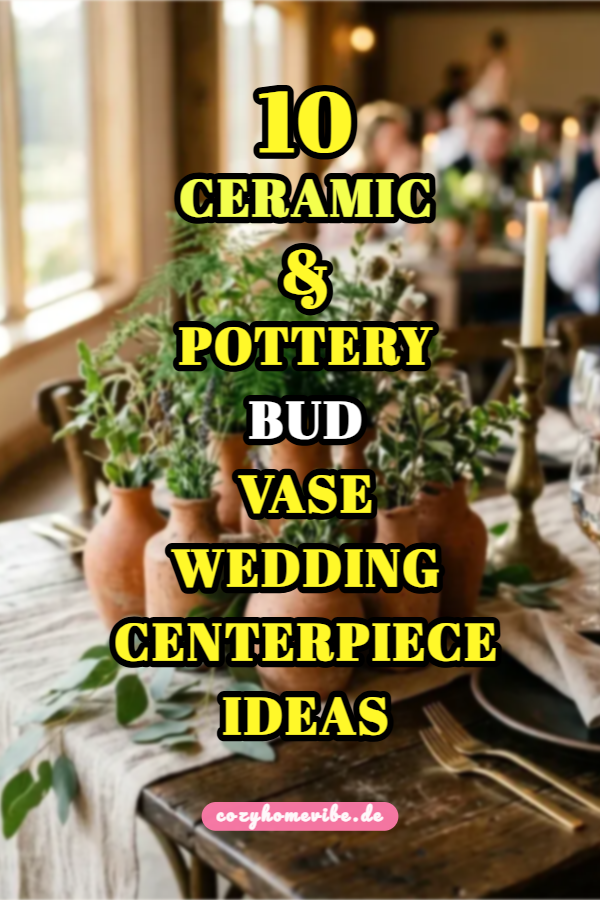
Ceramic and pottery bud vases offer an elegant, adaptable approach to styling wedding reception tables while maintaining visual interest across varied event layouts. Utilizing small clay vessels allows event planners and couples to create dynamic table arrangements that highlight individual blooms, delicate foliage, and handcrafted textures. This guide explores creative ideas for integrating ceramic bud vases into wedding decor, focusing on practical assembly methods, color palette coordination, and vessel arrangement techniques. Readers will learn how to select suitable pottery shapes, choose resilient floral varieties, and balance vessel heights to build memorable reception displays. The minimalist profile of bud vases makes them particularly effective for maximizing table space while providing flexible decoration options for long banquet setups or intimate round tables. Understanding how stoneware finishes, glaze textures, and flower types interact enables decorators to design cohesive visual themes without requiring complex floristry experience. Incorporating these practical design strategies ensures every reception table reflects a refined, aesthetic charm that enhances the overall atmosphere of the wedding celebration.
The widespread popularity of pottery bud vase centerpieces across modern wedding inspiration platforms stems from their balance of DIY accessibility and high-end design value. Visual platforms like Pinterest frequently feature ceramic flower arrangements because they allow couples to execute a sophisticated look using manageable, budget-friendly components. Unlike massive floral arrangements that require specialized structural foam or expensive container bases, small pottery vessels require fewer stem counts while delivering significant visual impact. This approach appeals directly to couples seeking beginner-friendly creative ideas that can be prepared well ahead of the event date. Additionally, handcrafted ceramic textures align seamlessly with trending design themes, including modern minimalist style, organic rustic concepts, and contemporary bohemian decor. The modular nature of bud vases allows easy customization for tables of any shape or length, preventing physical barriers that block guest sightlines across reception spaces. Exploring these flexible centerpiece concepts offers an actionable pathway to achieving custom, artistic wedding styling without exceeding decoration budgets.
Successful preparation for a ceramic bud vase centerpiece project requires careful material selection, thorough venue planning, and structured floral organization before assembly begins. Essential materials include an assortment of stoneware or terracotta bud vases, floral shears, bucket containers, water tubes, and fresh floral stems or dried botanicals. When gathering pottery, select vessels with varied heights ranging from three to eight inches to ensure vertical diversity across the table layout. Ensure all clay containers are properly sealed internally with waterproof glaze to prevent moisture seepage onto rented table linens or wood surfaces. Prepare fresh flowers by stripping lower foliage from stems and making clean diagonal cuts under running water before storing them in cool, hydrated environments. Prepare a physical layout plan mapping out how many vessels will occupy each banquet or round table to streamline reception setup. Organizing materials by height, color, and vessel texture allows decorating teams to execute quick, consistent table arrangements on the event day.
1. Matte White Stoneware with Delicate Wildflowers
Concept and Design Principles
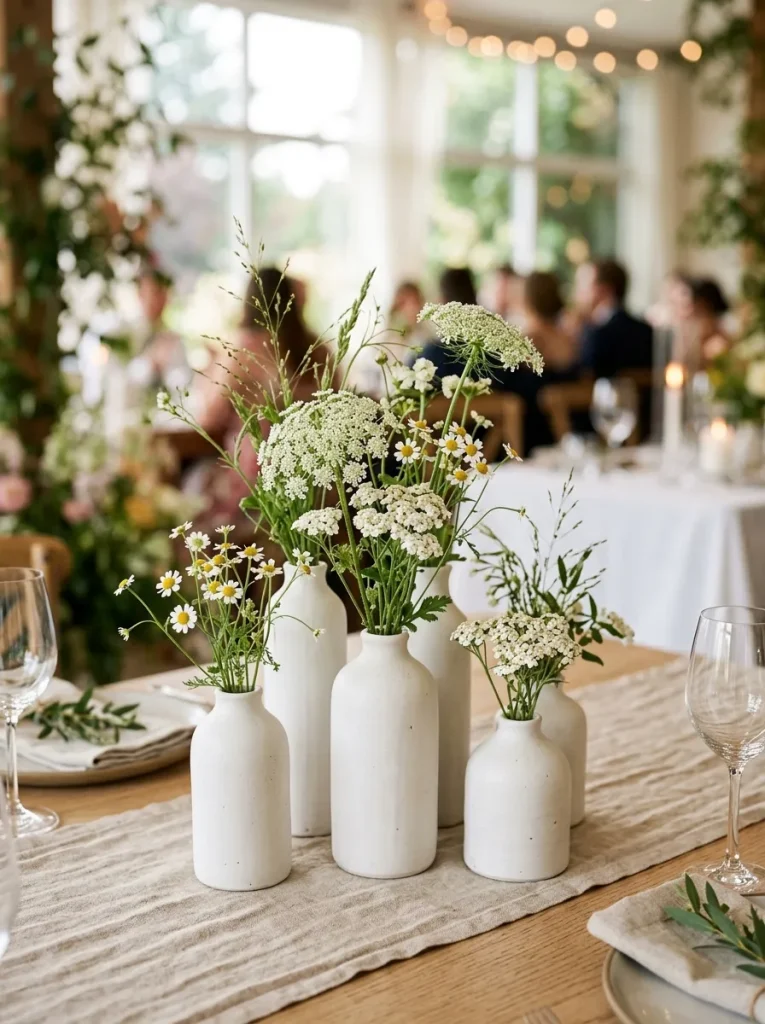
Combining matte white stoneware bud vases with delicate wildflowers creates a clean, minimalist aesthetic suitable for modern wedding receptions. The non-reflective surface of unglazed or matte clay provides a soft, neutral foundation that highlights the organic shapes and vibrant colors of individual botanical stems. Using minimalist style white ceramics keeps the overall presentation bright and light, making small dining tables feel uncluttered and airy. Wildflowers such as chamomile, feverfew, and queen anne’s lace bring a subtle, field-gathered texture that contrasts beautifully against the crisp structure of handcrafted pottery. This styling choice works particularly well in gallery spaces, loft venues, or bright outdoor garden settings where understated elegance is preferred. Selecting vessels with smooth, uniform silhouettes emphasizes clean geometry, while slight variations in vessel height prevent the arrangement from looking overly rigid. The combination of simple ceramics and delicate blossoms establishes an effortless, romantic mood that feels both modern and timeless for any wedding style.
How to Create
Begin by collecting five to seven matte white stoneware vessels of varying heights and neck widths for each table placement. Clean each ceramic container thoroughly and fill them two-thirds full with fresh water mixed with floral preservative. Prepare your botanical selection by trimming delicate wildflower stems like chamomile, cosmos, and soft grasses at varying angles using sharp floral shears. Place one to three stems per vase, keeping stems at different heights to establish a natural, airy balance within the grouping. Cluster the vessels along the center of the table in a staggered, linear formation, leaving two to three inches of space between individual bases. Inspect the layout from multiple angles to ensure no single stem blocks views across the dining space. Adjust stem positions so that lighter blossoms sit near the top while denser foliage remains anchored closer to the vessel openings, creating a stable, balanced visual flow.
2. Terracotta Clusters with Earthy Terrarium Greens
Concept and Design Principles
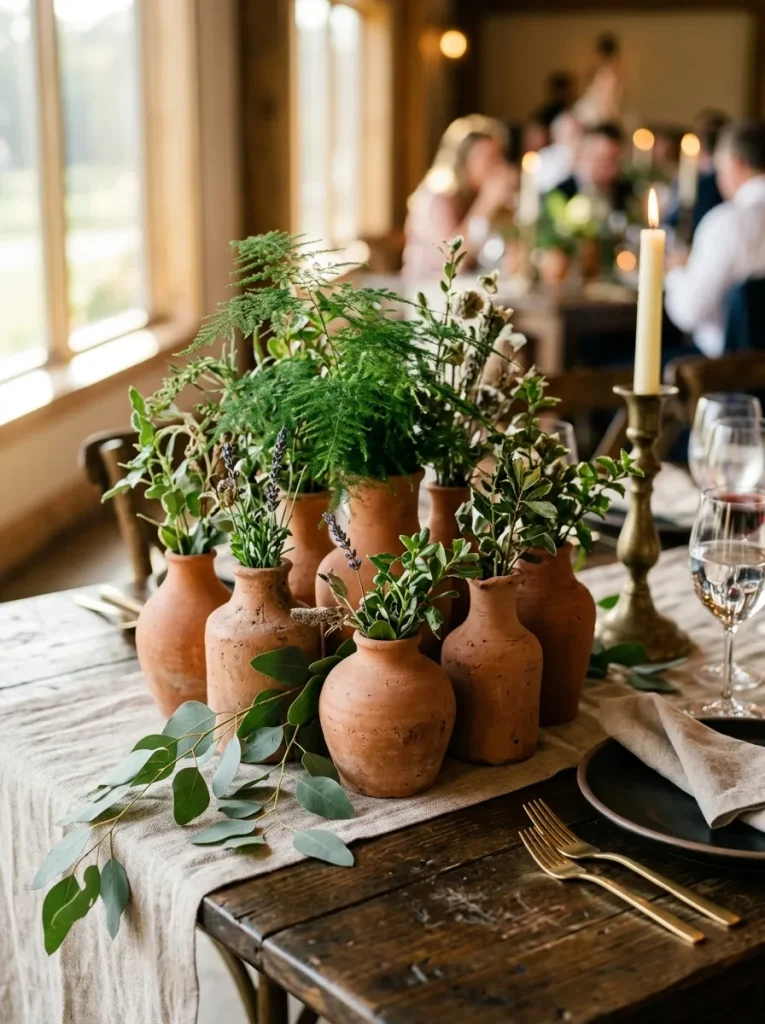
Terracotta pottery clusters paired with rich terrarium foliage bring warmth, texture, and a sense of natural craftsmanship to wedding table settings. The rich clay tones of terracotta provide an inviting, earthy base that enhances bohemian, rustic, or Mediterranean-inspired wedding decor. Grouping multiple small clay pots together creates a concentrated focal point that mimics natural clay formations and artisanal pottery displays. Pairing warm orange and brown earthenware with deep green leaves, small ferns, and trailing ivy creates a strong color contrast that grounds the overall table composition. The porous look of unglazed clay adds tactile depth to simple floral setups, making the centerpiece feel grounded and handcrafted. Using foliage as the primary visual element instead of heavy blooms offers a budget-friendly decorating strategy that remains fresh throughout long reception events. This layout excels on rustic wooden farm tables where natural wood grain harmonizes with warm ceramic materials.
Step-by-Step Guide
Select three to five terracotta bud vases featuring distinct shapes, such as bulbous bases, narrow cylinders, and flared necks. Treat any unglazed interior bases with a clear spray sealant or insert small plastic water liners to hold moisture safely without damaging table surfaces. Fill each sealed vessel with water, then trim structural greens like Italian ruscus, plumosa fern, and eucalyptus stems to appropriate lengths. Insert one sturdy foliage stem into each container, allowing some leaves to drape naturally over the clay rims to soften hard ceramic edges. Arrange the terracotta vessels in tight triangular clusters near the center of round tables or along the runner space of rectangular banquet tables. Add small sprigs of textured filler plants, such as baby’s breath or dried seeded eucalyptus, to fill subtle gaps between main leaves. Ensure all stems remain securely submerged in water, rechecking fluid levels right before guests arrive at the reception area.
3. Speckled Clay Vessels with Soft Pastel Ranunculus
Concept and Design Principles
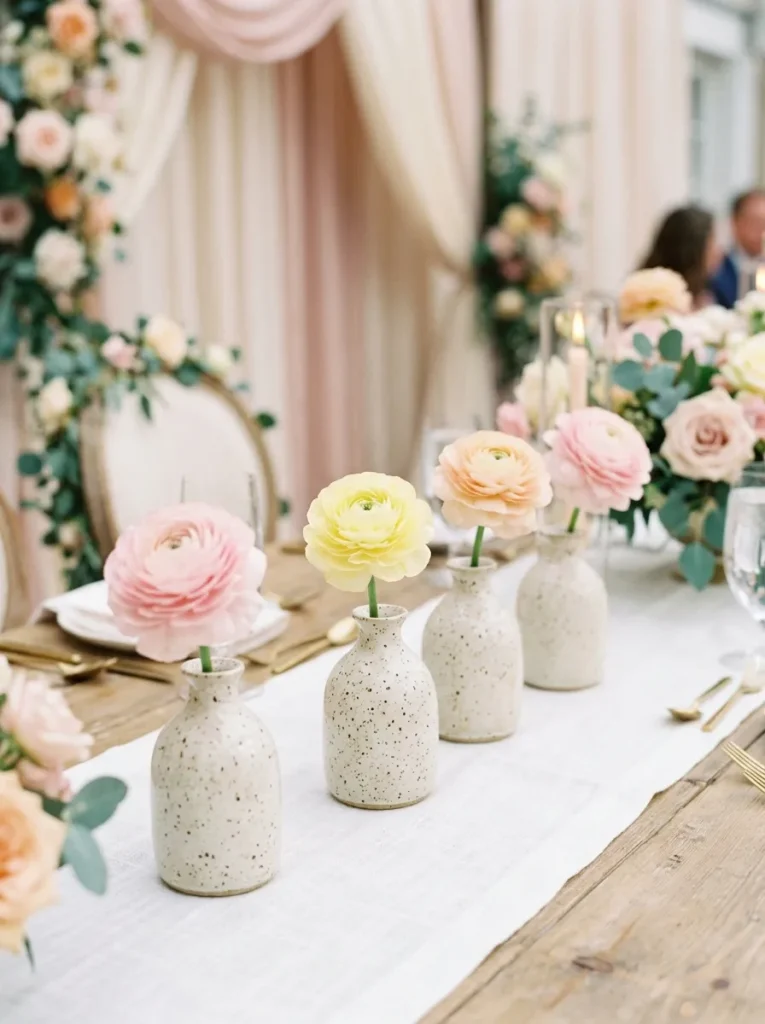
Speckled clay bud vases featuring soft pastel ranunculus blossoms deliver a tactile, artistic charm suitable for fine art or vintage-inspired weddings. The subtle flecks embedded in speckled stoneware add visual texture and depth to small pottery pieces without distracting from the delicate floral elements above. Soft pastel tones like blush pink, butter yellow, lavender, and pale peach ranunculus flowers create a gentle, romantic color palette that feels sophisticated and curated. Ranunculus blooms feature dense layers of tissue-thin petals, making a single stem visually substantial inside a narrow-necked ceramic vase. This combination balances the heavy, grounded feel of artisan pottery with the light, floating appearance of layered spring flowers. Speckled ceramics fit naturally into garden, vineyard, or estate venue settings where fine details and artistic craftsmanship are highlighted. The resulting look offers a soft, romantic atmosphere that enhances table settings without overwhelming place settings or dinnerware.
Execution Process
Gather four to six speckled ceramic bud vases with narrow neck openings that support slender floral stems upright. Fill each vessel with fresh water and arrange them in an alternating zigzag pattern down the center of your reception tables. Select high-grade ranunculus stems in complementary pastel shades, stripping away any lower leaves that might sit beneath the water line inside the pottery. Cut stems so the heavy flower heads rest two to four inches above the rim of each ceramic vessel for optimal structural balance. Place a single prime ranunculus bloom into each narrow vase neck, allowing the natural curve of the stem to direct the flower head softly outward. Intersperse a few small stems of sweet peas or delicate astilbe among the main ranunculus containers to add movement and varied heights. Confirm that all ceramic bases sit completely flat on table runners or wooden surfaces to prevent accidental tipping during the dinner service.
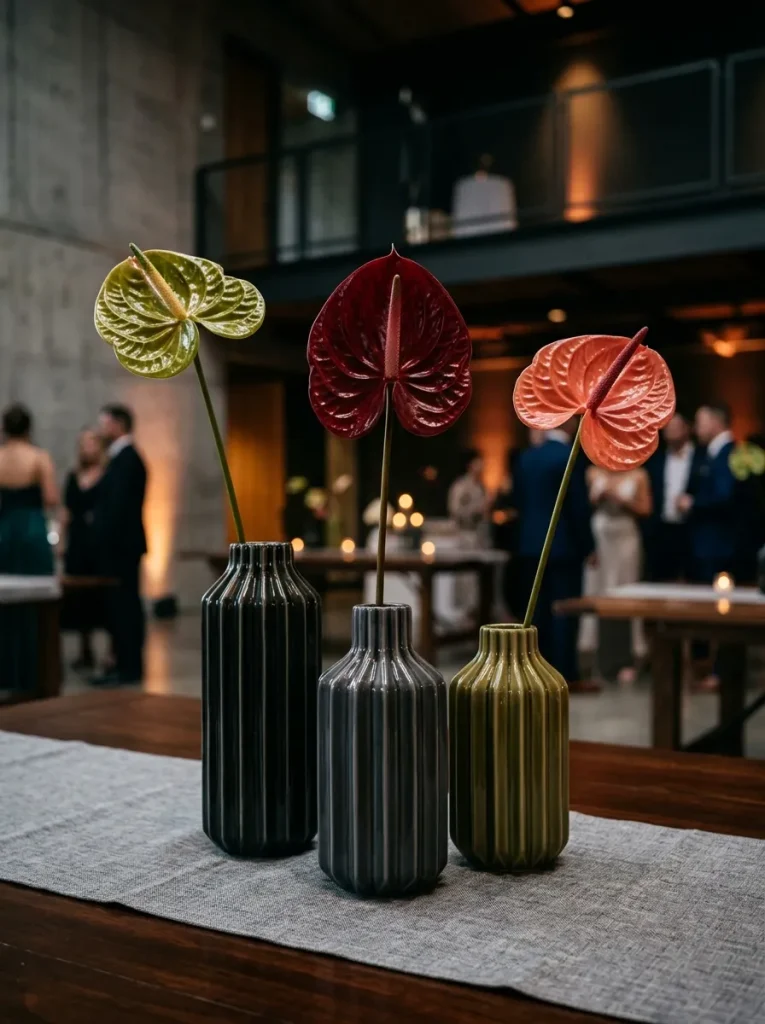
4. Glazed Ribbed Pottery with Bold Anthurium Stems
Concept and Design Principles
Glazed ribbed pottery paired with architectural anthurium stems creates a high-impact, modern centerpiece designed for contemporary wedding themes. Ribbed ceramic surfaces catch ambient venue lighting, creating dynamic highlights and shadows along the vertical grooves of each vessel. High-gloss glazes in neutral shades like cream, charcoal, or soft olive provide a sleek, polished foundation that feels refined and stylish. Anthurium flowers contribute strong geometric lines, glossy heart-shaped spathes, and vivid color options that transform simple table settings into modern art displays. This bold floral choice requires minimal stem counts, making it a practical option for clean, uncluttered banquet tables. The combination of structured ceramic ribbing and sculptural floral shapes appeals to couples seeking an avant-garde, fashionable wedding aesthetic. Placing these striking pairings on minimalist linen table runners ensures that every structural detail of the glazed pottery and glossy flower stands out.
Setup Method
Choose a set of three glazed ribbed bud vases in varying heights with wider, stable bases capable of supporting top-heavy architectural stems. Pour fresh water into each vessel until half full, ensuring the weight of the water provides additional physical stability to the pottery. Prepare glossy anthurium stems by wiping down their shiny spathes with a damp cloth and making a fresh angled cut at the base of each stem. Insert one anthurium stem into each ribbed vessel, adjusting the height so the prominent flower face angles toward approaching guests. Position the three ribbed vases in a staggered diagonal line across the center of your table to establish a sense of modern visual movement. Fill small surrounding gaps with low ceramic tealight holders to illuminate the glossy surfaces of the glazed pottery during evening celebrations. Double check that each high-profile anthurium stem is securely balanced within its ceramic container before finalizing the table setup.
5. Muted Neutral Stoneware with Dried Botanical Stems
Concept and Design Principles
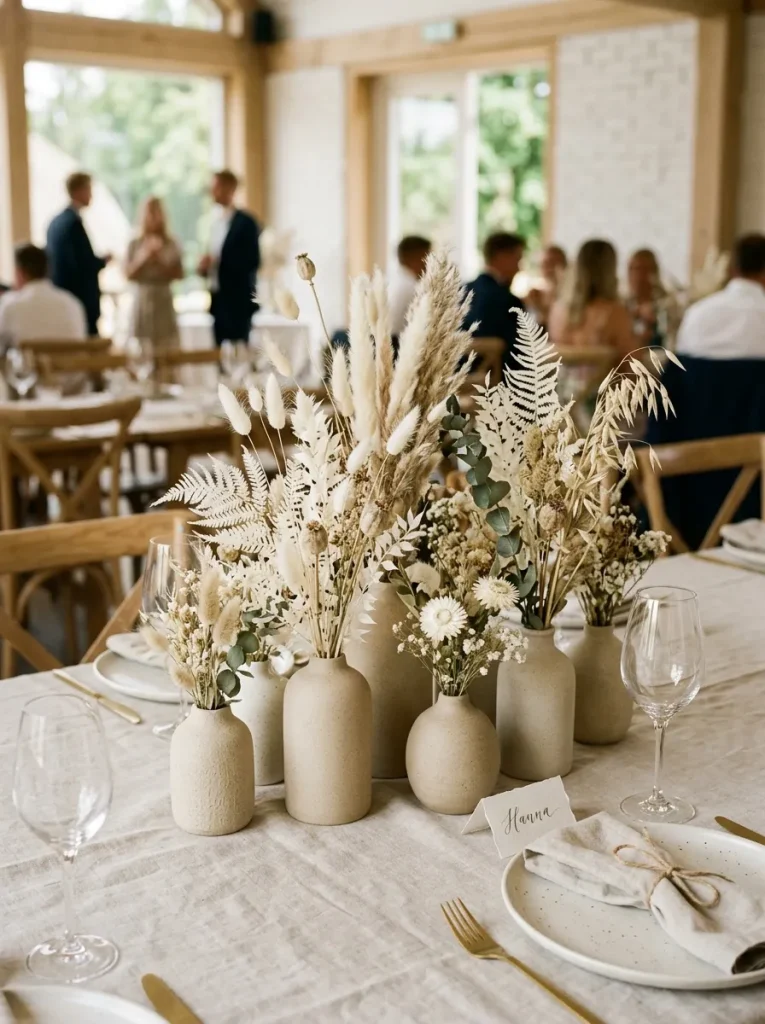
Muted neutral stoneware paired with dried botanical stems provides a sustainable, long-lasting centerpiece option that fits boho-chic and minimalist weddings. Neutral pottery finishes in beige, taupe, sand, and cream create an understated, calming palette that complements natural linen and wooden decor elements. Utilizing dried florals like pampas grass, bunny tails, palm spears, and dried bleached ruscus eliminates the need for water, reducing setup complexity on the wedding day. The matte, tactile quality of stoneware clay matches the papery, preserved textures of dried botanicals, creating a cohesive organic theme. This decorating style allows couples to assemble centerpieces weeks in advance of the event, providing significant planning convenience and stress reduction. Dried floral arrangements remain completely unaffected by venue temperatures, ensuring consistent visual appeal from the start of the ceremony to the end of the reception. The warm, neutral composition delivers an inviting, cozy atmosphere across all table layouts.
How to Create
Acquire an assortment of six to eight matte stoneware bud vases featuring neutral earth tones such as sand, beige, and warm greige. Since dried botanicals require no water, ensure the interiors of the vessels are completely clean and dry before starting the assembly process. Select a variety of preserved stems, including dried bunny tails, mini pampas plumes, bleached fern leaves, and dried palm spears. Trim the dried stems to varied lengths, using wire cutters or sturdy craft shears to handle tough, fibrous botanical materials. Insert small clusters of two to four dried stems into each stoneware neck, mixing fluffy textures with structured shapes to build visual contrast. Line the neutral vases along the center of long banquet tables, alternating high and low containers to construct a continuous, textured floral runner. Secure light vessels with small removable adhesive dots underneath if placement on breezy outdoor tables is required.
6. Dark Charcoal Pottery with Moody Deep-Toned Blooms
Concept and Design Principles
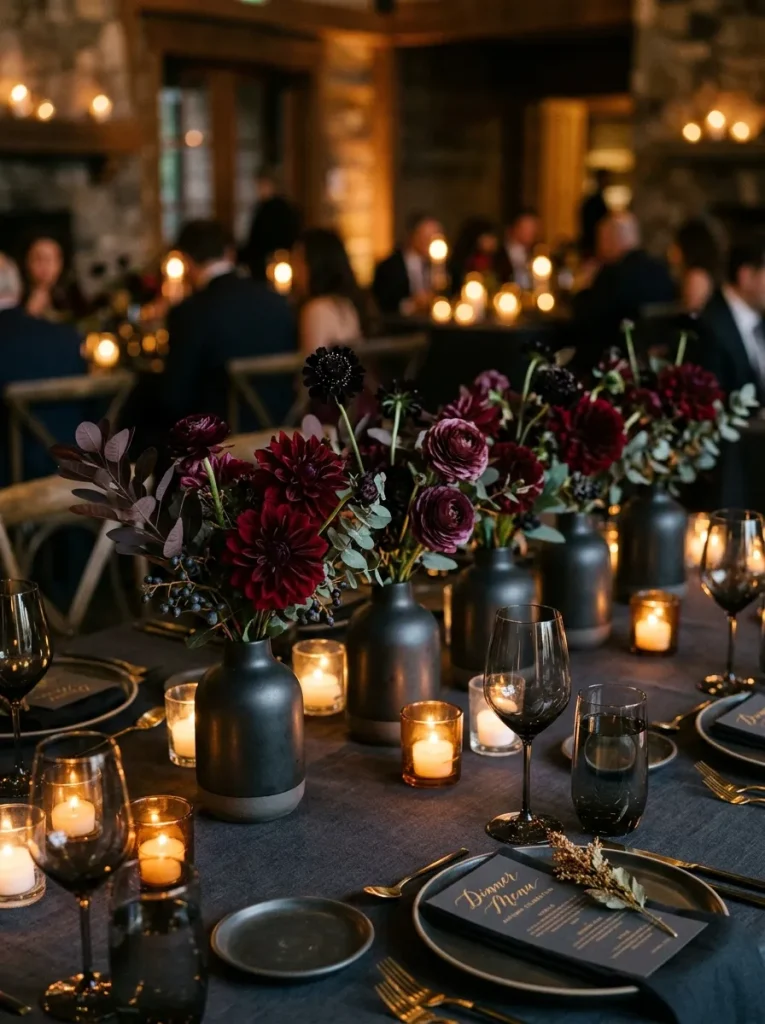
Dark charcoal pottery paired with rich, moody blooms creates a dramatic, luxurious centerpiece ideal for autumn or winter wedding receptions. Matte or satin black ceramic finishes absorb light, providing a stark, high-contrast backdrop that makes deep floral colors pop vividly. Combining dark stoneware with rich wine, burgundy, plum, and deep crimson flowers delivers a sophisticated, atmospheric tone across dining spaces. Floral varieties like dark dahlias, burgundy calla lilies, chocolate cosmos, and deep red roses bring opulent depth to simple bud vase configurations. This dark color concept brings a sense of intimacy and drama to indoor venues, historic halls, or moody candlelit reception spaces. The contrast between dark clay structures and velvety floral petals adds dynamic visual weight to table settings without requiring large, bulky centerpieces. The final look offers a modern interpretation of classic romantic themes that elevates the overall event decor.
Step-by-Step Guide
Select four to six dark charcoal or matte black ceramic bud vases with solid, heavy bases to hold dramatic floral arrangements. Fill each dark vessel with cool water treated with floral nutrient solution to keep deep-toned flowers fresh throughout the event. Select rich, dark blooms like burgundy carnations, black scabiosa, deep red dahlias, and dark plum ranunculus. Strip all lower leaves from the flower stems, making fresh diagonal cuts to maximize water absorption inside the pottery. Insert one or two deep-toned stems into each charcoal vessel, varying the height of the flower heads between four and nine inches above the table surface. Cluster the dark ceramic vases tightly together along the center line of the table, placing shorter vessels around tall containers. Surround the charcoal pottery cluster with dark glass votive candles to cast warm light against the matte black ceramic surfaces and deep floral petals during the evening reception.
7. Vintage-Style Glazed Pitchers with Single Statement Roses
Concept and Design Principles
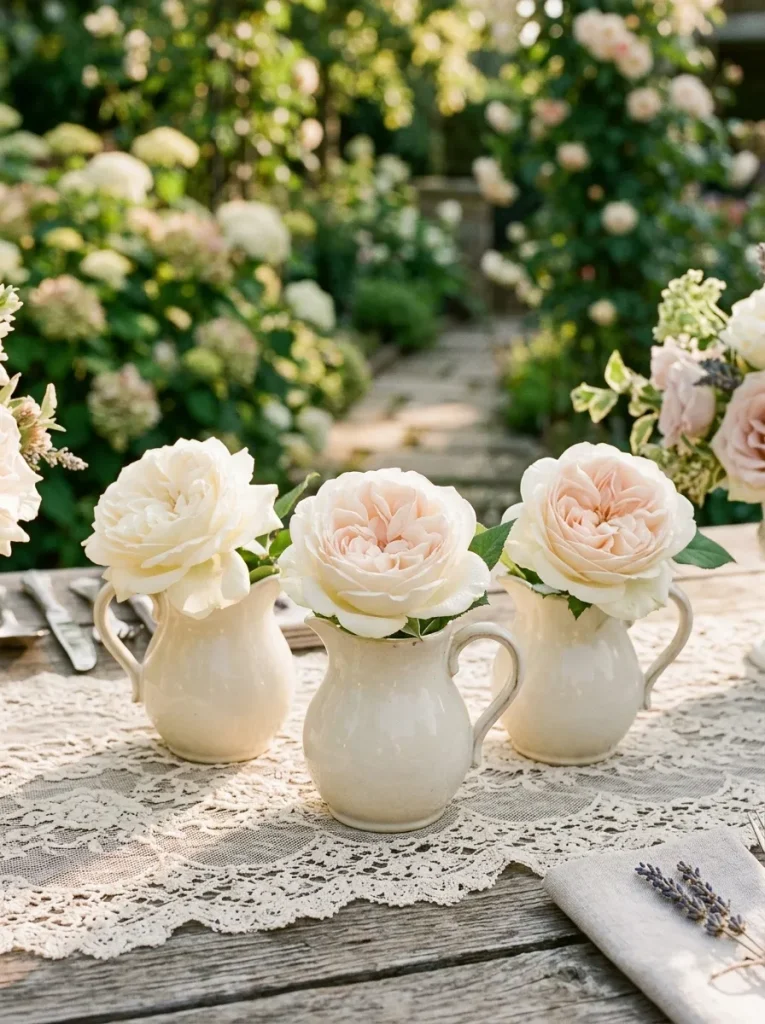
Vintage-style glazed ceramic pitchers holding single statement roses bring a classic, garden-inspired elegance to wedding reception tables. Mini pottery pitchers introduce charm through historical shapes, decorative handles, and delicate spouts that evoke traditional country estate styling. Glazed finishes in soft ivory, pale mint, or sky blue provide a subtle sheen that reflects natural light beautifully across daytime event spaces. A single large garden rose, such as a David Austin or garden garden variety, acts as a striking focal point inside the narrow pitcher opening. The combination of nostalgic ceramic shapes and classic, fragrant blooms establishes an inviting, romantic atmosphere that appeals to traditional and vintage design lovers alike. Using single statement flowers minimizes floral costs while maximizing the visual presence of every individual table centerpiece. This concept harmonizes effortlessly with lace table runners, antique glassware, and polished silver cutlery setups.
Execution Process
Collect four to five small vintage-style ceramic pitchers per table, choosing pieces with subtle glaze variations and elegant handle details. Fill each miniature pitcher with fresh water mixed with flower food, ensuring the liquid level stays below the spout opening to avoid spills. Choose large-headed garden roses or tea roses in classic shades like cream, soft blush, or pale coral. Carefully remove outer guard petals and foliage from each stem, cutting the stem length so the rose head sits comfortably just above the pitcher rim. Insert one rose stem into each pitcher, angling the flower head slightly toward the handle side to balance the container’s asymmetrical silhouette. Set the ceramic pitchers in a neat line down the length of banquet tables, or place three pitchers on a raised wooden pedestal for round tables. Inspect each setup to verify that all roses face outward toward seated guests, creating a welcoming floral view across the room.
8. Hand-Thrown Artisan Clay with Delicate Fluffy Grasses
Concept and Design Principles
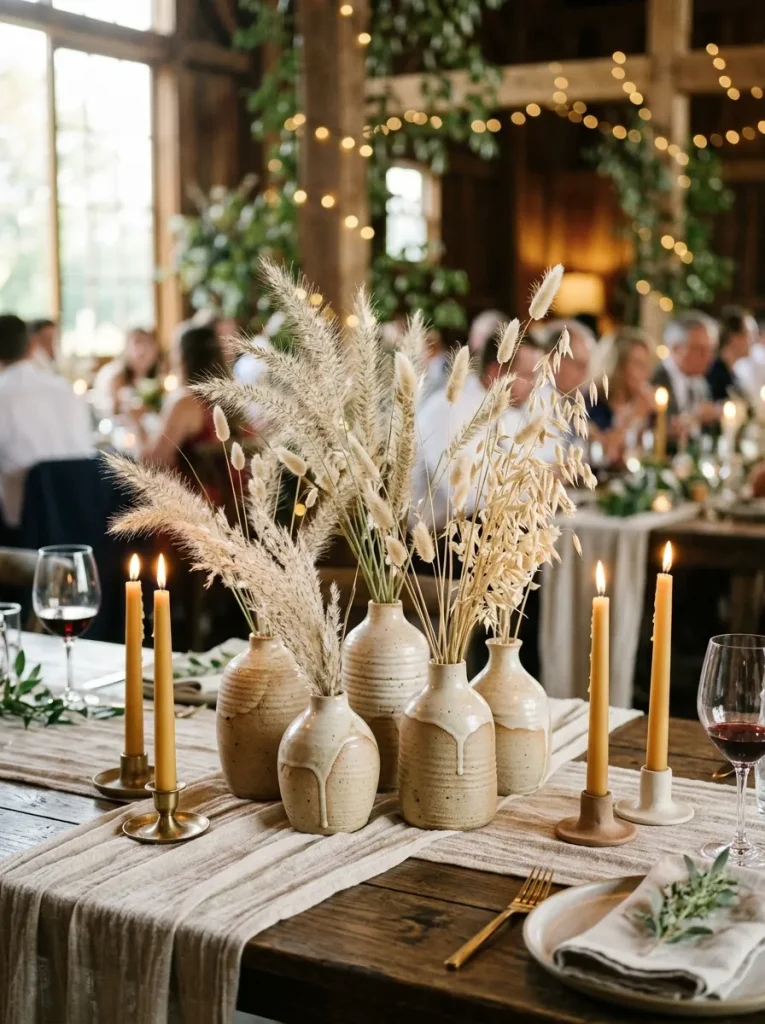
Hand-thrown artisan clay vessels combined with delicate fluffy grasses offer a organic, textural centerpiece concept suited for outdoor or rustic-chic weddings. The visible potter’s marks, subtle throwing lines, and irregular shapes of artisan pottery celebrate natural imperfection and authentic craft quality. Pairing raw, unglazed or partially glazed clay with feathery botanicals like fountain grass, feather reed grass, and soft oats introduces movement and light texture to table decor. The neutral, tactile surfaces of hand-thrown pottery ground the wispy, floating qualities of ornamental grasses, creating a balanced organic composition. This design approach fits naturally into barn venues, coastal settings, or open field receptions where natural surroundings influence event styling. The soft movement of airy grasses responds to light breezes, adding a dynamic, living feel to dining spaces. Using budget-friendly ornamental grasses alongside unique artisan ceramics yields a high-end, custom look on a practical budget.
Setup Method
Gather a collection of five hand-thrown clay bud vases featuring unique organic shapes, raw clay bases, and partial dip glazes. Pour water into any glazed stoneware vessels intended for fresh grasses, or keep containers dry if using naturally cured or dried botanical stems. Select delicate grass varieties such as bunny tails, fountain grass, dried oats, and soft feathery reed grass stems. Trim the grass stems at staggered lengths using sharp scissors, ensuring stem heights vary significantly to accentuate the wild, natural look. Insert three to five slender grass stems into each hand-thrown pottery vessel, fanning the tops outward to build a soft, cloud-like silhouette. Place the artisan vessels along the center of the dining table in an irregular, free-flowing cluster that feels natural rather than calculated. Combine the pottery setup with natural linen table runners and simple beeswax tapers to complete the organic, rustic reception table theme.
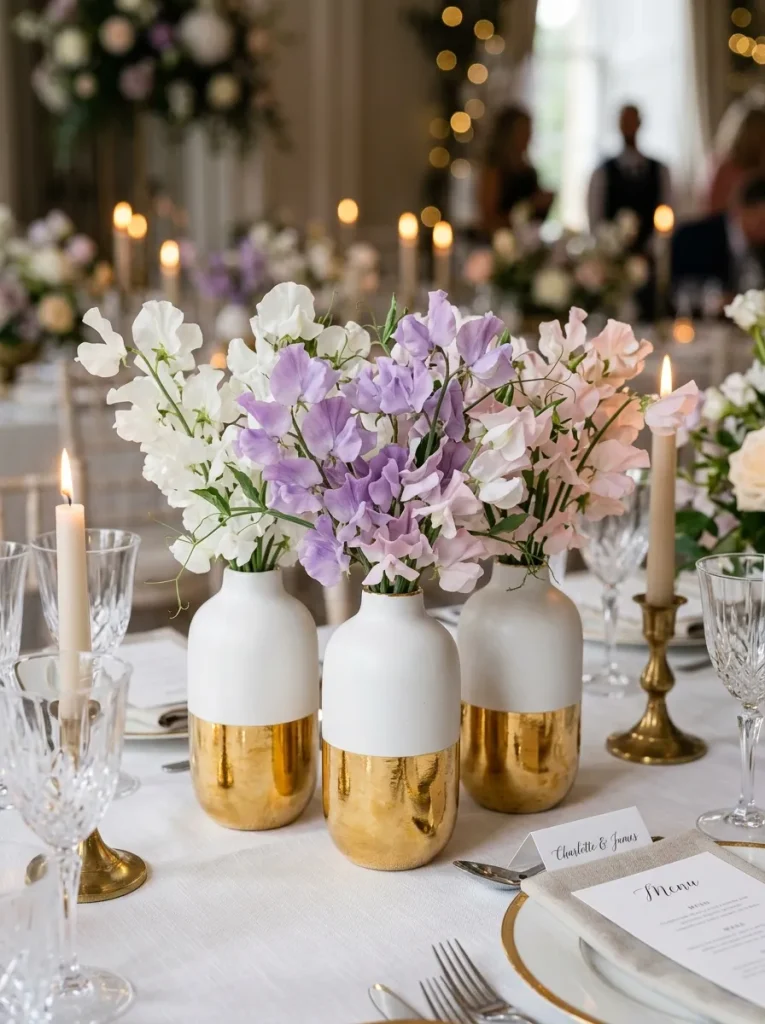
9. Metallic-Dipped Ceramic Vases with Romantic Sweet Peas
Concept and Design Principles
Metallic-dipped ceramic bud vases paired with romantic sweet peas combine contemporary shine with classic garden charm for modern wedding settings. Featuring gold, copper, or silver foil application over matte ceramic bases introduces a subtle touch of luxury that catches candlelight across dining tables. The combination of metallic sheen and soft, matte clay yields a balanced texture that elevates casual wedding setups into formal celebrations. Sweet peas offer ruffled, delicate petals and soft, flexible stems that drape gracefully over metallic rims, softening the structural lines of the pottery. Their pleasant, natural fragrance enhances the sensory experience for guests seated around reception tables. This styling concept works exceptionally well in formal ballroom spaces, urban venues, or evening receptions where reflective metallic surfaces catch light from surrounding chandeliers and candles. The pairing bridges modern glamour and classic garden beauty in a fresh, accessible format.
How to Create
Select four metallic-dipped ceramic bud vases per table, choosing vessels with polished gold or rose gold foil along their lower halves or rims. Fill each ceramic container two-thirds full with fresh, cool water to keep delicate stems properly hydrated throughout the event. Gather fresh sweet pea stems in coordinating shades such as white, soft lavender, pink, or deep raspberry. Strip away any leaves along the lower half of the stems, making clean cuts at a forty-five degree angle with floral shears. Group three to four sweet pea stems together and place them into each metallic vessel, allowing the vine-like stems to curve and cascade naturally over the top edge. Arrange the metallic-dipped vases in an alternating pattern alongside sleek glass votive holders down the middle of the table. Check that the delicate petals do not directly touch hot candle flames or glass votive surfaces, preserving the fresh look of the blooms all evening.
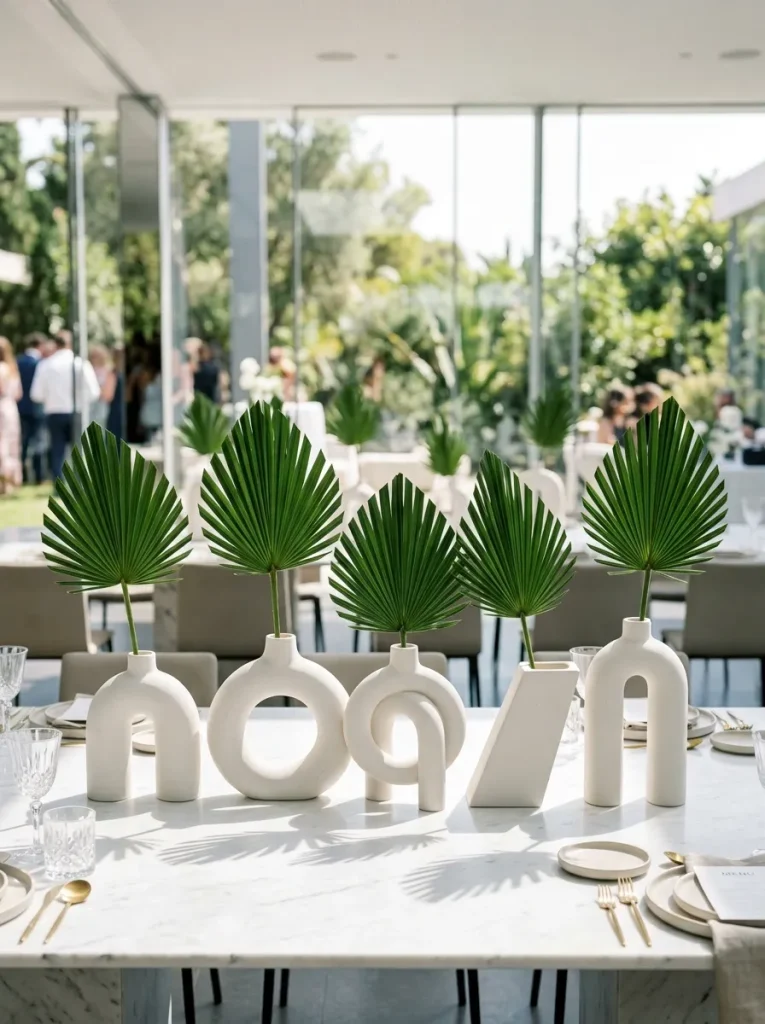
10. Sculptural Geometric Pottery with Minimalist Single Palm Leaves
Concept and Design Principles
Sculptural geometric pottery paired with minimalist single palm leaves provides a fresh, modern aesthetic suitable for tropical, coastal, or contemporary weddings. Geometric ceramics featuring sharp angles, arches, spheres, or asymmetrical shapes serve as standalone artistic sculptures on dining tables. Using clean white, concrete gray, or soft terracotta geometric vessels introduces an architectural focus that modernizes traditional floral reception decor. Inserting a single structured green palm leaf, fan palm, or monstera leaf into a sculptural vessel creates a high-impact, minimalist display that requires minimal botanical material. The contrast between rigid ceramic angles and bold green fan shapes delivers a fresh visual statement that feels clean, curated, and uncluttered. This arrangement choice maximizes open table space for dining service while providing high visual style. The architectural layout appeals to couples looking for a bold, non-traditional wedding centerpiece that stands out in modern venue spaces.
Step-by-Step Guide
Select three sculptural geometric ceramic vases featuring distinct architectural forms, such as archways, circular cutouts, or triangular prisms. Fill the internal water reservoirs of the geometric pottery with fresh water, checking for a stable center of gravity once filled. Trim small tropical green leaves, such as mini fan palms, sun palms, or monstera foliage, so their stems fit securely inside the narrow vessel openings. Insert one palm leaf into each sculptural vase, adjusting the leaf face so it stands upright or angles slightly outward to display its geometric silhouette. Position the geometric ceramic pieces centrally on each reception table, spacing them six to eight inches apart to allow guests to appreciate each distinct vessel shape. Add small, smooth river stones around the vessel bases if additional weight or decorative grounding is needed on long linen runners. Verify that all leaves are secure and positioned to maintain clear view corridors across the table.
Common Beginner Mistakes and How to Avoid Them
Planning ceramic bud vase centerpieces involves managing vessel proportions, water retention, and floral scale, which can present challenges for first-time wedding decorators. One frequent mistake is choosing ceramic vessels with internal openings that are too wide, causing slender flower stems to flop outward awkwardly instead of standing gracefully upright. Prevent this by selecting pottery with narrow necks or using hidden floral frog inserts inside wider openings to hold stems securely in place. Another common issue is failing to verify if unglazed terracotta or artisan clay vessels are completely waterproof, leading to moisture leaks that ruin expensive table linens or rented wooden furniture. Always test ceramic containers with water twenty-four hours before the event, using internal plastic liners or waterproofing sprays on porous clay bases. Additionally, overcrowding tables with too many tall bud vases can create physical clutter and block sightlines across dining tables. Maintain a balanced display by mixing low and medium height vessels while leaving ample open space for place settings and glassware.
Practical Tips for Better Results
Achieving professional-looking pottery centerpiece displays requires attention to flower preparation, vessel stability, and strategic table placement. Use sharp floral shears rather than domestic scissors when trimming stems to ensure clean cuts that maximize water intake and prolong bloom freshness. When working with lightweight ceramic vessels or outdoor venue tables, attach small clear adhesive dots or museum wax to the bottom of each vase base to prevent accidental tipping from wind or table bumps. Prepare floral stems at varying lengths before assembly, ensuring that stem heights scale proportionally with the height of their corresponding ceramic containers. Group bud vases in odd numbers, such as three, five, or seven vessels per table, to create naturally balanced, visually appealing arrangements. Finally, add water to all filled pottery pieces using a small long-spouted watering can after the vessels are positioned on the reception tables to prevent spills during transportation and setup.
Styling, Presentation, or Organization Ideas
Presenting ceramic bud vase centerpieces effectively involves integrating surrounding table elements, linens, and lighting to create a unified reception concept. Place bud vase groupings on textured table runners made of raw silk, crinkled linen, or gauze to visually anchor the ceramic bases along long banquet tables. Combine pottery clusters with flickering taper candles in matching ceramic holders or clear glass cylinder shades to cast warm light across glaze textures and floral petals during evening receptions. Intersperse small decorative elements like polished river stones, dried seed pods, or fresh fruits like figs and pears between the ceramic vessels to build a multi-layered table display. For round tables, arrange vessels on a raised wooden disc, marble slab, or brass tray to consolidate the centerpiece into a cohesive central focal point. Keeping tableware, flatware, and napkins in neutral, complementary shades allows the unique colors and handcrafted textures of your pottery arrangements to remain the primary aesthetic feature.
Budget or Time Planning
Managing time and financial resources efficiently ensures your wedding centerpiece project stays within budget while reducing last-minute assembly stress. Ceramic bud vases can be sourced affordably by purchasing wholesale pottery sets, exploring thrift stores for unique vintage pieces, or renting vessel collections from event design companies. Opting for bud vase arrangements significantly reduces floral expenses because individual vessels require only one to three stems, allowing you to buy premium focal flowers in smaller quantities. Allocate approximately two to three hours the day before the wedding to trim stems, fill vessels, and assemble floral arrangements in a cool storage space. If using fresh flowers, assign a dedicated team member or coordinator thirty to forty-five minutes on the event morning to transport and position the pre-assembled pottery on reception tables. Utilizing dried botanicals or preserved foliage allows for assembly weeks in advance, eliminating floral tasks on the wedding day entirely.
Creative Expansion and Advanced Inspiration
After mastering basic ceramic bud vase styling, consider advanced design techniques to elevate your wedding decor into a fully customized installation. Experiment with hand-painting or dip-dyeing plain white ceramic vases using porcelain paint to match your exact wedding color palette with custom ombre effects. Create a dynamic hanging installation by suspending lightweight ceramic bud vases filled with trailing greenery from overhead venue beams or wooden pergolas above the head table. Incorporate personalized pottery components by commissioning a local ceramic artist to craft custom bud vases featuring your wedding date or monogram stamped into the raw clay base. These custom vessels can then serve as meaningful wedding favors for guests or family members to take home after the reception. Transitioning from simple tabletop layouts to immersive multi-sensory displays with scented botanical stems and custom ceramic craftsmanship transforms basic wedding tables into unforgettable artistic experiences.
+------------------------------------------------------------------------------------+
|                         BUD VASE CENTERPIECE QUICK GUIDE                           |
+----------------------+------------------------------+------------------------------+
| Pottery Style        | Recommended Floral Selection | Ideal Wedding Theme          |
+----------------------+------------------------------+------------------------------+
| Matte White Stoneware| Wildflowers & Chamomile      | Modern Minimalist / Gallery  |
| Terracotta Clay      | Terrarium Greens & Ferns     | Boho / Rustic Farmhouse      |
| Speckled Stoneware   | Pastel Ranunculus            | Fine Art / Garden Romantic   |
| Glazed Ribbed Clay   | Architectural Anthuriums     | Contemporary / High-Fashion  |
| Neutral Stoneware    | Dried Botanicals & Pampas    | Earthy Boho / Sustainable    |
| Dark Charcoal Clay   | Deep Burgundy Dahlias        | Dramatic Autumn / Moody      |
| Vintage Glazed Jugs  | Single Statement Roses       | Vintage / Country Estate     |
| Hand-Thrown Clay     | Feathery Fountain Grasses    | Organic Rustic / Coastal     |
| Metallic-Dipped Clay | Ruffled Sweet Peas           | Modern Glamour / Formal      |
| Geometric Ceramics   | Minimalist Fan Palm Leaves   | Tropical / Architectural     |
+----------------------+------------------------------+------------------------------+
Implementing these practical styling methods ensures your ceramic bud vase wedding centerpieces deliver a memorable visual impact across every reception table. By balancing pottery textures, flower stem proportions, and cohesive color schemes, you can create professional-grade table decor that enhances your overall event design.