
10 Thrifted Vintage Glass Bud Vase Centerpiece Ideas
Designing a dining table layout using secondhand glassware allows homeowners to blend sustainable crafting techniques with timeless aesthetic appeal. A thrifted vintage glass bud vase centerpiece provides a delicate, versatile focal point that elevates home decor for casual family dinners and special occasions alike. This comprehensive tutorial explores ten creative ideas for selecting, organizing, and styling vintage glass vessels to construct visually compelling table arrangements. Readers will learn fundamental principles of visual weight, height distribution, color coordination, and floral placement necessary to create professional-quality displays. Understanding how light passes through varied glass textures, such as pressed glass, colored glass, cut crystal, and milk glass, empowers decorators to transform simple secondhand items into artful decorative features. By following clear step-by-step instructions, individuals can transform affordable market finds into elegant table arrangements that reflect personal taste and modern styling trends. The practical strategies outlined in this guide emphasize accessibility, low project costs, and straightforward setup procedures suitable for all skill levels. Master the art of sourcing, preparing, and arranging small glass containers to enhance your living space with sustainable creative ideas.
Thrifted glass bud vase displays have gained significant traction among interior styling trends on Pinterest due to their exceptional adaptability and charm. Sustainable home decoration continues to grow in popularity as craft enthusiasts prioritize upcycling discarded secondhand items over buying mass-produced decor. Bud vases offer remarkable practical value because they require only a few fresh or dried floral stems to achieve a complete, polished look, making them far more economical than large traditional floral arrangements. Their small physical footprint makes them ideal for compact dining tables, narrow kitchen islands, coffee tables, and mantelpieces where full-sized centerpieces would overpower the surrounding space. DIY enthusiasts appreciate the low barrier to entry, as collecting individual glass vessels across local flea markets and thrift stores provides an engaging, budget-friendly hobby. Furthermore, the inherent variety found in vintage glassware allows for endless customization, enabling beginners to experiment with different shapes, heights, and surface patterns without complex tools or specialized techniques.
Successful execution of a vintage glass centerpiece relies on thoughtful preparation, proper tool selection, and careful vessel inspection prior to styling. Begin by gathering essential project materials, including an assortment of vintage glass bud vases, sharp floral shears, clean lukewarm water, plant food packets, and decorative trays or fabric table runners. Essential preparation steps start with thoroughly cleaning secondhand glassware to eliminate mineral deposits, dirt, and vintage residue that impede clarity and light transmission. Soaking vessels in a mixture of warm water, mild dish soap, and white vinegar helps restore the original sparkle of pressed or cut glass surfaces. When planning your layout, carefully measure the dimensions of your dining surface to ensure the centerpiece maintains proportional balance and leaves sufficient room for place settings. Consider the architectural elements of your room, such as lighting placement and table shape, to select a vase combination that complements your overall decor scheme seamlessly.
Layered Pressed Glass Lineup
Step-by-Step Guide
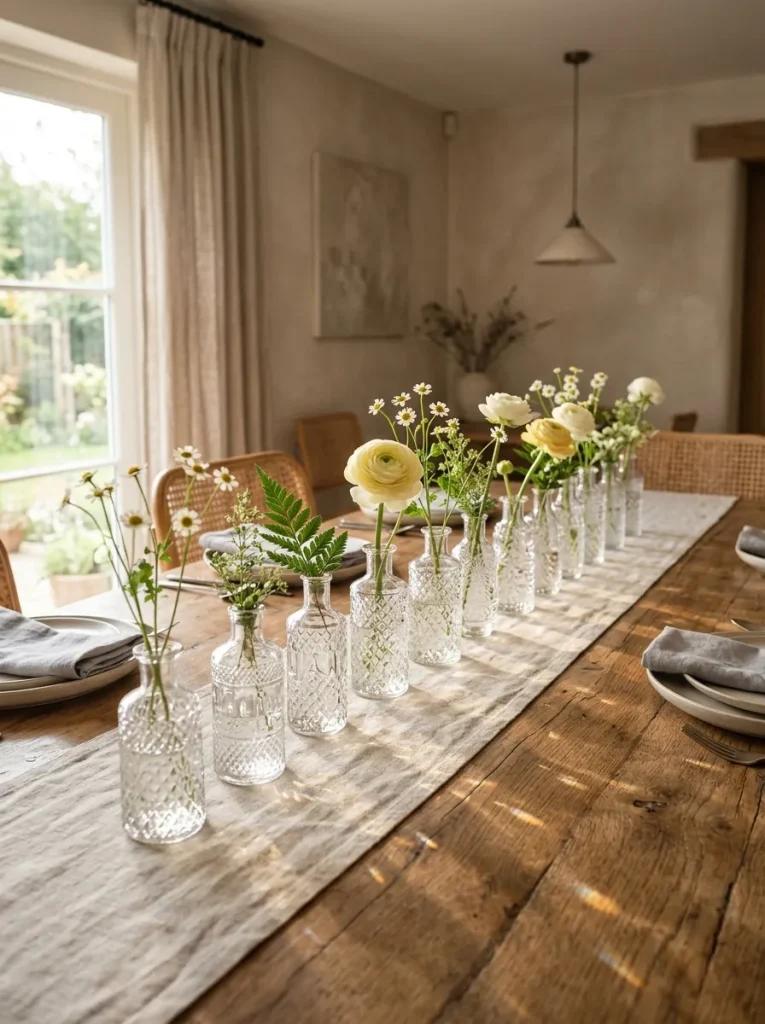
The layered pressed glass lineup utilizes geometric patterns and raised surface textures found in vintage glass to create a shimmering, linear focal point. Pressed glass features detailed molded designs, such as stars, diamonds, and floral motifs, which catch and scatter light across the dining surface. Arranging these textured vessels in a straight, continuous line along a table runner creates a clean, structured appearance that works exceptionally well on long rectangular tables. By keeping vessel heights relatively uniform while varying the molded glass patterns, you achieve subtle visual diversity without disrupting the overall sense of symmetry. Pairing transparent pressed glass with delicate, single-stem blooms like chamomile, sweet peas, or ranunculus highlights the intricate details of the glass without obscuring its reflective qualities.
To construct this linear arrangement, select five to seven pressed glass bud vases of similar height but differing textured patterns. Thoroughly clean each vessel inside and out using a soft bottle brush to ensure maximum light clarity. Position a neutral linen or lace runner along the center axis of your table to serve as a protective, unifying base. Place the pressed glass vessels at equal intervals down the middle of the runner, maintaining approximately three to four inches between each vase base. Fill each container two-thirds full with fresh water mixed with floral preservative, taking care to keep the outer glass dry. Insert one or two slender botanical stems into each opening, trimming the ends at a forty-five-degree angle so the blossoms float just above the vessel rims.
Gradient Colored Glass Cluster
Setup Method
A gradient colored glass cluster relies on grouping vintage glass bottles and vases in shifting tonal shades to establish a vibrant, harmonious tabletop display. Colored glass items from past decades, including amber, olive green, cobalt blue, and blush pink, offer rich hues that cast colorful shadows when illuminated by natural or artificial light. Grouping these vessels by color intensity creates a smooth visual transition from dark to light shades, drawing the eye across the entire centerpiece. This clustering technique concentrates small individual items into a singular, impactful arrangement that serves as a commanding centerpiece on round or square dining tables. The addition of neutral-toned florals ensures the colored glass remains the dominant design feature.
Begin by gathering seven to nine vintage colored glass vases that represent a cohesive color family, such as warm amber and smoke tones. Clean each piece thoroughly and dry the exterior with a microfiber cloth to remove smudges. Position the darkest and heaviest glass vessels in the center of your table to establish a solid visual anchor for the cluster. Stagger the lighter, paler glass pieces around the central core, tapering outward to form an asymmetrical, organic circular shape. Fill the vessels with clean water, then insert minimalist floral elements like eucalyptus twigs, dried bunny tails, or white cosmos into each opening. Ensure stems are cut to varying lengths so the blossoms mirror the gradual height transitions of the underlying glass grouping.
Cut Crystal Geometric Grid
How to Create
The cut crystal geometric grid combines high-clarity vintage crystal with precise spatial arrangement to deliver a crisp, sophisticated decorative statement. Cut crystal features sharp, hand-faceted facets that refract light with exceptional brilliance, generating sparkling highlights across surrounding tableware. Placing these pristine vessels in a structured grid pattern accentuates their formal, geometric qualities, making this layout suitable for formal dinners and holiday gatherings. The contrast between rigid grid alignment and fluid, organic floral stems produces a dynamic visual balance that feels both classical and modern. Standardizing the flower variety across all grid points reinforces the minimalist rhythm of the overall centerpiece design.
To execute a cut crystal grid arrangement, select nine uniform or similarly sized crystal bud vases featuring faceted surface cuts. Measure the central area of your table using a tape measure to ensure precise spacing between every container in the grid. Arrange the crystal vessels in a three-by-three square matrix, maintaining exactly four inches of space between all adjacent bases. Fill each crystal container halfway with room-temperature water using a thin-spouted pouring pitcher to prevent accidental spills on the table. Trim single white carnations, tulips, or anemones to an identical height, placing one stem firmly into each crystal vase. Inspect the completed matrix from multiple seating angles around the table to verify that alignment remains perfectly straight across all rows.
Milk Glass and Dried Floral Array
Execution Process
A milk glass and dried floral array pairs opaque, ivory-toned vintage glass with textured everlasting botanicals to build a soft, tactile centerpiece display. Vintage milk glass provides a solid, porcelain-like appearance that completely conceals floral stems and water lines, resulting in a smooth, clean aesthetic. The matte white finish of milk glass serves as a high-contrast canvas for dried botanicals such as pampas grass, preserved eucalyptus, bleached ruscus, and dried lavender. This setup is particularly practical because it requires no water, making it a low-maintenance option that can remain on the table indefinitely without fading or wilting. The combination delivers a warm, rustic elegance that complements farmhouse and bohemian interior styles.
Assemble five to eight vintage milk glass vessels featuring diverse shapes, such as hobnail, fan-edge, or smooth urn profiles. Wipe the interior and exterior of each milk glass piece with a dry cloth to eliminate lingering dust or storage debris. Arrange the vessels down the center of the table in an informal zigzag pattern, overlapping the bases slightly to create visual depth. Select a variety of dried florals, trimming the lower leaves and stems using sharp floral shears to suit the height of each vessel. Place small bundles of dried stems into each milk glass opening, balancing feathery textures with denser seed pods across the arrangement. Adjust the positions of individual vases until the overall grouping presents a balanced distribution of height, texture, and white ceramic-like tone.
Mixed Height Bottle Assembly
Assembly Procedure
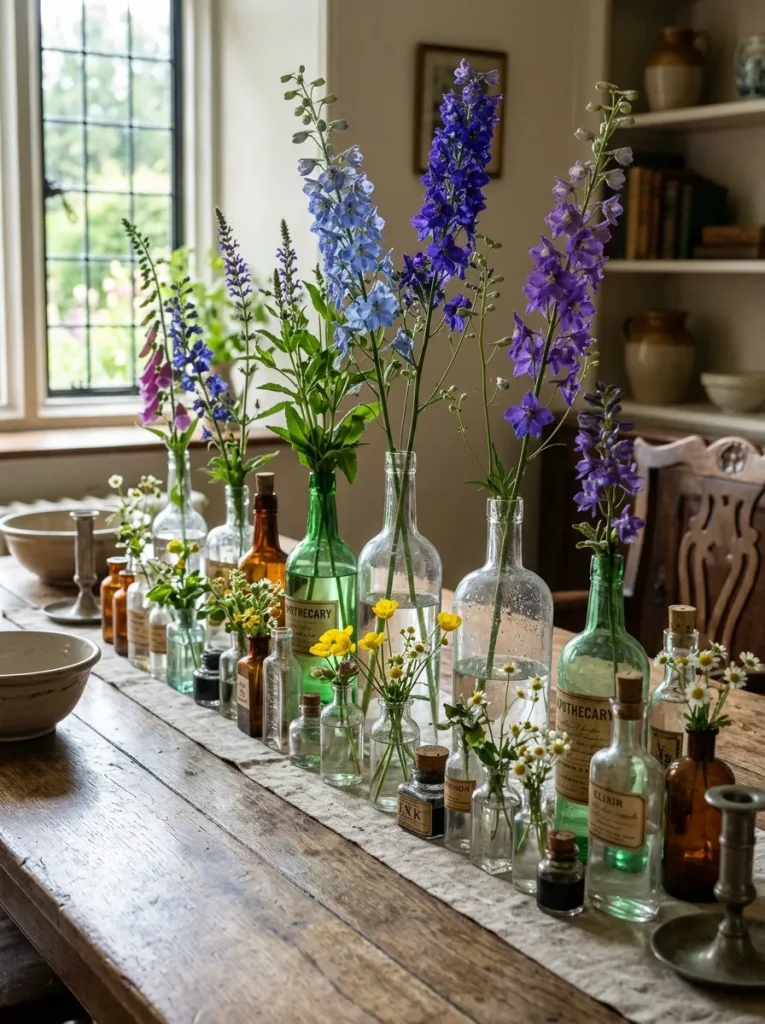
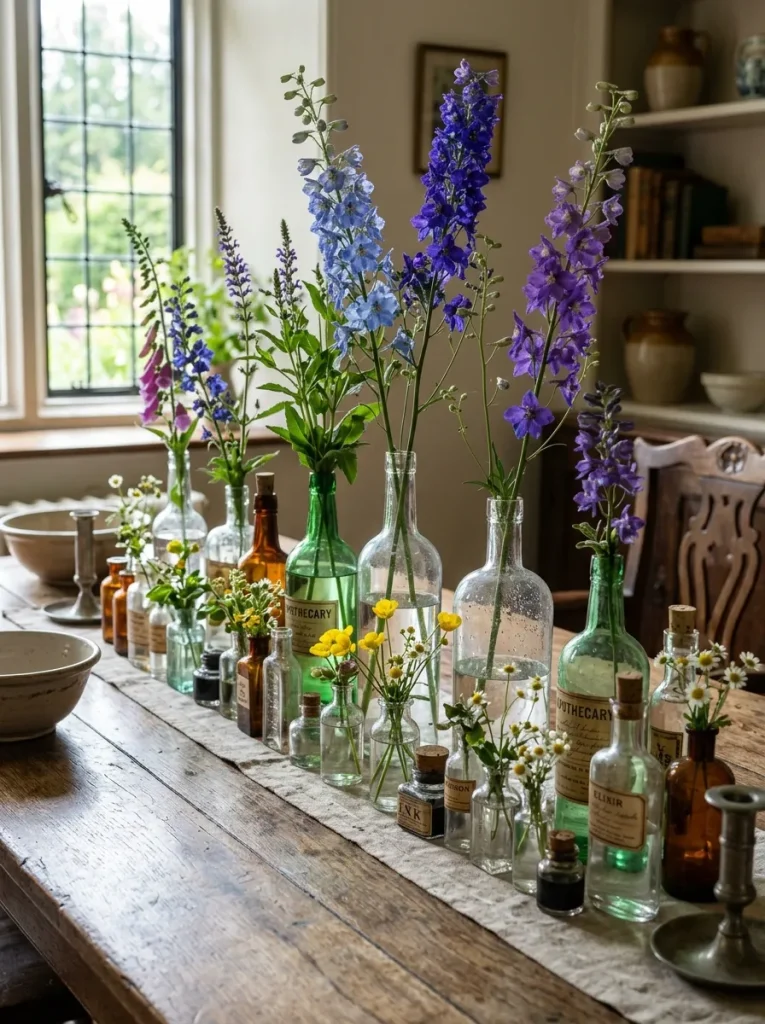
The mixed height bottle assembly utilizes various vintage glass medicine bottles, inkwells, and soda bottles to establish an engaging vertical landscape across the dining surface. Integrating vessels of dramatically different heights prevents visual monotony and guides the eye through a dynamic rhythm of tall, medium, and short display points. Repurposing old utility bottles introduces an authentic vintage charm that blends industrial history with delicate floral styling. The narrow necks characteristic of vintage bottles naturally support slender stems, preventing flowers from drooping and eliminating the need for internal floral foam or support wires. This layout works exceptionally well along long dining tables where varying elevation keeps the view open and interactive.
Start by collecting eight to twelve vintage glass bottles spanning heights from three inches to ten inches tall. Clean the bottle interiors thoroughly using warm water, coarse salt, and dish detergent to scrub away old residue from hard-to-reach bottoms. Set the tallest bottles along the center line of the table, spacing them widely to form the high structural pillars of the display. Surround the tall pieces with medium and short bottles, filling the gaps to form an interconnected, flowing line of glass containers. Carefully pour water into each bottle neck, leaving one inch of air space at the top. Insert tall, slender stems like delphinium or larkspur into the high bottles, while placing short blooms like buttercups or clover into the low inkwells.
Etched Glass and Single Stem Symphony
How to Make
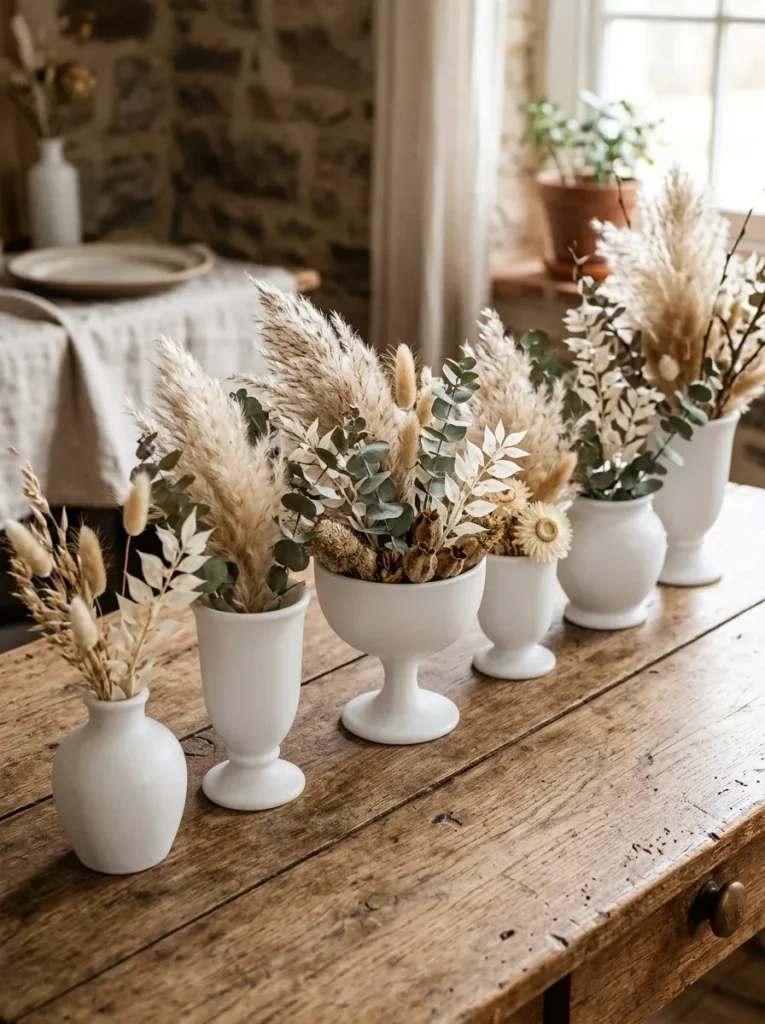
An etched glass and single stem symphony focuses on the romantic delicacy of vintage glassware featuring subtle frosted, wheel-engraved, or acid-etched motifs. These intricate surface decorations often portray trailing vines, small birds, or soft geometric lines that diffuse light gently without full transparency. Using only one high-impact blossom per vase highlights both the craftsmanship of the etched glass and the individual beauty of each chosen flower. This minimalist approach stresses restraint and spatial awareness, allowing the subtle details of both the glassware and the flora to shine without visual clutter. It serves as an accessible option for quick table setup while maintaining a refined aesthetic.
Select six to eight etched vintage glass bud vases showcasing delicate frosted patterns along their exterior surfaces. Wash each piece gently by hand using mild soap and tepid water, avoiding abrasive sponges that could scratch delicate etched details. Place a sheer linen table runner down the table, positioning the etched vases along its length in loose pairs or small trios. Fill the containers two-thirds full with fresh water, wiping away any stray droplets from the etched pattern lines. Select premium single stems with striking form, such as garden roses, calla lilies, or dahlias, stripping all foliage off the lower stems. Insert a single stem into each etched vase, slanting the cut base so the bloom rests gracefully at an elegant angle.
Thrifted Apothecary Jar Accent Line
Execution Process
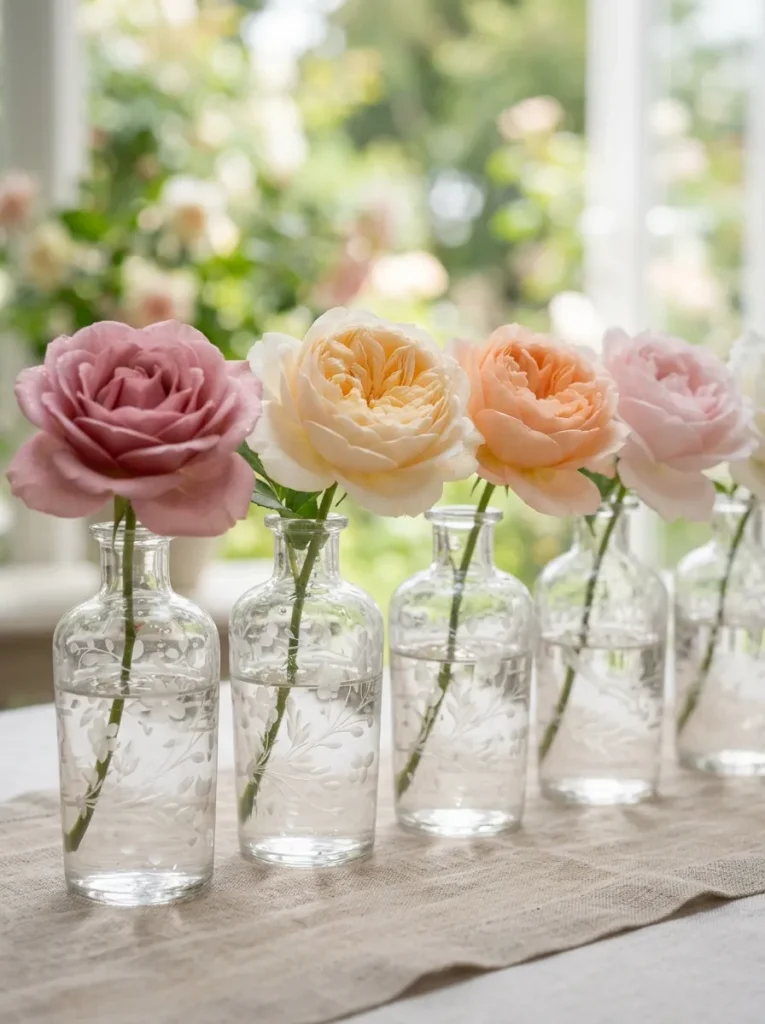
The thrifted apothecary jar accent line relies on wide-bodied, narrow-necked vintage pharmaceutical jars to construct a grounded, vintage-inspired centerpiece. Apothecary jars typically feature heavy glass bases, amber or clear walls, and sturdy proportions that provide physical stability on busy dining tables. Their substantial silhouette offers a more grounded visual presence compared to delicate crystal, making them excellent anchors for casual dining environments. Styling these jars with rustic garden blooms, wild grasses, and herbs creates an informal, gathered-from-the-garden look that feels effortless and inviting. The dark glass variants also protect plant stems from direct sunlight, helping cut flowers maintain freshness longer during daytime events.
Gather five to seven vintage glass apothecary jars of varying volumes, ensuring all glass stoppers are removed and stored safely. Clean the heavy glass interiors thoroughly and check the rims for sharp chips or cracks before proceeding with assembly. Position the apothecary jars in an alternating staggered formation down the middle of the dining surface, keeping three inches of clearance around each base. Fill the sturdy jars halfway with fresh water, adding a drop of liquid plant food to nourish the botanical arrangements. Insert clusters of textured garden flowers, such as feverfew, yarrow, mint sprigs, and cornflowers, into the wide bottle openings. Allow the stems to fan out naturally, creating a full, relaxed canopy of foliage above the substantial glass bases.
Iridescent Glass and Soft Pastels
Setup Method
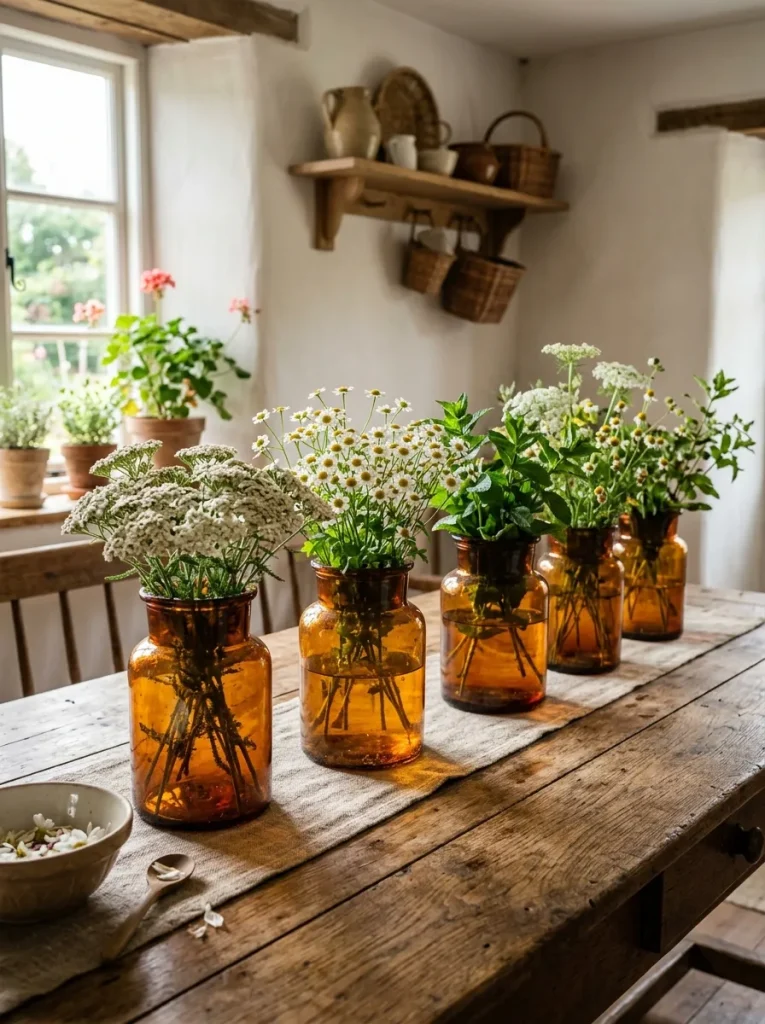
An iridescent glass display utilizes vintage carnival glass or art glass featuring a shimmering, rainbow-like surface coating that reacts dynamically to ambient lighting. The oil-slick finish of iridescent glass reflects multiple pastel hues simultaneously, producing a captivating effect as guests move around the table. Combining these luminous vessels with soft pastel botanicals, such as sweet peas, light hydrangeas, and pale carnations, enhances the dreamy, romantic mood of the setting. This design style is particularly effective for spring celebrations, daytime brunches, or romantic evening dinners where gentle, shifting light amplifies the reflective qualities of the treated glass surface.
Collect four to six vintage iridescent glass bud vases showing soft pink, peach, or pearlescent surface sheens. Hand-wash the glassware delicately in warm water, ensuring no harsh chemical cleaners are used that might degrade the iridescent surface coating. Arrange the iridescent pieces in a tight central cluster on top of a soft pastel or neutral tablecloth. Fill each vase with water, taking care not to spill liquid onto the outer iridescent finish to avoid water spots. Trim pastel-colored blossoms to low heights, inserting two to three stems into each vessel to form a compact, cloud-like dome of flowers above the shimmering glass. Position the entire arrangement where natural sunlight or overhead candlelight directly hits the glass surfaces to maximize light reflection.
Silver-Rimmed Glass and Metallic Accent Layout
Step-by-Step Guide
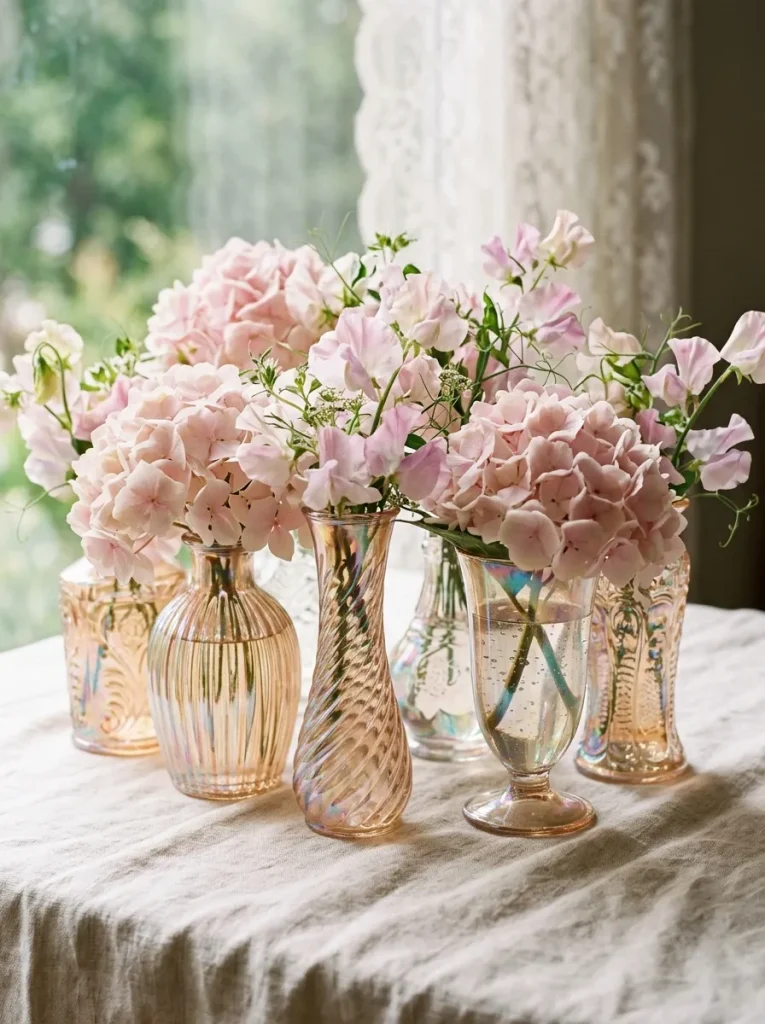
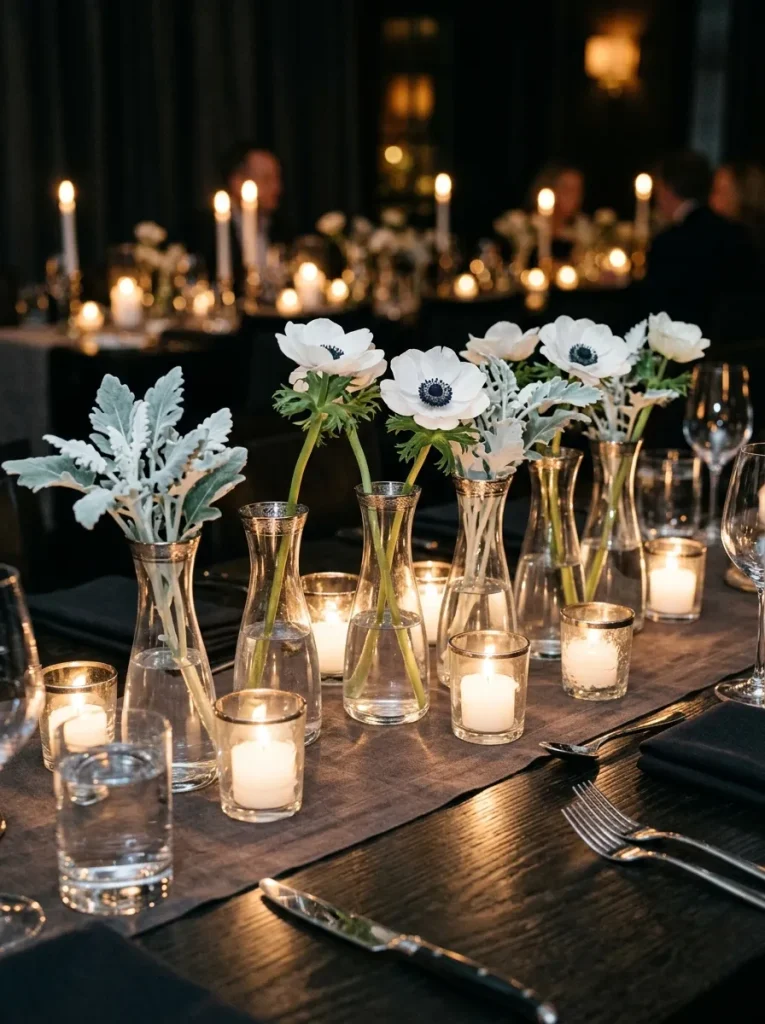
The silver-rimmed glass centerpiece integrates vintage vessels featuring silver, platinum, or mercury glass detailing to bring a touch of formal elegance to the tabletop. These hybrid glass pieces incorporate thin metallic bands around their rims or speckled metallic interiors that catch candlelight and reflect ambient room colors. Blending metallic accents with clear glass creates a bridge between traditional glassware and metallic tableware, such as silver cutlery or brass candleholders. This arrangement pairs exceptional durability with high-end visual appeal, providing a polished look that elevates seasonal holiday tables and evening dinner parties without requiring extensive floral investments.
Select five to seven vintage glass bud vases featuring silver rims, platinum bands, or subtle mercury glass accents around their upper edges. Polish the metallic trim gently using a soft jewelry cloth to restore shine and remove tarnish or finger marks. Position the silver-rimmed vases along the center line of your dining table, interspersing them with small metallic tea light holders to amplify light reflections. Fill each vase halfway with water, ensuring the liquid level stays below the metallic rim line to prevent mineral corrosion over time. Insert refined, structured botanicals like white anemones, pale dusty miller foliage, or silver dollar eucalyptus into the containers. Light the adjacent tea lights just before serving dinner to illuminate the silver rims and create a glowing metallic backdrop.
Vintage Decanter and Stopper Ensemble
Assembly Procedure
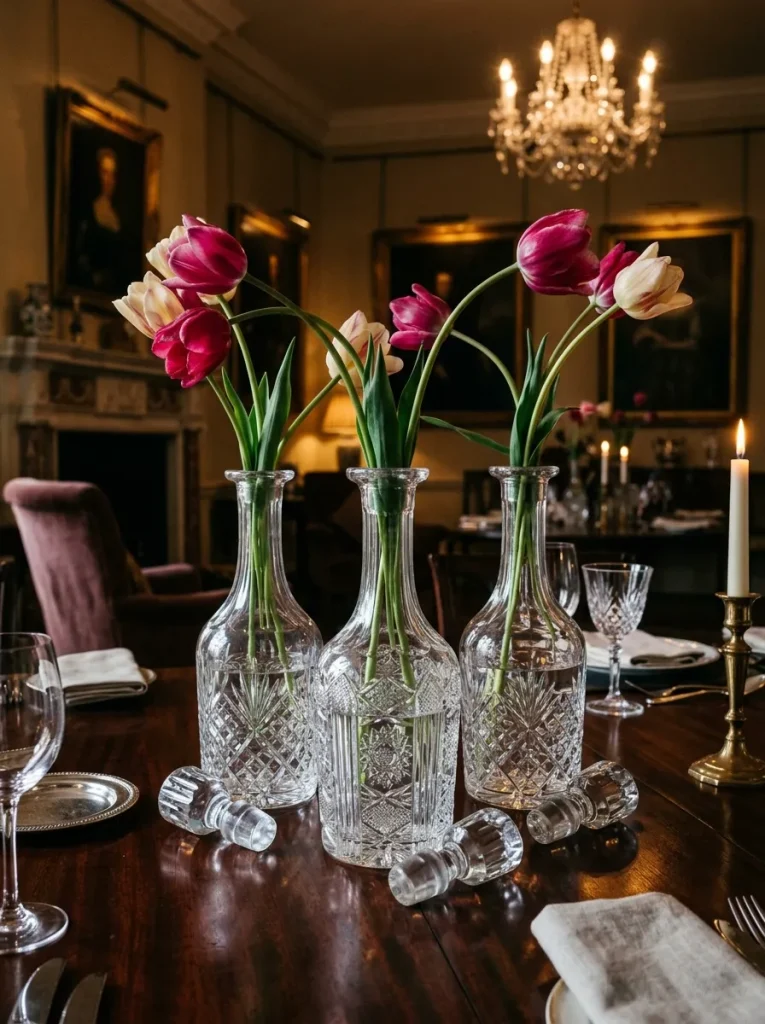
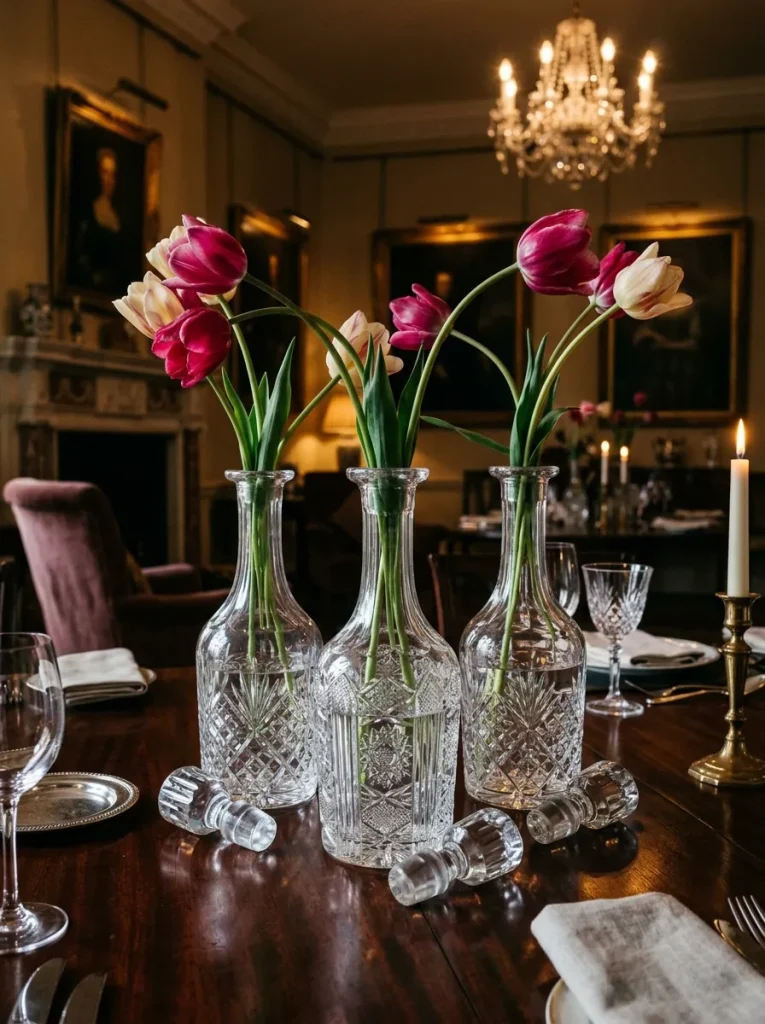
The vintage decanter and stopper ensemble repurposes glass wine and liquor decanters along with their solid glass stoppers as dramatic, heavy-weight centerpiece elements. Decanters feature wide glass bases, intricate cut patterns, and elongated necks that create an impressive sense of scale and craftsmanship on large dining surfaces. Utilizing the decanters as tall bud vases while artfully resting their solid glass stoppers beside the bases adds an intriguing conversational element to the display. This approach takes advantage of larger thrifted glass finds, combining significant visual mass with delicate floral styling to anchor wide dining tables that would overwhelm smaller glassware.
Acquire three vintage glass decanters of differing geometric shapes, along with their matching or complementary solid glass stoppers. Wash the decanter interiors thoroughly using warm water mixed with a small amount of rubbing alcohol to strip cloudiness and old liquid stains. Position the three decanters centrally on the table, forming an asymmetrical triangle layout that serves as the focal anchor. Place the heavy glass stoppers flat on the table surface next to their corresponding decanter bases, resting them on small fabric coasters to protect the wood table finish. Fill the decanters one-third full with fresh water to provide low center-of-gravity stability. Insert long-stemmed structural botanicals, such as French tulips, calla lilies, or blooming cherry blossom branches, allowing their natural curves to extend gracefully above the decanter necks.
| Centerpiece Idea | Primary Glass Type | Color Palette | Ideal Table Shape | Maintenance Level |
|---|---|---|---|---|
| Layered Pressed Glass Lineup | Molded Pressed Glass | Clear / Neutral Green | Long Rectangular | Low |
| Gradient Colored Glass Cluster | Tinted Vintage Bottles | Amber / Smoke / Warm Tones | Round or Square | Low |
| Cut Crystal Geometric Grid | Faceted Cut Crystal | Clear / Pure White | Large Square or Rectangular | Medium |
| Milk Glass and Dried Array | Opaque Milk Glass | White / Cream / Earth Tones | Rectangular or Oval | Very Low |
| Mixed Height Bottle Assembly | Utility Medicine Bottles | Clear / Green / Wildflower | Long Rectangular | Medium |
| Etched Glass Single Stem | Wheel-Etched / Frosted | Clear / Soft Pastels | Oval or Small Rectangular | Low |
| Thrifted Apothecary Jar Line | Heavy Amber Jars | Warm Amber / Deep Green | Rectangular | Low |
| Iridescent Glass Pastel Display | Carnival / Art Glass | Pearlescent / Soft Pink | Round | Medium |
| Silver-Rimmed Glass Layout | Metallic-Trimmed Glass | Silver / White / Cool Tones | Rectangular | Medium |
| Vintage Decanter Ensemble | Heavy Cut Decanters | Clear / Botanical Green | Large Rectangular | Low |
Common Beginner Mistakes and How to Avoid Them
A frequent error when creating thrifted glass centerpieces is selecting vessels of identical height and shape, which results in a flat, visually uninteresting layout across the table. To avoid this monotony, intentionally collect glass pieces that vary in height, volume, and surface texture to build dynamic visual interest. Another mistake involves overfilling small bud vases with overly dense floral bunches, which can cause narrow-necked glass containers to tip over from top-heavy weight distribution. Prevent stability issues by trimming stems short and restricting each small vase to one to three lightweight botanicals. Beginners also frequently overlook the cleanliness of thrifted glass, leaving cloudy mineral deposits or old sticker residue visible on the table under bright lights. Always scrub secondhand glassware thoroughly with vinegar or baking soda prior to styling to ensure maximum transparency and sparkle. Finally, avoid crowding the table surface too densely with glassware, ensuring adequate room remains for dining plates, serving platters, and beverage glasses.
Practical Tips for Better Results
Achieving professional styling results with vintage glass bud vases relies on small adjustments in preparation, lighting, and botanical selection. Use a small drop of clear liquid dish soap in vase water to lower surface tension, helping cut flower stems absorb water efficiently while keeping the liquid clear longer. When working with extremely light glass bottles that feel unstable, place clean glass marbles or polished river pebbles inside the bottom to lower the center of gravity. Position your centerpiece where natural daylight from nearby windows or warm overhead light hits the glassware directly to amplify reflections and shadows across the tabletop. When trimming floral stems, always cut at a sharp diagonal angle under running water to prevent air bubbles from blocking water intake within the stem. To maintain a fresh look over multiple days, use a thin turkey baster to siphon out dirty water from narrow-necked vases without disturbing your established floral arrangement.
Styling, Presentation, or Organization Ideas
Integrating a thrifted glass centerpiece into your broader dining room decor requires thoughtful attention to surrounding textures, linens, and table accessories. Pair transparent glass arrangements with textured table runners made of unbleached linen, raw silk, or natural jute to ground the sparkling reflective qualities of the glass. Intermingle small glass vessels with low-profile tapered candles or brass candlestick holders to add warm ambient lighting that illuminates the glassware during evening meals. Group leftover vintage bottles on nearby sideboards, floating shelves, or window sills to extend the design theme throughout the entire dining space seamlessly. When organizing your collection between uses, store small glass bud vases in compartmentalized cardboard boxes lined with bubble wrap to prevent accidental chipping or breakage. Categorize stored glassware by color or material type so you can quickly retrieve specific sets for future seasonal decorating projects and gatherings.
Budget and Time Planning
Creating a custom vintage glass centerpiece is one of the most cost-effective home decor projects available, requiring minimal financial investment and time commitment. Sourcing vintage bud vases at thrift stores, garage sales, and flea markets typically costs between one and three dollars per vessel, keeping total glassware expenses extremely low. Assembly time for most ten-vase arrangements takes less than thirty minutes once the glassware has been cleaned and prepared. To save money on floral elements, forage wild grasses, branches, and seasonal blooms from your home garden or buy single mixed bouquets from local markets to divide among multiple small vases. Plan your thrift shopping trips periodically over several weeks to accumulate a diverse, interesting collection rather than rushing to buy everything from expensive antique dealers. By building a versatile inventory of upcycled glassware over time, you can construct elevated, changing seasonal displays in minutes without recurring costs.
Creative Expansion and Advanced Inspiration
Once you master basic vintage glass styling, explore advanced creative variations to adapt your centerpieces for changing seasons and special celebrations. Combine small glass bud vases with large natural elements, such as trailing ivy vines, fresh moss, or architectural tree branches, to build expansive, immersive botanical installations across the table. For autumn displays, integrate small heirloom pumpkins, dried wheat sheaves, and amber glassware to evoke a rich harvest atmosphere. Transform your centerpiece for winter holidays by pairing clear cut-crystal vessels with evergreen sprigs, holly berries, and silver metallic accents that sparkle under festive lighting. Advanced decorators can experiment with hanging lightweight glass bottles filled with single blooms from overhead dining light fixtures using clear monofilament line, creating a floating floral cloud above the table. Continuously reimagining how you group, illuminate, and fill your upcycled glass collection ensures your dining space remains visually dynamic, sustainable, and uniquely styled throughout the year.