

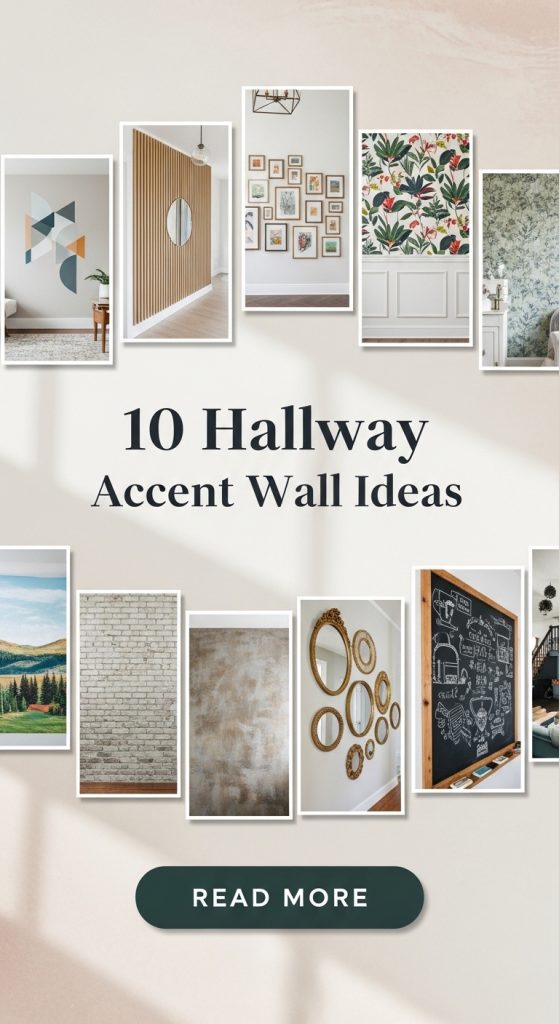
10 Hallway Accent Wall Ideas
Hallways are among the most overlooked spaces in a home. They are rarely furnished, seldom lingered in, and often treated as purely functional — a means of getting from one room to another. Yet hallways are also the first spaces we experience when entering a home and the last we pass through before leaving. They frame movement, guide the eye, and quietly shape how the rest of the home is perceived.
In architectural terms, hallways are transitional spaces. They exist between destinations, but they are spaces nonetheless. When designed intentionally, they create rhythm, anticipation, and cohesion. When ignored, they feel empty, awkward, or unfinished.
Accent walls are one of the most effective ways to elevate a hallway. Unlike furniture-heavy rooms, hallways benefit from vertical interest. Walls do the majority of the visual work. An accent wall can define character, introduce texture, guide direction, or provide a moment of pause within movement.
Importantly, hallway accent walls do not need to be loud. In fact, the most successful designs often rely on subtlety, repetition, and material quality rather than bold contrast. Because hallways are passed through frequently, overstimulation can become tiring. Elegance and restraint are key.
This essay explores ten hallway accent wall ideas that transform corridors into intentional design moments. Each idea focuses on how the wall interacts with movement, light, and proportion, ensuring that the hallway feels purposeful rather than decorative for decoration’s sake.
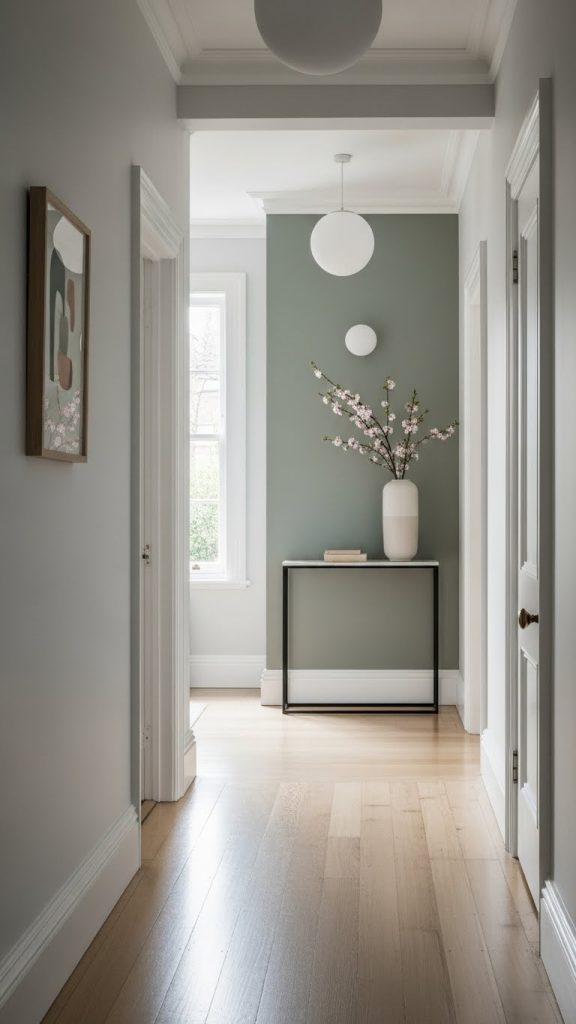
1. Painted Accent Wall in a Soft, Muted Tone
Paint is one of the simplest and most versatile ways to create a hallway accent wall, but elegance lies in restraint.
Rather than bold or saturated colors, muted tones work best in hallways. Soft greige, warm taupe, muted sage, dusty blue, or clay-inspired hues add depth without overwhelming the narrow space.
The accent wall may appear at the end of the hallway to draw the eye forward, or along one continuous side to create rhythm. The surrounding walls remain neutral, allowing the color to anchor the space gently.
This approach works especially well in homes where the hallway connects multiple rooms, as it adds character without clashing.
2. Vertical Wood Slat Accent Wall
Vertical wood slats add texture, warmth, and architectural interest to hallways without requiring additional décor.
The vertical lines visually elongate the space, making hallways feel taller and more intentional. Natural wood tones introduce warmth, while painted slats offer a more modern, monochrome look.
This type of accent wall pairs beautifully with minimalist lighting and neutral flooring. It works particularly well in modern, Scandinavian, or contemporary homes.
The tactile quality of wood transforms the hallway from a passage into a sensory experience.

3. Wallpaper Accent Wall With Subtle Pattern
Wallpaper offers an opportunity to introduce pattern and personality into a hallway, but subtlety is essential.
Small-scale patterns, soft florals, tonal geometrics, or textured wallpapers work best. Large or high-contrast patterns can feel overwhelming in narrow spaces.
An accent wallpaper wall at the end of a hallway can act as a visual destination, while a single side wall can introduce rhythm without clutter.
When paired with simple lighting and clean trim, wallpaper elevates the hallway without competing for attention.

4. Gallery Wall as a Living Accent Wall
A gallery wall transforms a hallway into a narrative space.
Rather than a single material change, the accent comes from repetition and curation. Framed artwork, photographs, sketches, or prints line the wall, guiding movement through visual storytelling.
Consistency is key. Frames should share a common finish or color, and spacing should be intentional. This keeps the gallery feeling cohesive rather than chaotic.
A gallery accent wall works beautifully in long hallways, turning the act of walking into a slow, engaging experience.

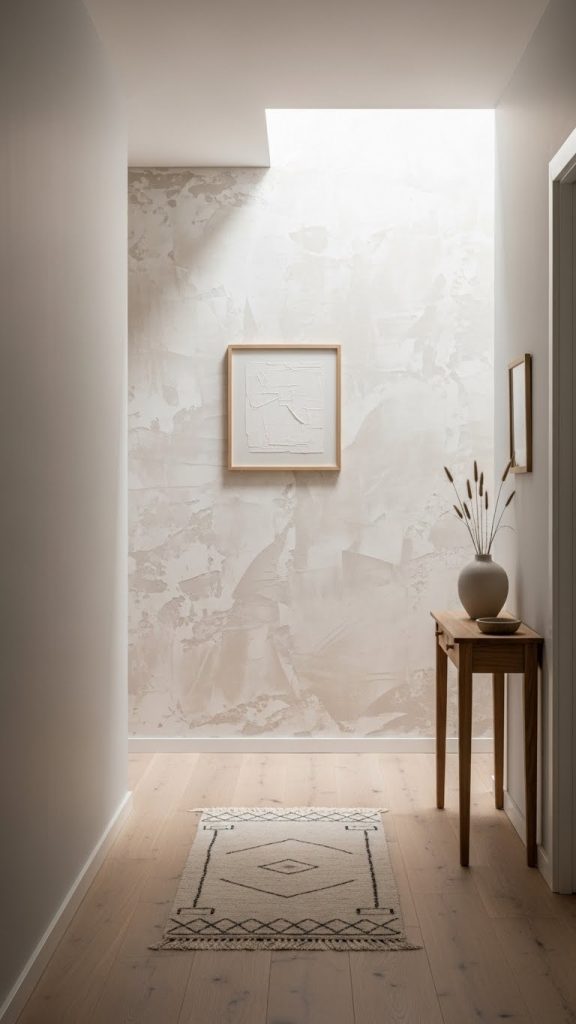
5. Textured Plaster or Limewash Accent Wall
Texture can be more powerful than color.
Plaster or limewash finishes introduce subtle variation, depth, and movement to hallway walls. These finishes catch light differently throughout the day, making the space feel alive without decoration.
Neutral tones work best — soft whites, warm greys, or sandy hues. The texture becomes the accent rather than the color.
This approach is ideal for elegant, European-inspired, or minimalist interiors where material quality takes precedence over ornament.
6. Stone or Brick Accent Wall
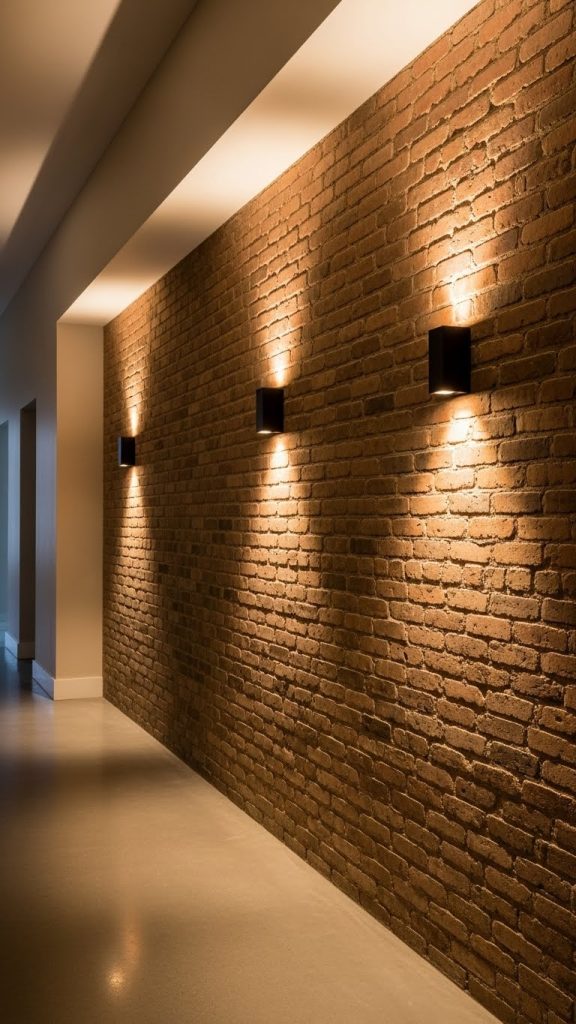
Natural or faux stone and brick accent walls add grounding and character to hallways.
Exposed brick introduces warmth and history, while stone adds texture and architectural weight. These materials work especially well in older homes, lofts, or transitional interiors.
Because stone and brick are visually strong, they should be used on a single wall only. Lighting plays a crucial role here — soft, directional lighting enhances texture without harsh shadows.
This accent wall creates a sense of permanence and craftsmanship.
7. Mirror Accent Wall for Light and Space
Mirrors are powerful tools in hallway design, especially in narrow or dimly lit spaces.
A full-height mirror wall or a series of vertical mirrors reflects light and visually expands the hallway. This creates openness while maintaining elegance.
Framed mirrors can add detail, while frameless designs feel modern and seamless. Placement should consider sightlines to avoid cluttered reflections.
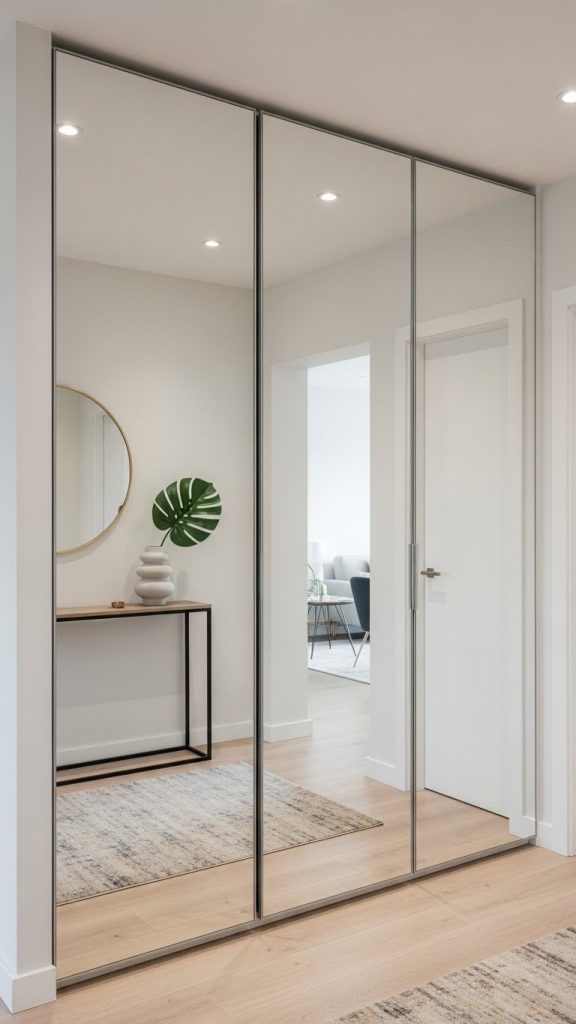
Mirror accent walls are particularly effective in apartments or homes with limited natural light.
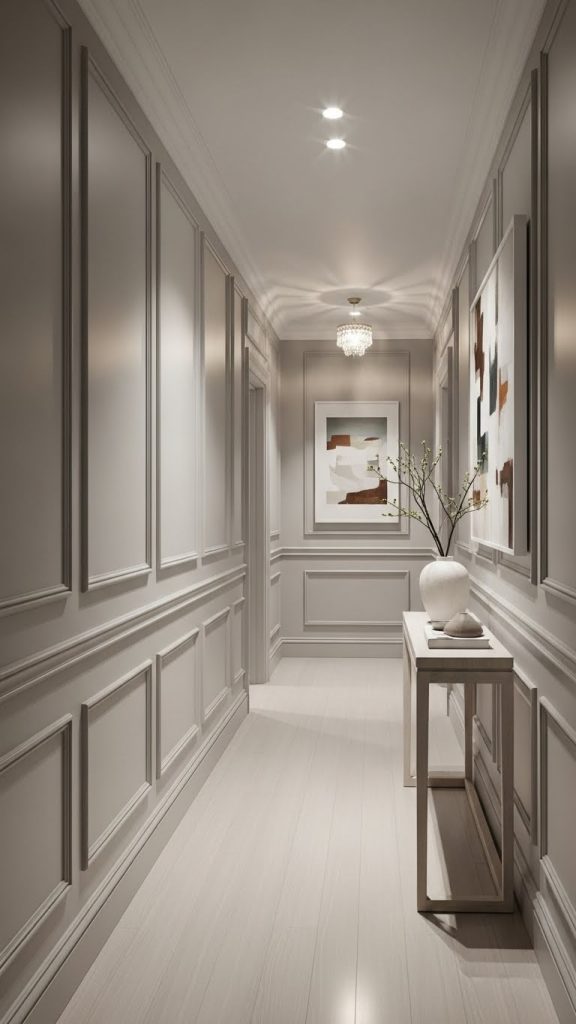
8. Molding and Paneling Accent Wall
Wall molding introduces classic elegance to hallways.
Paneling, wainscoting, or decorative trim adds architectural interest without requiring color contrast. Painted in the same color as the wall, molding relies on shadow and depth rather than pigment.
This approach works beautifully in traditional, transitional, or Parisian-inspired interiors.
Molding turns a plain hallway into a refined, finished space that feels intentional and timeless.
9. Dark Accent Wall for Dramatic Depth
Dark accent walls can work in hallways when handled carefully.
Charcoal, deep navy, forest green, or rich brown create depth and sophistication. The key is balance — the dark wall should be paired with adequate lighting and lighter surrounding surfaces.
Often, the dark accent wall is placed at the end of the hallway, grounding the space and drawing the eye forward.

This idea works best in wider hallways or those with good ceiling height.
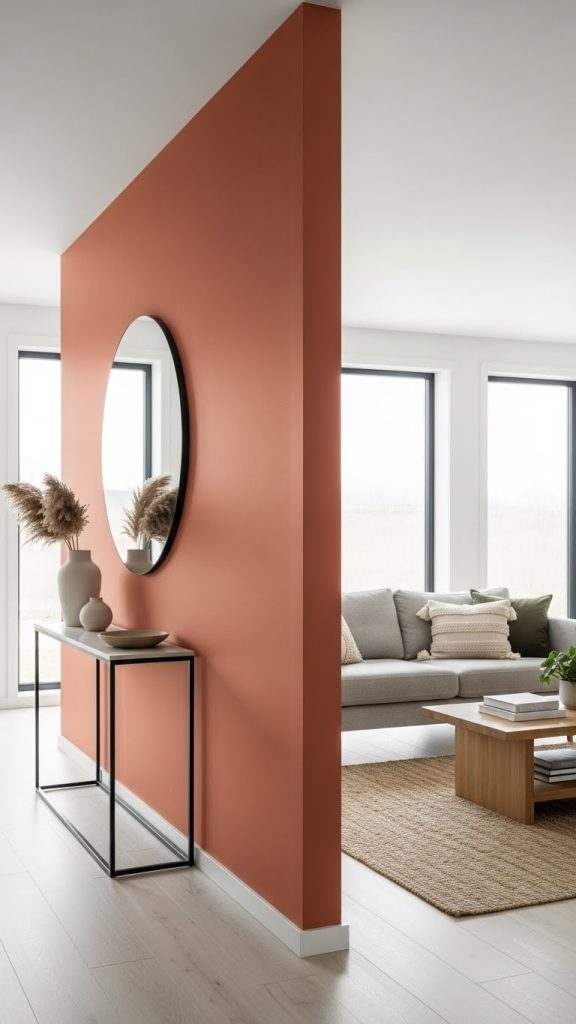
10. Continuous Accent Wall That Flows Into Adjacent Rooms
One of the most sophisticated hallway accent wall ideas is continuity.
Using the same accent material — color, texture, or paneling — from the hallway into an adjacent room creates visual flow and cohesion. The hallway becomes part of a larger design story rather than a separate space.
This approach works especially well in open-plan homes or apartments, where transitions should feel seamless.
The accent wall becomes a unifying thread, connecting spaces through design rather than dividing them.
Conclusion: Turning Passage Into Presence
Hallways do not need furniture to feel finished. They need intention.
Accent walls offer a way to give hallways identity without overcrowding. Whether through color, texture, pattern, or material, a well-designed accent wall transforms movement into experience.
The best hallway accent walls are not about boldness for its own sake. They are about proportion, flow, and atmosphere. They guide the eye, soften transitions, and quietly elevate the home.
When treated thoughtfully, the hallway becomes more than a corridor. It becomes part of the home’s narrative — a place where design doesn’t stop, but gently continues.