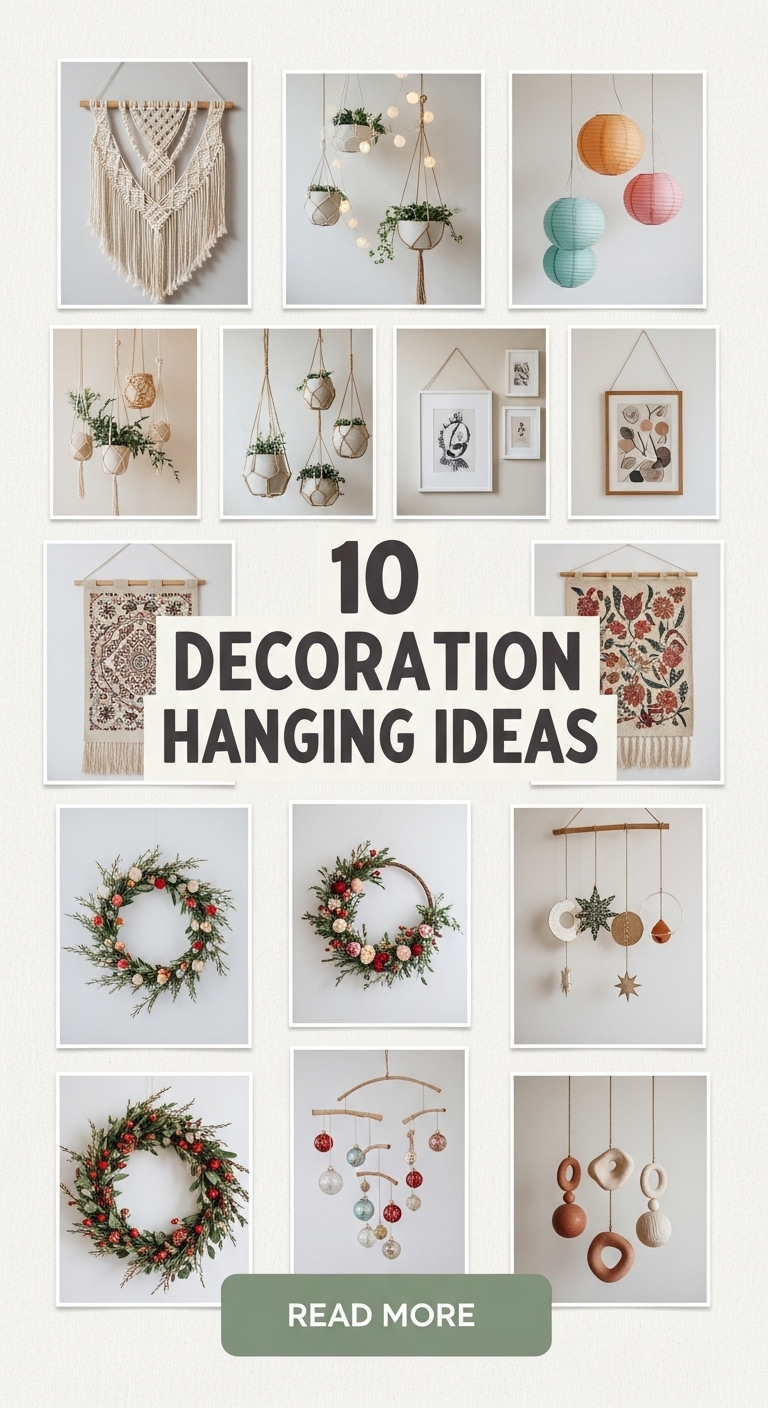
10 Decoration Hanging Ideas
Hanging decoration is one of the oldest and most instinctive forms of interior expression. Long before furniture became permanent or walls were filled with framed art, people hung objects — textiles, lanterns, plants, talismans — to bring warmth, meaning, and life into their surroundings. Hanging décor introduces a vertical dimension to design, activating space that would otherwise remain unused.
Unlike surface décor, which occupies tables, shelves, and floors, hanging elements interact with air and light. They move subtly. They cast shadows. They shift as the day changes. This sense of motion adds softness and depth to a room, preventing it from feeling static or rigid.

In modern interiors, hanging décor is often treated as purely decorative — something added for visual interest. Yet when done thoughtfully, it becomes architectural. It shapes how a room is perceived: ceilings feel higher, corners feel softer, and spaces feel more layered and intentional.
This essay explores ten decoration hanging ideas that go beyond trend. Each approach focuses on atmosphere, balance, and meaning — not excess. Hanging décor, at its best, does not clutter space. It completes it.
1. Hanging Plants for Living Movement
Hanging plants introduce life in its most literal form. They soften hard lines, add organic movement, and bring nature into interior spaces without occupying valuable floor or surface area.
Plants suspended from ceilings, wall brackets, or beams create a layered environment. Leaves cascade downward, interacting with light and air. Even the slightest movement adds dynamism to a room.
The appeal of hanging plants lies in their versatility. They work in nearly every room — living areas, kitchens, bedrooms, bathrooms. Their placement can highlight architectural features or soften awkward corners.
When chosen thoughtfully, hanging plants do not overwhelm. They frame space gently, reminding the room that it is lived in and alive.

2. Fabric Wall Hangings for Softness and Sound
Fabric wall hangings are among the most emotionally grounding forms of décor. They introduce softness where walls might otherwise feel cold or flat.
Textiles absorb sound, reducing echo and creating a quieter atmosphere. This makes them especially valuable in bedrooms, reading rooms, and open-plan spaces.
Hanging fabrics may include tapestries, woven pieces, quilts, or simple draped textiles. Their texture and weight matter more than pattern or color.
Fabric hangings bring a sense of shelter. They recall historical interiors where cloth was used for warmth and privacy, making modern spaces feel more humane and intimate.

3. Framed Art Arranged as a Hanging Gallery
A hanging gallery transforms blank walls into narratives. Rather than a single focal point, multiple framed pieces create rhythm and visual conversation.
The key to a successful hanging gallery is cohesion. Frames may vary slightly, but they should feel related. Spacing matters as much as content.
A gallery wall invites the eye to move slowly. It encourages exploration and reflection. Each piece contributes without dominating.
This approach allows personal expression while maintaining structure, making it ideal for shared spaces where individuality and balance must coexist.

4. Mirrors Hung to Shape Light and Space
Hanging mirrors is both decorative and architectural. Mirrors reflect light, expand perceived space, and add depth without physical intrusion.
When hung thoughtfully, mirrors can brighten dark corners, visually raise ceilings, or bring balance to asymmetrical layouts.
The frame and placement matter more than size alone. A well-positioned mirror feels intentional, not utilitarian.
Mirrors also introduce quiet drama. They reflect movement and change throughout the day, making the room feel dynamic and alive.

5. Hanging Lighting as Decorative Structure
Light fixtures are among the most impactful hanging elements in any interior. Beyond function, they act as visual anchors.
Pendant lights, lanterns, or sculptural fixtures define zones within a room. They draw the eye upward, giving the ceiling a role in the overall composition.
Decorative lighting should feel proportionate to the space. Oversized fixtures can overwhelm, while undersized ones disappear.
When lighting is both beautiful and well-placed, it becomes part of the décor — shaping mood as much as illumination.

6. Hanging Shelves for Functional Display
Hanging shelves combine utility with visual lightness. Suspended rather than supported from below, they feel less heavy than traditional shelving.
These shelves allow objects to float within the space, creating openness while still offering storage or display.
They are particularly effective in smaller rooms, where floor space is limited. Hanging shelves keep the eye moving vertically rather than compressing the room horizontally.

When styled with restraint, hanging shelves feel intentional and architectural rather than cluttered.
7. Decorative Plates or Objects Hung as Art
Objects traditionally kept in cabinets — plates, baskets, ceramics — can become wall décor when hung thoughtfully.
This approach celebrates craftsmanship and material rather than imagery. The wall becomes a gallery of texture and form.
Consistency matters. Objects should share a visual language, whether through color, shape, or material.
Hanging objects adds depth and personality, turning everyday items into meaningful visual statements.

8. Curtains and Drapery Beyond Windows
Curtains are not limited to windows. Hanging fabric panels can define space, soften walls, or create visual separation without permanence.
Floor-to-ceiling drapery adds height and elegance. Light, sheer panels introduce softness without blocking light.
This approach works especially well in large rooms or open-plan spaces, where defined zones are needed without walls.
Hanging drapery creates a sense of enclosure and comfort — a feeling of being gently held by the space.

9. Hanging Sculptural Elements for Subtle Drama
Sculptural hanging décor introduces artistry without weight. These pieces may be abstract forms, mobiles, or crafted objects.
The key is restraint. Sculptural hangings should interact with space, not dominate it. Movement and negative space are essential.
These elements add intrigue. They reward closer attention and change appearance depending on light and angle.
When chosen carefully, sculptural hangings elevate a room’s character without overwhelming it.

10. Personal and Symbolic Hangings
The most meaningful hanging décor is often personal. Items with emotional significance — heirlooms, handmade pieces, symbolic objects — carry weight beyond aesthetics.
These pieces do not need explanation. Their value lies in presence and memory.
Hanging personal objects integrates identity into space, making it feel lived-in and authentic rather than styled.
This approach ensures that decoration serves not just beauty, but belonging.

Conclusion: When Décor Floats, Space Breathes
Hanging décor changes how space behaves. It introduces lightness, movement, and depth. It allows rooms to breathe by activating vertical space rather than crowding horizontal surfaces.
The most successful hanging decoration ideas are those guided by intention rather than abundance. They consider proportion, placement, and meaning. They allow space to remain open while still feeling complete.
When décor is suspended thoughtfully, it does not clutter. It complements. It frames the room gently, inviting both the eye and the body to relax.
Hanging decoration, at its best, does not demand attention. It earns it — quietly, steadily, and with grace.