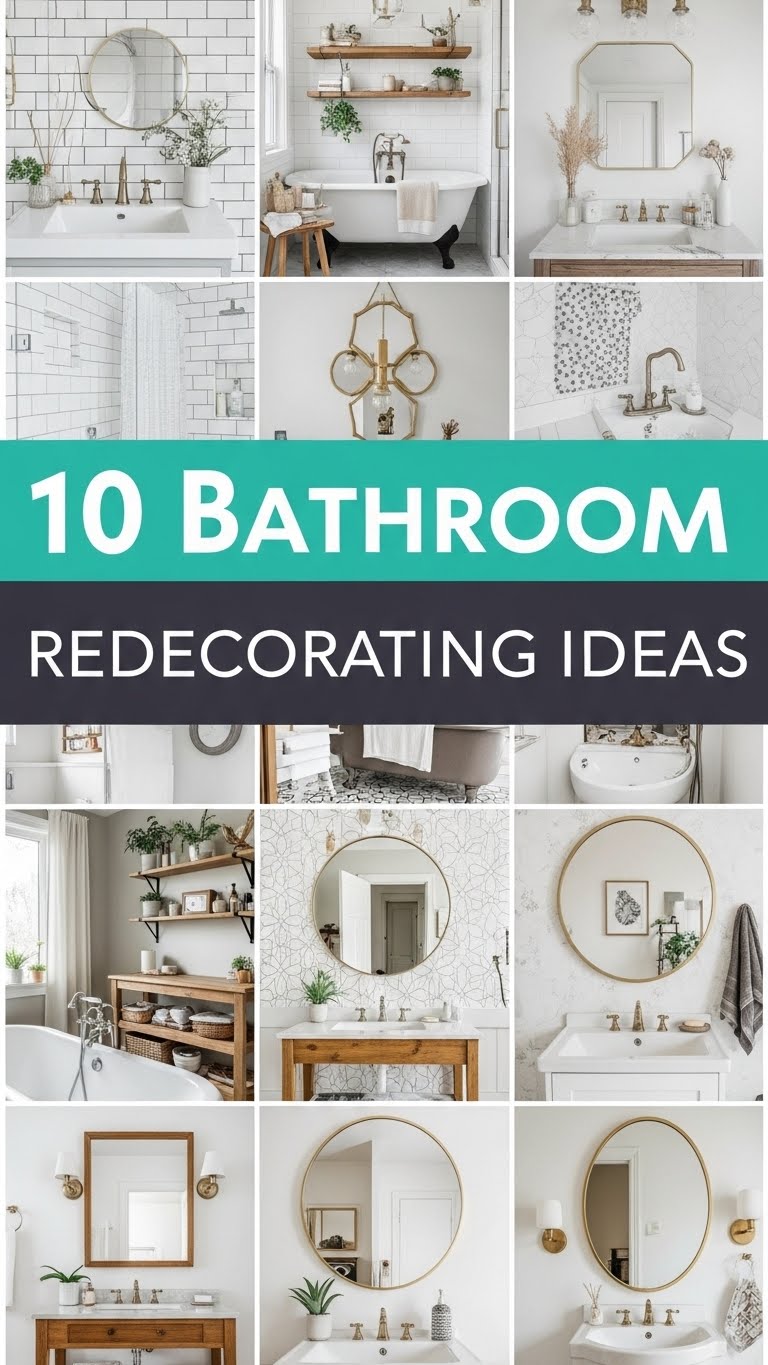
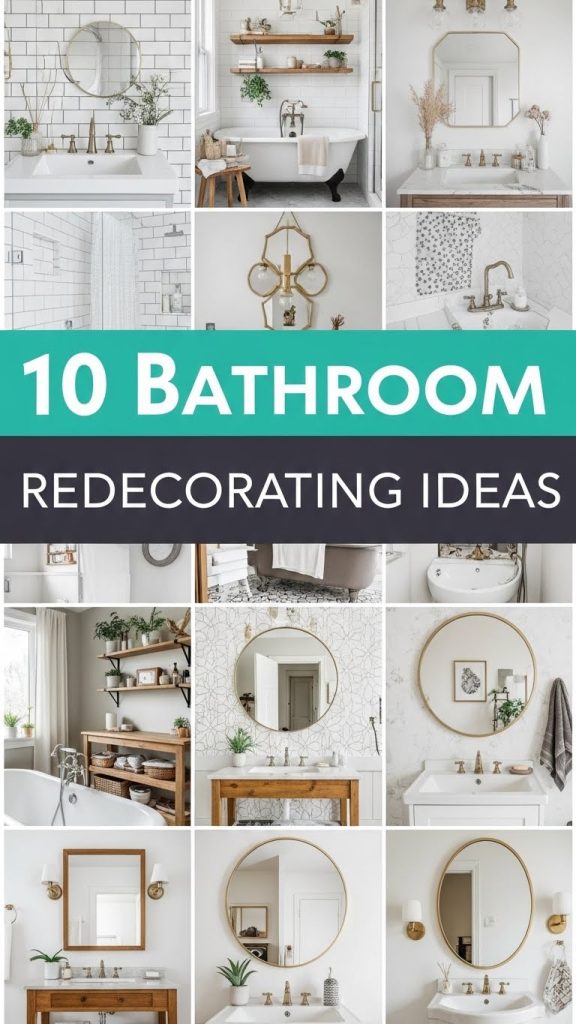
10 Bathroom Redecorating Ideas
Bathrooms are among the most frequently used rooms in any home, yet they are often the last to be thoughtfully redesigned. Because they are seen as functional rather than expressive, bathrooms frequently end up feeling cold, cluttered, or purely utilitarian. Redecorating a bathroom is an opportunity to change that narrative—to turn a necessary space into one that supports comfort, calm, and daily rituals.
Unlike major renovations, redecorating does not require tearing out walls or replacing plumbing. Thoughtful changes in layout, materials, lighting, and color can dramatically improve how a bathroom looks and feels. Small adjustments often produce outsized results because bathrooms are compact environments where every element is noticed.
For adults, the bathroom is often the first place visited in the morning and the last place at night. The atmosphere of this space influences mood, stress levels, and even how the day begins or ends. A well-designed bathroom can feel restorative rather than rushed, grounding rather than sterile.
The following ten bathroom redecorating ideas focus on practical, achievable changes that elevate both form and function. They prioritize longevity, ease of maintenance, and emotional comfort, helping transform bathrooms into spaces that feel intentional and lived-in rather than temporary or neglected.
1. Redefine the Color Palette for Calm and Cohesion
One of the most impactful ways to redecorate a bathroom is by rethinking its color palette. Bathrooms are often dominated by white or overly cool tones, which can feel stark or clinical. Introducing a more nuanced palette can instantly soften the space.
Consider colors that evoke calm and cleanliness without harshness. Soft whites with warm undertones, pale grays, muted greens, and gentle blues all work well in bathrooms. These shades reflect light while creating a more inviting atmosphere. Avoid highly saturated colors, which can feel overwhelming in a small space.
If repainting the entire bathroom is not an option, color can still be introduced through textiles, accessories, or even a painted vanity. Consistency matters more than boldness. A cohesive palette creates visual calm and makes the space feel larger and more intentional.
This approach is ideal for homeowners who want a noticeable change without a major overhaul.

2. Upgrade Lighting to Support Daily Rituals
Lighting is one of the most underestimated elements of bathroom design. Many bathrooms rely on a single overhead light, which creates harsh shadows and flattens features. Redecorating is the perfect opportunity to layer lighting.
Start by improving task lighting around the mirror. Wall-mounted sconces or vertical lights placed at eye level provide even illumination for grooming. Warm-toned bulbs reduce harshness and create a more flattering light.
Ambient lighting should be soft and diffused. If possible, use dimmers to adjust brightness throughout the day. Low light in the evening creates a spa-like atmosphere, while brighter light supports morning routines.
Thoughtful lighting transforms a bathroom from purely functional into emotionally supportive.
3. Refresh Fixtures for Instant Modernization
Replacing fixtures is one of the fastest ways to modernize a bathroom without structural changes. Faucets, showerheads, towel bars, and cabinet hardware all contribute to the overall aesthetic.
Choose a finish and use it consistently. Matte black, brushed nickel, soft brass, and chrome all have distinct personalities. Consistency creates cohesion, while mixing too many finishes can feel chaotic.
Modern fixtures often improve functionality as well. Water-efficient showerheads, single-handle faucets, and streamlined designs enhance everyday use while updating the look.
This redecorating idea works well for renters or homeowners who want visible improvement with minimal disruption.

4. Introduce Texture to Warm the Space
Bathrooms often suffer from an excess of smooth, hard surfaces. While necessary for cleanliness, these surfaces can make the room feel cold or echoey. Introducing texture softens the environment.
Textured towels, woven baskets, fabric shower curtains, and wood accents all add warmth. Even small changes—like swapping a plastic trash bin for a woven one—can alter the room’s feel.
Texture also helps visually balance tile, porcelain, and glass. A mix of soft and hard elements makes the bathroom feel more like a living space and less like a utility room.
This approach is especially effective in modern or minimalist bathrooms that need warmth.
5. Rework Storage to Reduce Visual Clutter
Clutter is one of the biggest barriers to a calm bathroom. Redecorating provides an opportunity to rethink how items are stored and displayed.
Start by decluttering thoroughly. Remove expired products, duplicates, and items that do not belong in the bathroom. Then, assess what remains and design storage accordingly.
Use closed storage for everyday items you don’t want to see, and open storage for items that add beauty—such as neatly folded towels or glass jars. Drawer organizers, baskets, and wall-mounted cabinets can dramatically improve function.
A clutter-free bathroom feels larger, cleaner, and more relaxing.

6. Update Textiles for Comfort and Style
Textiles are an easy and affordable way to redecorate a bathroom. Towels, bath mats, shower curtains, and window treatments all contribute to the room’s personality.
Choose textiles that feel good to use, not just good to look at. Plush towels, absorbent mats, and quality fabrics elevate daily routines. Neutral or muted tones create a spa-like feel, while subtle patterns add interest.
Changing textiles seasonally can refresh the space without permanent changes. Lighter fabrics in summer and heavier ones in winter add variety and comfort.
This idea is perfect for those who want flexibility and low commitment.

7. Add Natural Elements for Balance
Nature has a calming effect, and bathrooms benefit greatly from its presence. Adding natural elements softens the room and improves its atmosphere.
Houseplants that tolerate humidity, such as ferns or pothos, thrive in bathrooms and add life. If plants aren’t an option, natural materials like wood, stone, or clay achieve a similar effect.
Even small natural touches—such as a wooden stool, stone soap dispenser, or ceramic tray—help balance the bathroom’s harder surfaces.
This approach is ideal for creating a spa-inspired environment.

8. Rethink the Mirror as a Design Feature
The mirror is often the focal point of a bathroom, yet it is frequently overlooked in redecorating. Replacing or reframing a mirror can dramatically change the room’s look.
Consider mirrors with soft edges, thin frames, or unique shapes. A framed mirror adds warmth, while a minimalist mirror suits modern spaces. Backlit mirrors offer both style and function.
The size of the mirror also matters. Larger mirrors reflect more light and make small bathrooms feel more spacious.
This update is relatively simple but visually powerful.
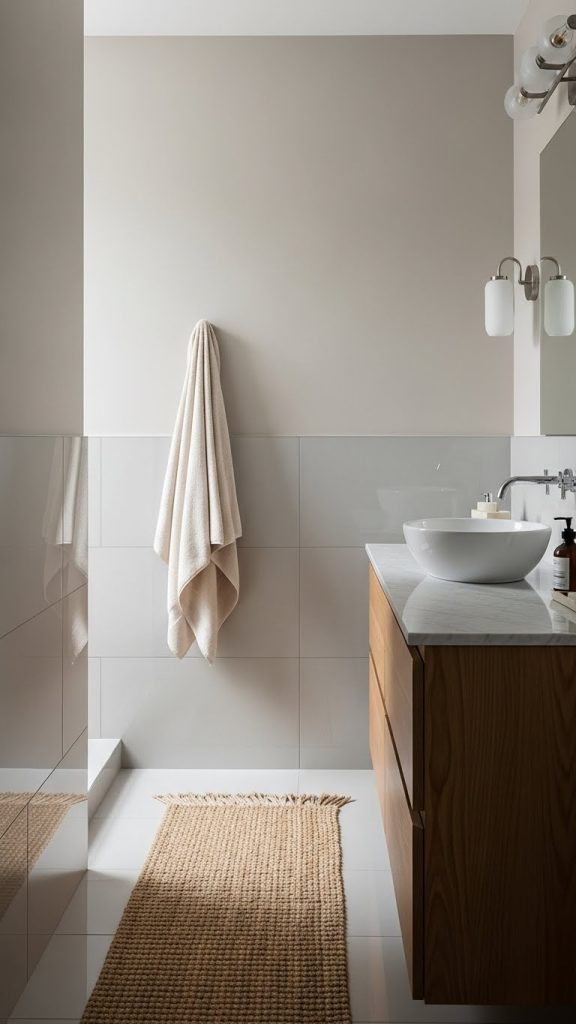
9. Create a Spa-Like Shower or Bath Experience
Redecorating can elevate the bathing experience without full renovation. Small changes in the shower or bath area can make a big difference.
Upgrade the shower curtain to a fabric one, add a teak or bamboo bath mat, or install a rainfall-style showerhead. Coordinated accessories create a sense of luxury.
Keep the bathing area uncluttered. Use wall-mounted caddies or recessed niches to store products neatly. A clean, organized shower feels more relaxing and easier to maintain.
This idea focuses on enhancing daily comfort rather than aesthetics alone.

10. Personalize with Thoughtful Details
The final step in bathroom redecorating is personalization. This is what transforms a bathroom from generic to meaningful.
Artwork, framed prints, candles, or personal objects add character. Choose items that can withstand humidity and are easy to clean. Avoid overcrowding; a few well-chosen pieces are more effective than many small ones.
Personal details should enhance the room’s mood rather than distract from it. When done thoughtfully, they make the bathroom feel like an extension of the home rather than a separate, purely functional space.

Conclusion: Redecorating as a Form of Everyday Care
Bathroom redecorating is not about luxury for its own sake. It is about improving the quality of everyday moments—washing your face, taking a shower, preparing for the day. Small changes in design can significantly affect how these moments feel.
By focusing on color, light, texture, and organization, you can transform a bathroom without major renovation. The result is a space that feels calmer, cleaner, and more supportive of daily life.
Ultimately, a well-redecorated bathroom is an act of care—for your home and for yourself.