
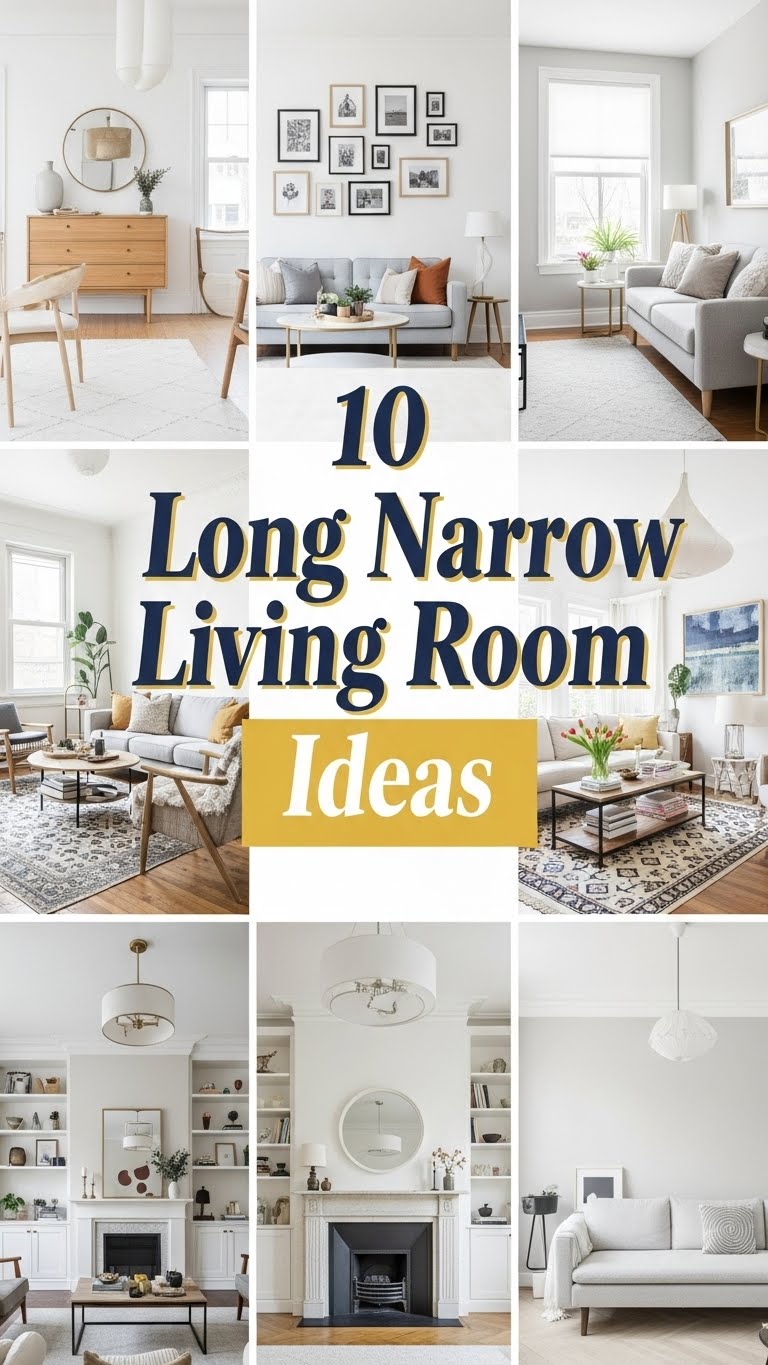
10 Long Narrow Living Room Ideas
A long, narrow living room is one of the most common layout challenges in modern homes, apartments, and older houses alike. Often described as “bowling alley–shaped,” these spaces can feel awkward, hard to furnish, and visually unbalanced. Furniture placement feels limited, walkways become confusing, and the room can easily feel more like a corridor than a place to relax.
The problem is not the size—it is proportion. Long, narrow rooms exaggerate length while minimizing width, which can create visual tension if treated like a standard square living room. Many people respond by pushing all furniture against the walls or lining everything up in a straight row, which unfortunately makes the room feel even longer and less inviting.
The key to designing a long, narrow living room is intentional zoning, visual breaks, and strategic furniture placement. Rather than fighting the shape, successful designs work with it—using layout tricks, lighting, color, and texture to rebalance proportions and create comfort.

A well-designed long living room can actually offer advantages: clear circulation paths, the ability to create multiple functional zones, and a strong sense of flow. When approached thoughtfully, these spaces can feel cozy, stylish, and surprisingly versatile.
The following ten ideas explore practical, design-forward solutions for long narrow living rooms. Each idea focuses on improving balance, usability, and atmosphere—helping the room feel like a destination rather than a passageway.
1. Divide the Room into Distinct Zones
One of the most effective strategies for a long narrow living room is to stop treating it as a single space. Instead, divide it into two or more functional zones.
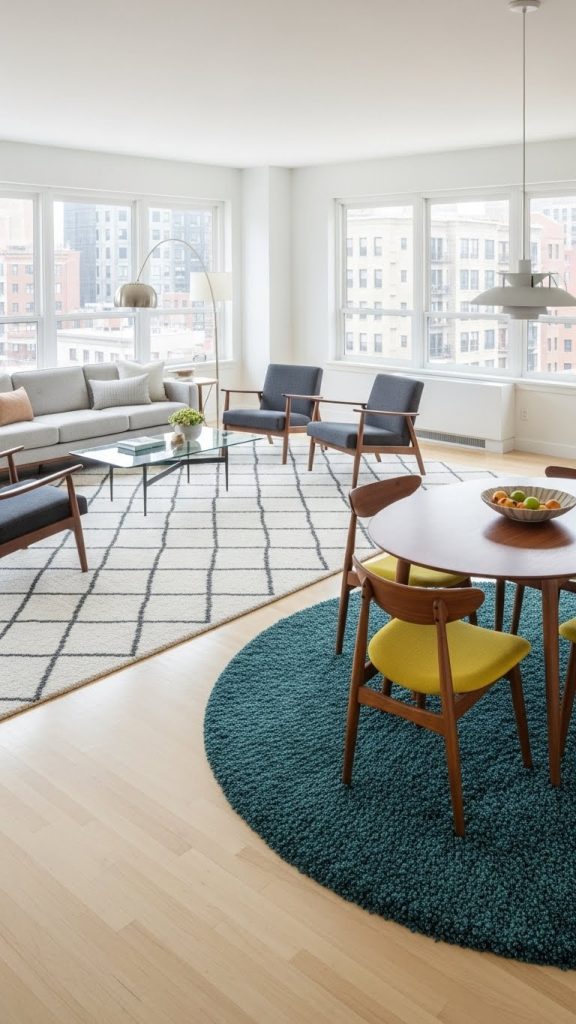
For example, the front half of the room might function as a formal seating or conversation area, while the back half serves as a reading nook, workspace, or media zone. Area rugs, lighting changes, or furniture placement can visually separate these zones without adding walls.
Zoning shortens the perceived length of the room and gives each section a clear purpose. It also makes the space feel intentional rather than accidental. When each zone has its own identity, the room feels fuller, more balanced, and easier to use.

2. Float Furniture Away from the Walls
A common instinct in narrow rooms is to push all furniture against the walls to “save space.” In reality, this often makes the room feel longer, emptier, and less comfortable.
Floating furniture—especially the sofa—can dramatically improve balance. Pulling a sofa a few inches away from the wall or positioning it perpendicular to the length of the room creates visual breaks and adds depth.
Floating furniture also allows you to create walkways behind or beside seating, which improves circulation. The room feels more intentional and less like a hallway with furniture attached to the edges.

3. Use Area Rugs to Break Up the Length
Area rugs are powerful tools in long narrow living rooms. They visually anchor furniture and define zones, helping to interrupt the stretched proportions of the space.
Instead of one long rug that emphasizes length, use multiple rugs—each scaled to its zone. For example, one rug under the main seating area and another under a reading or dining nook.
Choose rugs that are wide enough to reach beyond the furniture edges. Wider rugs visually expand the room sideways, counteracting the narrow feel.

4. Arrange Seating Across the Width, Not the Length
Furniture arranged along the length of a narrow room reinforces its stretched shape. Instead, aim to arrange seating across the width whenever possible.
Place sofas, chairs, or benches perpendicular to the long walls. Even a single chair positioned sideways can visually shorten the room and create a sense of intimacy.
This approach encourages conversation and prevents the “train car” effect, where furniture lines up end to end. It also makes the room feel more dynamic and human-scaled.

5. Create a Clear and Intentional Walkway
Long narrow rooms often double as circulation spaces, connecting different parts of the home. Ignoring this reality leads to awkward furniture placement and blocked paths.
Designate a clear walkway—usually along one side of the room—and commit to it. Keep furniture out of this path and allow it to flow naturally from one end to the other.
When circulation is clear, the room feels calmer and more functional. Guests intuitively understand how to move through the space, and the living area feels purposeful rather than cluttered.
6. Use Vertical Elements to Balance Proportions
When a room feels too long, drawing the eye upward can help rebalance proportions. Vertical elements reduce emphasis on length by shifting attention to height.
Tall bookcases, vertical artwork, floor-to-ceiling curtains, and high shelving all help create vertical interest. Even wall paneling or vertical stripes can subtly change perception.
Be careful not to overcrowd walls. The goal is to add height, not visual noise. Well-spaced vertical elements help the room feel more structured and less stretched.

7. Vary Lighting to Define Different Areas
Lighting is often overlooked in long narrow living rooms, but it plays a crucial role in shaping how the space feels.
Instead of relying on a single ceiling light, use layered lighting to support zoning. Floor lamps, table lamps, wall sconces, and accent lighting can distinguish one area from another.
For example, a pendant or chandelier might define the main seating area, while a floor lamp marks a reading nook. These subtle shifts make the room feel intentional and visually interesting.

8. Choose Furniture with the Right Scale and Profile
Oversized furniture can overwhelm a narrow room, while furniture that is too small can make it feel underfurnished. Scale matters deeply in long living rooms.
Choose sofas and chairs with slimmer profiles, exposed legs, or open bases. These allow light to pass through and prevent the room from feeling heavy.
Modular seating, armless chairs, or low-profile sectionals can be especially effective. The goal is to maintain comfort while preserving visual breathing room.

9. Use Color and Pattern to Rebalance the Space
Color can subtly reshape how a room is perceived. In long narrow living rooms, thoughtful color placement helps counteract extreme proportions.
Painting the short end walls a slightly darker or warmer color can visually “pull them closer,” making the room feel shorter. Lighter tones on long walls help widen the space.
Patterns can also help. Horizontal patterns—on rugs, pillows, or artwork—draw the eye sideways rather than forward, helping balance the room’s shape.

10. Anchor the Room with a Strong Focal Point
A long narrow living room benefits greatly from a clear focal point. Without one, the eye travels endlessly down the length of the room, reinforcing its corridor-like feel.
A fireplace, media unit, large artwork, or feature wall placed on a short wall can anchor the space. Furniture should be arranged to acknowledge this focal point rather than ignoring it.
When the eye has somewhere to rest, the room feels resolved and intentional. The focal point gives the space identity and emotional grounding.

Conclusion: Turning a Challenging Shape into a Strength
A long narrow living room does not need to feel awkward or limiting. With thoughtful design, it can become a layered, comfortable, and highly functional space that flows naturally and feels inviting.
The key lies in breaking up length, creating zones, floating furniture, and designing for real movement. When the room is treated as a series of experiences rather than a single stretched rectangle, it transforms.
Rather than forcing the room to behave like a square space, embrace its linear nature and guide it with intention. When balance replaces symmetry and flow replaces rigidity, the room begins to work with you—not against you.
In the end, a well-designed long narrow living room is not defined by its proportions, but by how it feels to live in. With the right approach, it can become one of the most interesting and rewarding spaces in your home.