
10 Fresh Floral Dining Room Table Centerpiece Ideas
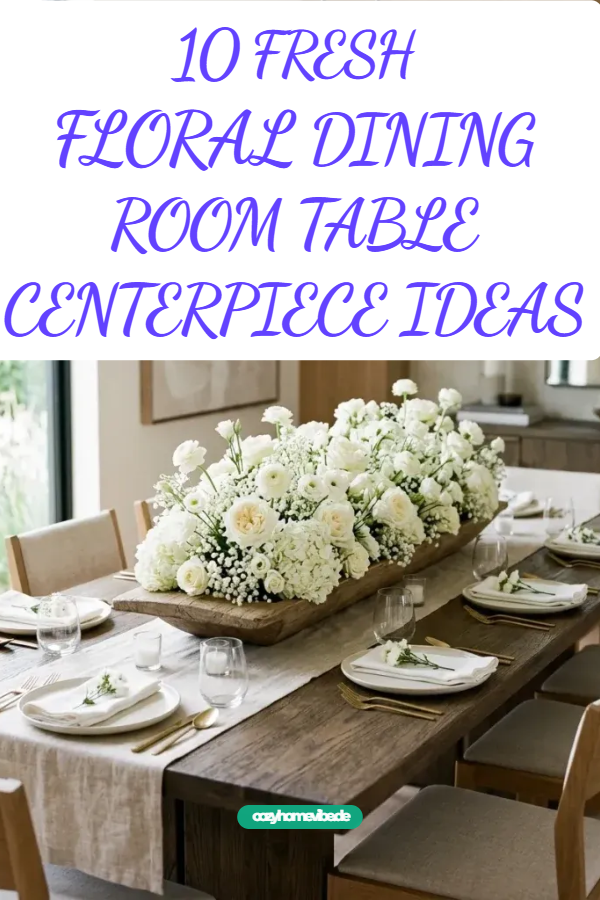
Table styling creates an inviting atmosphere in any home decor scheme, and formal dining spaces benefit immensely from natural organic elements. A fresh floral dining room table centerpiece serves as the focal point of your dining space, anchoring the room, establishing a cohesive color palette, and elevating everyday meals into memorable visual experiences. Learning how to select, arrange, and maintain live botanical arrangements allows homeowners to enhance their interior spaces with seasonal textures and vibrant visual appeal. This step by step guide explores ten distinct creative ideas for fresh floral arrangements tailored for dining tables of all shapes and sizes. You will discover practical methods for choosing harmonious vessels, balancing color schemes, controlling arrangement scale, and extending the lifespan of cut flowers. Whether preparing for casual family gatherings, seasonal celebrations, or formal dinner parties, these aesthetic ideas offer versatile inspiration that blends modern design concepts with classic floral styling practices. Mastering these basic concepts empowers beginners and experienced decorators alike to design professional quality botanical focal points effortlessly.
The popularity of botanical dining room decor continues to grow as homeowners embrace natural materials, organic textures, and seasonal styling concepts across modern Pinterest ideas. Fresh floral arrangements remain a dominant inspiration trend because they offer an accessible, budget friendly way to transform an interior environment without committing to permanent renovations. Unlike static decorative objects, live plant displays evolve dynamically, offering shifting visual textures, natural fragrances, and seasonal warmth that instantly brighten dining areas. The growing preference for minimalist style and eco-friendly home aesthetics has further accelerated interest in DIY floral projects that incorporate locally sourced, native, or garden-grown blooms. Beginners appreciate how straightforward botanical styling can be, as simple floral arrangements require minimal specialty equipment while yielding immediate high-impact results. Furthermore, changing dining table centerpieces according to seasonal availability provides an engaging, creative project that keeps home interiors feeling updated and aligned with nature throughout the year.
Proper preparation and material selection are essential preliminary steps for creating durable, visually balanced fresh floral dining table centerpieces. Before beginning any floral design project, you must gather fundamental supplies, including sharp floral shears, clean glass or ceramic vessels, floral tape, waterproof foam or reusable metal flower frogs, and commercial flower food packets. Selecting appropriate floral vessel shapes requires evaluating your dining table dimensions; long rectangular tables benefit from linear arrangements or multiple smaller vessels, while round tables suit centered, symmetrical designs. Cleanliness is paramount during preparation, as bacteria in dirty vases drastically shortens the lifespan of fresh cut stems. Wash all glass jars, ceramic pots, or metal containers thoroughly with warm soap and water before filling them with clean, room-temperature water mixed with cut-flower nutrients. Stripping low-hanging leaves from stems prevents organic decay in the water reservoir, ensuring your arrangement remains clear, healthy, and visually appealing for several days.
Floating Botanical Bowl Display
Creation Method
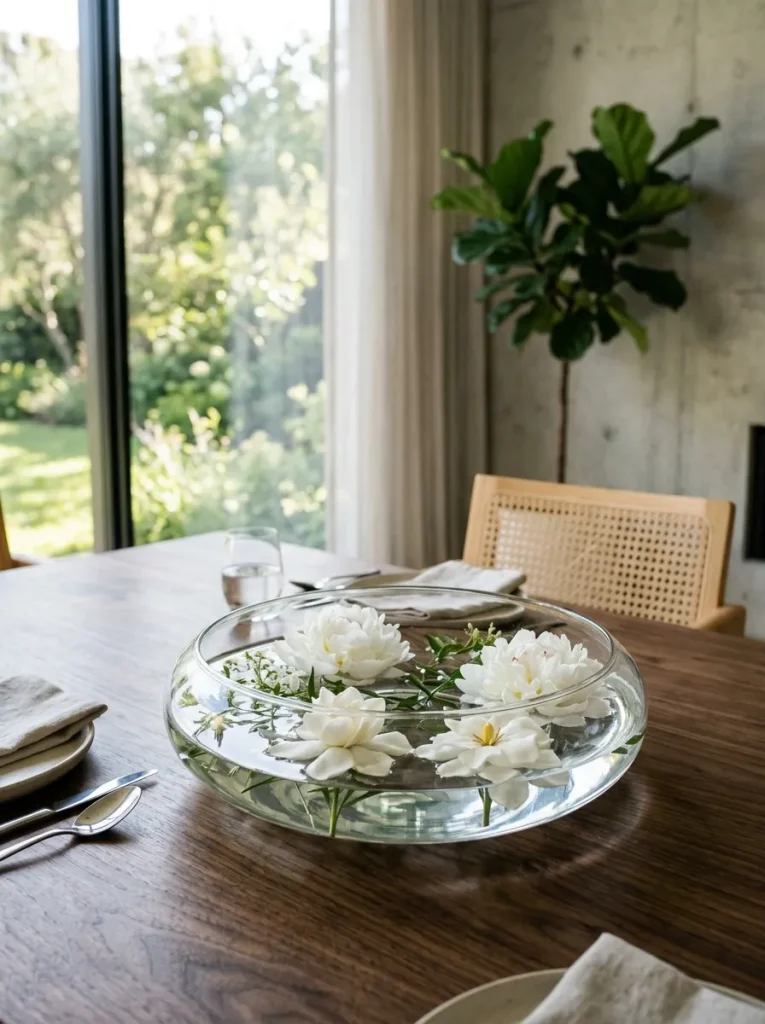
The floating botanical bowl display is a modern design concept that emphasizes minimalist style and fluid geometric symmetry. This technique involves submerging short-stemmed fresh blooms in a shallow, wide-mouthed vessel filled with clear water, allowing blossoms to float freely across the surface. The visual effect highlights the intricate natural geometry of individual petals while creating a serene, calm atmosphere ideal for intimate dining settings. Large-petaled flowers such as gardenias, camellias, open roses, and fully bloomed peonies work exceptionally well for this specific application due to their broad surface area and buoyancy. Selecting a transparent glass bowl enhances visibility from all viewing angles, whereas an opaque ceramic dish creates a striking visual contrast against colorful floating petals. This minimalist style keeps the overall vertical profile extremely low, ensuring that guests sitting across the dining table enjoy completely unobstructed sightlines during conversation.
To construct this low-profile centerpiece step by step, begin by selecting a clean glass or ceramic bowl measuring roughly ten to fourteen inches in diameter. Fill the vessel two-thirds full with fresh, cool water mixed with liquid floral preservative to maintain petal crispness and prevent premature wilting. Carefully trim fresh flower stems using sharp floral shears, leaving approximately one half-inch of stem beneath the flower head to allow adequate water uptake while preventing the bloom from tipping over. Place the prepared blossoms gently onto the water surface, starting from the center and working outward in a balanced arrangement. Incorporate small floating leaves, such as trimmed eucalyptus or ivy, around the perimeter to add structural variety and deep green tonal contrast. Check water levels daily, topping off the reservoir with clean water and immediately removing any spent petals to keep the floating display looking fresh and pristine.
Layered Monochromatic Floral Trough
Execution Process
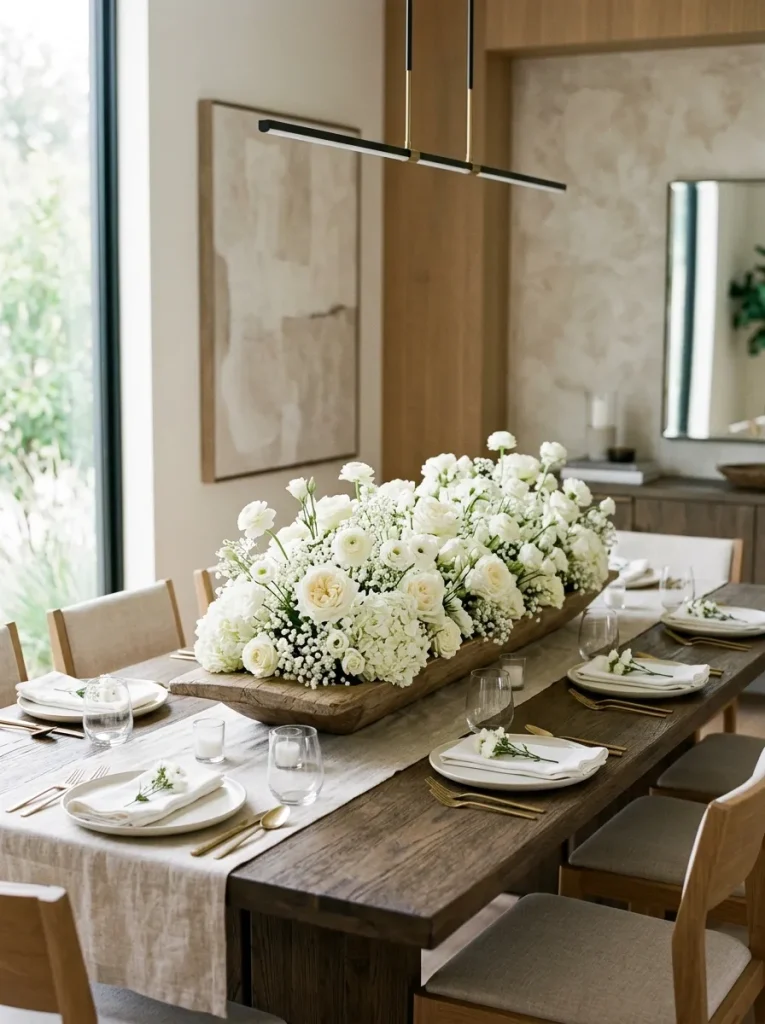
A layered monochromatic floral trough utilizes a single color palette across a linear wooden or metallic trough vessel, delivering a bold aesthetic statement suitable for long dining tables. By restricting the arrangement to a single hue—such as varied shades of pure white, deep burgundy, or soft blush—the focus shifts toward contrasting textures, stem heights, and varied petal shapes. Combining different floral varieties within the same color family creates rich visual depth without cluttering the aesthetic profile of the dining room. For instance, pairing white hydrangea blooms with ivory roses, pale ranunculus, and delicate baby’s breath produces a sophisticated textured look that feels both structured and organic. The extended rectangular shape of a table trough distributes visual weight evenly down the length of long wooden tables, creating an inviting horizontal focal point for dinner parties.
Creating a monochromatic trough arrangement requires a structured step by step approach to secure floral stems across an elongated vessel. Select a rectangular trough made from wood, galvanized metal, or ceramic, lining any porous materials with a waterproof plastic liner to prevent water leakage onto your dining table surface. Insert pre-soaked floral foam bricks trimmed to fit snugly inside the container, or construct a sturdy grid using clear waterproof floral tape stretched across the rim. Begin the assembly process by inserting broad focal flowers, such as hydrangeas, low into the foam grid to establish a strong base foundation. Next, insert secondary blooms at varying heights, angling stems outward slightly to create natural movement and fluid transitions across the length of the trough. Fill remaining gaps with fine textured filler flowers and small green leaves, ensuring all mechanical structures and foam bases remain fully concealed from view.
Terracotta Pot and Wildflower Cluster
Assembly Instructions
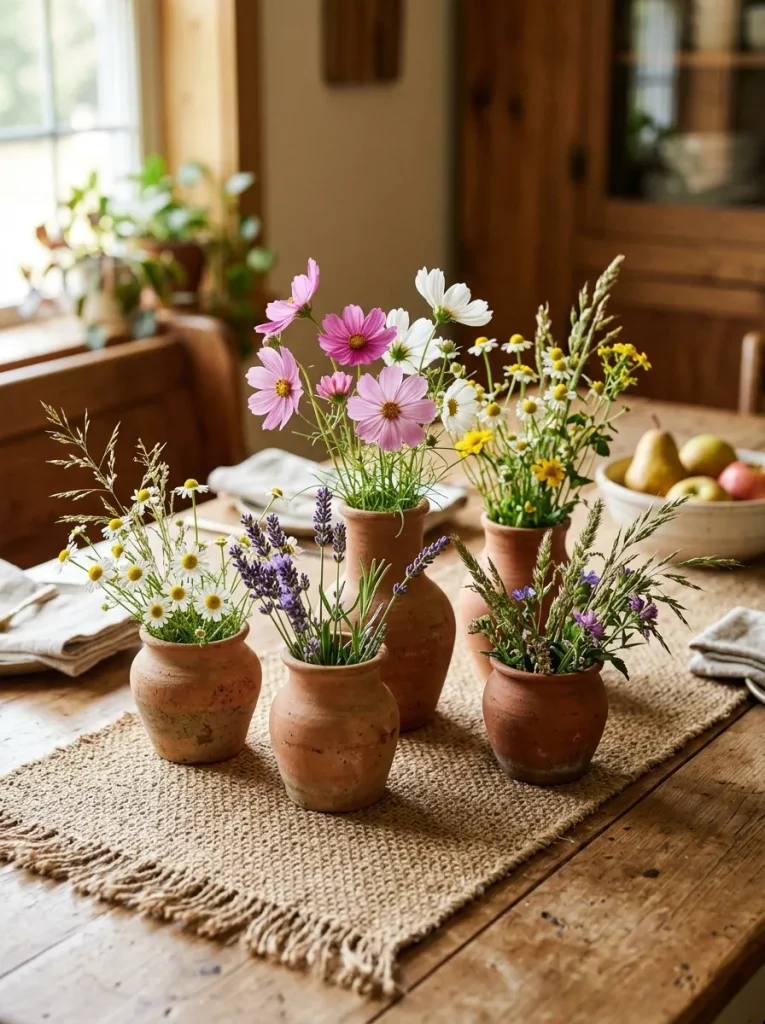
The terracotta pot and wildflower cluster concept brings a rustic, organic charm into modern dining spaces by grouping small clay vessels into a cohesive centerpiece ensemble. Instead of relying on one massive central arrangement, this approach spreads individual wildflower stems across three to five varied terracotta pots clustered together in the center of the table. Wildflowers such as cosmos, chamomile, lavender, cornflowers, and delicate ornamental grasses provide an airy, field-gathered aesthetic that feels relaxed and unpretentious. The earthy, warm orange tones of natural terracotta pottery complement vibrant floral colors while adding tactile material contrast against polished dining surfaces. This flexible modular system allows hostesses to adjust the centerpiece size effortlessly based on table dimensions, guest counts, or dining space availability.
Setting up this flexible centerpiece begins with selecting an odd number of terracotta pots in varying heights and diameters for optimal visual balance. Seal the interior of porous terracotta pots with plastic liners or insert small glass cups inside each pot to hold water reliably without seeping through the clay walls. Fill each glass insert with clean water mixed with flower nutrients, then gather small bunches of fresh field flowers and textured greenery stems. Trim stems at sharp angles, cutting them to distinct heights so that flowers emerge at varying elevations across the overall cluster. Place the tallest floral stems in the central, largest terracotta pot, surrounding it with shorter pots filled with delicate textural blooms and trailing greenery accents. Arrange the pots in a tight triangular or linear cluster on a woven jute table runner to complete the cohesive rustic presentation.
Mason Jar and Twine Linear Trio
Setup Method
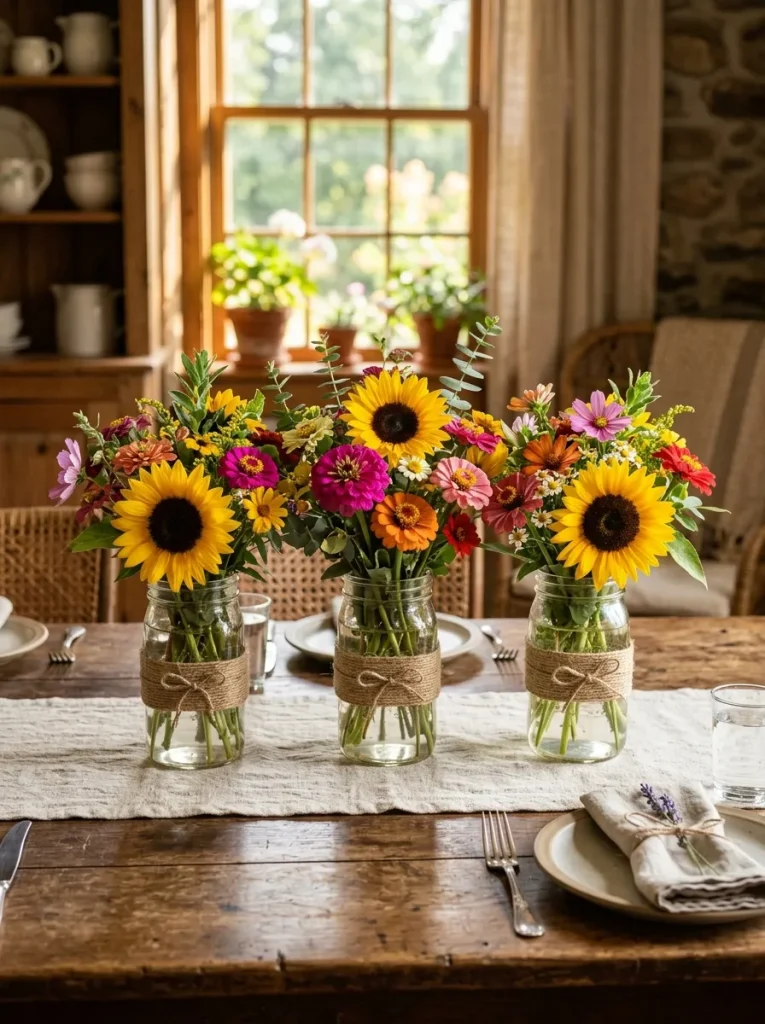
A mason jar and twine linear trio offers an accessible, budget friendly DIY centerpiece project that fits perfectly into casual, farmhouse, or rustic interior spaces. This design relies on three matching clear glass mason jars spaced evenly along a table runner, connected visually by natural jute twine wrapped around their threaded necks. Mason jars act as exceptionally stable, accessible vessels that showcase both the colorful top blossoms and the clean green stems resting inside clear water. Choosing seasonal garden blooms, such as bright sunflowers, colorful zinnias, or fresh snapdragons, gives the arrangement an upbeat, informal energy ideal for family meals and relaxed weekend gatherings. The simplicity of clear glass paired with natural fiber highlights clean lines and unpretentious craftsmanship while retaining high decorative value.
To execute this easy project step by step, start by gathering three clean mason jars of equal height and capacity. Wrap natural jute twine tightly around the rim of each jar three to four times, tying a simple knot or small bow to secure the decorative fiber accent in place. Space the three jars evenly along the center axis of your dining table, ideally positioning them over a contrasting fabric or burlap table runner. Fill each jar two-thirds full with fresh water and flower food, then prepare your selected floral stems by stripping lower leaves. Create small, symmetrical hand-tied bouquets using four to five main blossoms surrounded by greenery, placing one uniform bouquet into each glass vessel. Adjust stem angles so the floral heads fan out slightly over the jar rims, creating three balanced, repeating visual points across the dining surface.
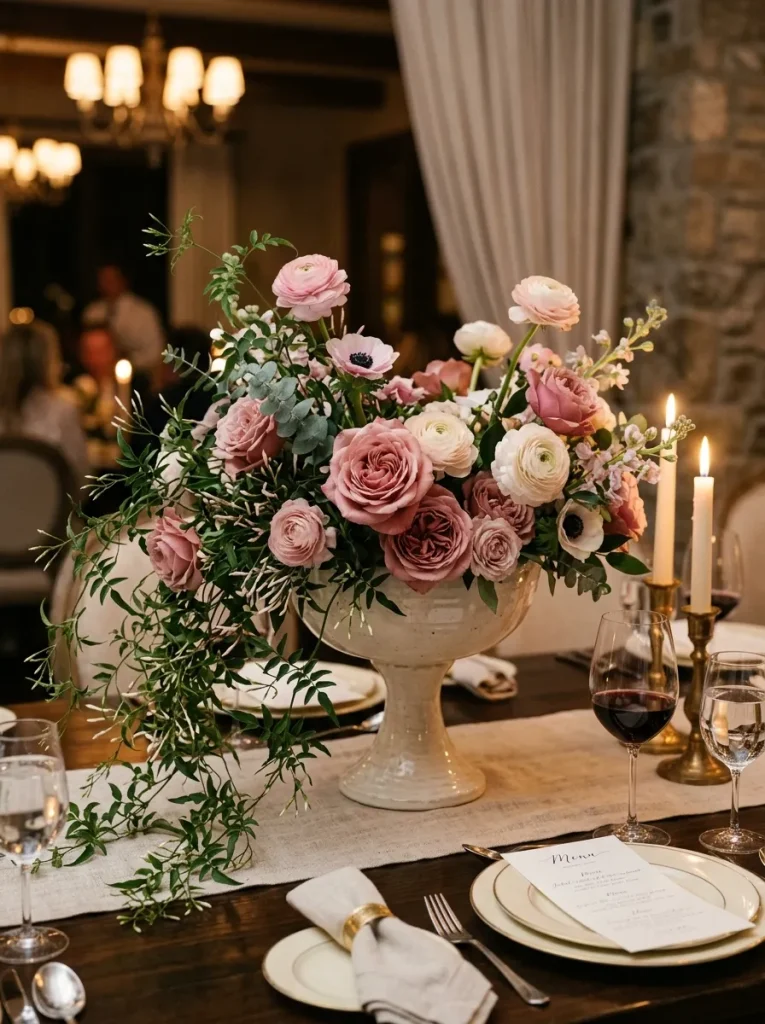
Raised Footed Compote Arrangement
Design Approach
The raised footed compote arrangement utilizes a classic elevated pedestal vessel to create an elegant, theatrical centerpiece with sweeping, dramatic movement. Compote bowls feature a wide, shallow dish elevated on a narrow central stem, elevating the floral canopy higher off the dining table surface without blocking eye contact. This architectural format encourages asymmetrical, organic styling where branches, vines, and long-stemmed blossoms cascade fluidly over the rim toward the tabletop. Flowers like garden roses, ranunculus, dahlias, and trailing jasmine vines excel in compote designs, generating a lush, romantic silhouette that feels artfully sculpted. The elevated base introduces formal elegance into traditional or modern dining rooms, making it a preferred choice for festive holiday dinners and special celebrations.
Building a balanced compote arrangement requires structural support inside the shallow elevated dish to support heavy stems effectively. Secure a metal flower frog to the bottom of the compote dish using waterproof floral clay, or construct a sturdy dome using coiled coated chicken wire fitted tightly inside the bowl. Fill the container with fresh water, taking care not to overfill the shallow rim during the design process. Begin by inserting structural greenery, such as Italian ruscus, eucalyptus, or olive branches, angling stems downward over the edges to establish a cascading perimeter outline. Insert your largest focal blossoms near the center and lower base of the grid to establish visual weight and stability. Add lighter, delicate face flowers on longer stems throughout the top and sides, allowing them to extend beyond the main foliage footprint to emphasize airy, dynamic movement.
Eucalyptus and Garden Rose Garland
Assembly Guide
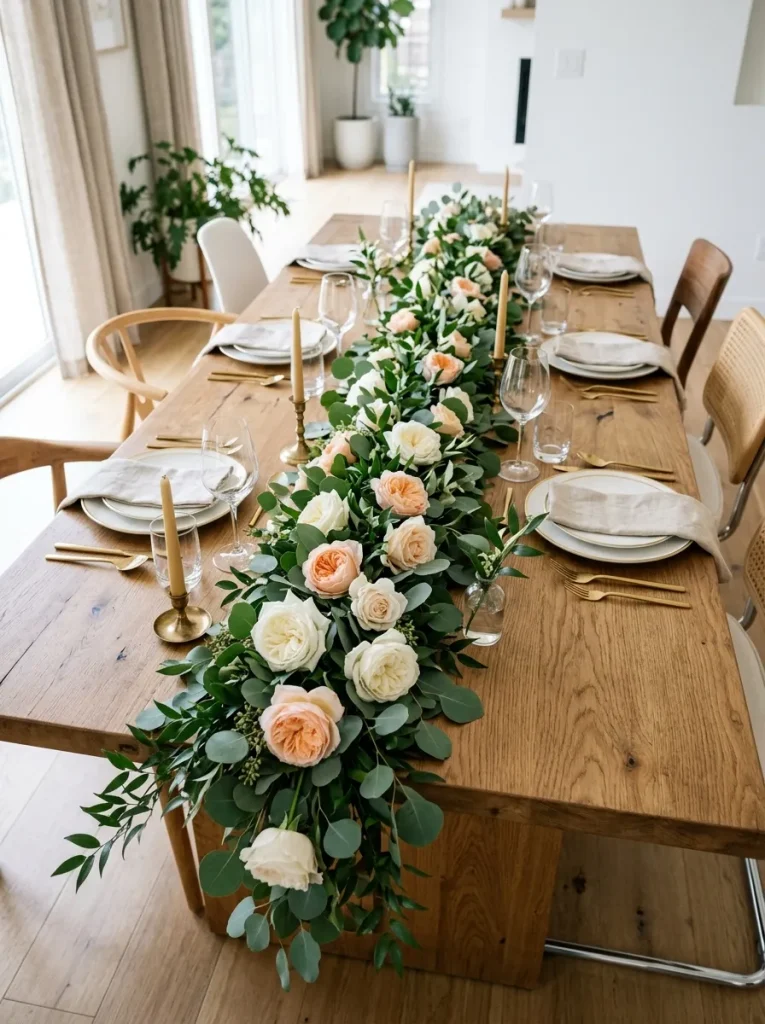
Combining a lay-down greenery garland with strategically inserted garden rose blooms provides a luxurious, continuous botanical runner down the center of long dining tables. This style eliminates traditional vertical vases entirely, opting instead for a horizontal bed of textured foliage resting directly along the table surface. Silver dollar eucalyptus, seeded eucalyptus, and Italian ruscus are woven together to build a lush, aromatic green base that spans the entire length of the dining seating area. Fresh garden roses, cut with very short stems and placed in tiny hidden water tubes, are tucked into the foliage matrix to provide bursts of vibrant color and soft romantic texture. This low-slung, horizontal design keeps sightlines completely open while generating a high-end, editorial look suitable for modern dining spaces.
Constructing a fresh foliage garland centerpiece involves preparing a stable greenery foundation directly on your dining table or a decorative runner. Lay long branches of mixed eucalyptus end-to-end along the center of the table, overlapping the stem ends and binding them loosely with green floral wire to form a continuous foliage chain. Ensure the greenery fans out naturally to a width of six to eight inches, creating a full, voluminous base that hides wire connections. Cut fresh garden roses leaving roughly one inch of stem, inserting each stem into a small plastic floral water tube filled with fresh water and sealed with a rubber cap. Tuck these watered rose tubes deep into the eucalyptus leaves at staggered intervals along the entire garland length, angling the flower heads upward and outward. Inspect the garland from all seating perspectives, adding extra leaf sprigs where necessary to conceal water tubes completely.
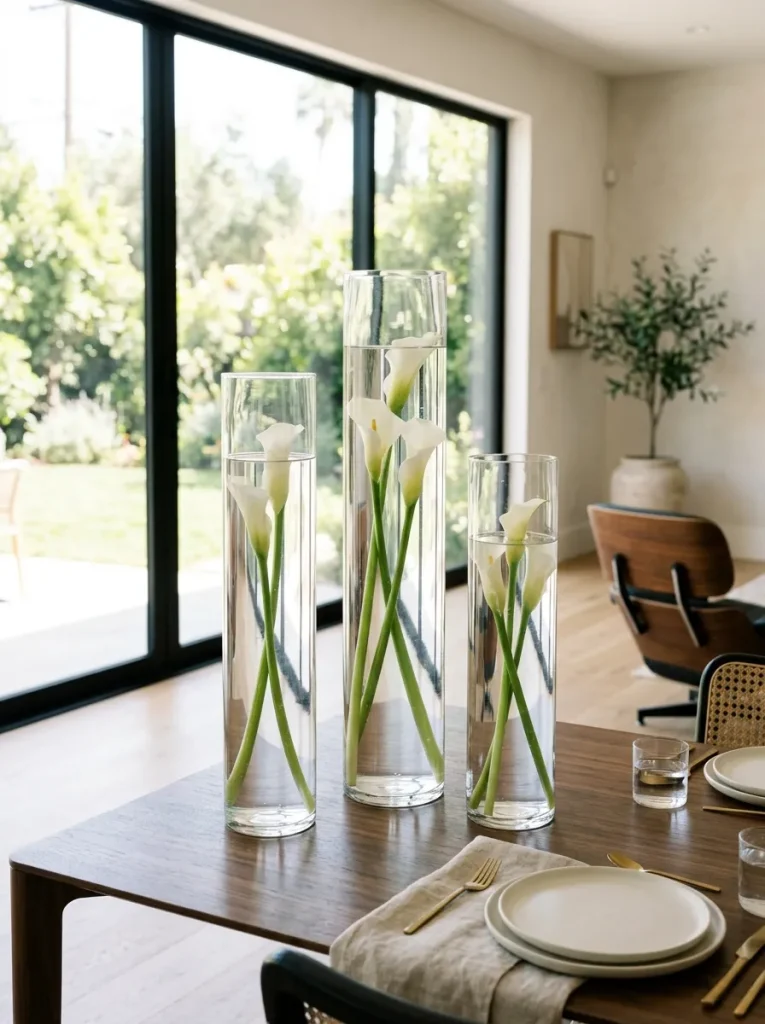
Tall Cylinder Glass Stem Display
Execution Guide
The tall cylinder glass stem display adopts a streamlined, architectural design philosophy by housing long-stemmed architectural flowers within tall, narrow glass columns. Instead of dense, bushy arrangements, this concept focuses on clean lines, vertical elegance, and minimal floral density using bold single-stem flowers. Botanical varieties with strong structural silhouettes, such as calla lilies, French tulips, orchids, or long-stemmed delphiniums, work best for this refined modern style. Utilizing clear glass cylinders of varying heights allows light to pass through the centerpiece freely, maintaining a airy, uncluttered feel in bright dining rooms. The transparency of the glass showcases clean green stems submerged in crystal-clear water, turning the functional support elements into an integral visual feature of the modern design.
Executing this modern centerpiece requires precise stem trimming and careful water management inside clear glass vessels. Gather three clear glass cylinder vases of varying heights, such as eight, ten, and twelve inches tall, and arrange them in a tight triangular grouping in the table center. Fill each cylinder halfway with distilled or carefully filtered water to prevent unsightly air bubbles or mineral haze from forming along the interior glass walls. Trim long-stemmed flowers cleanly at a sharp forty-five-degree angle, removing every leaf that would sit beneath the water line to ensure crystal clarity. Place two to three long stems into each cylinder, allowing the sleek stems to cross naturally inside the water while the flower heads emerge neatly above the glass rims. Keep the water perfectly clear by replacing it every two days and wiping glass surfaces clean with a lint-free cloth.
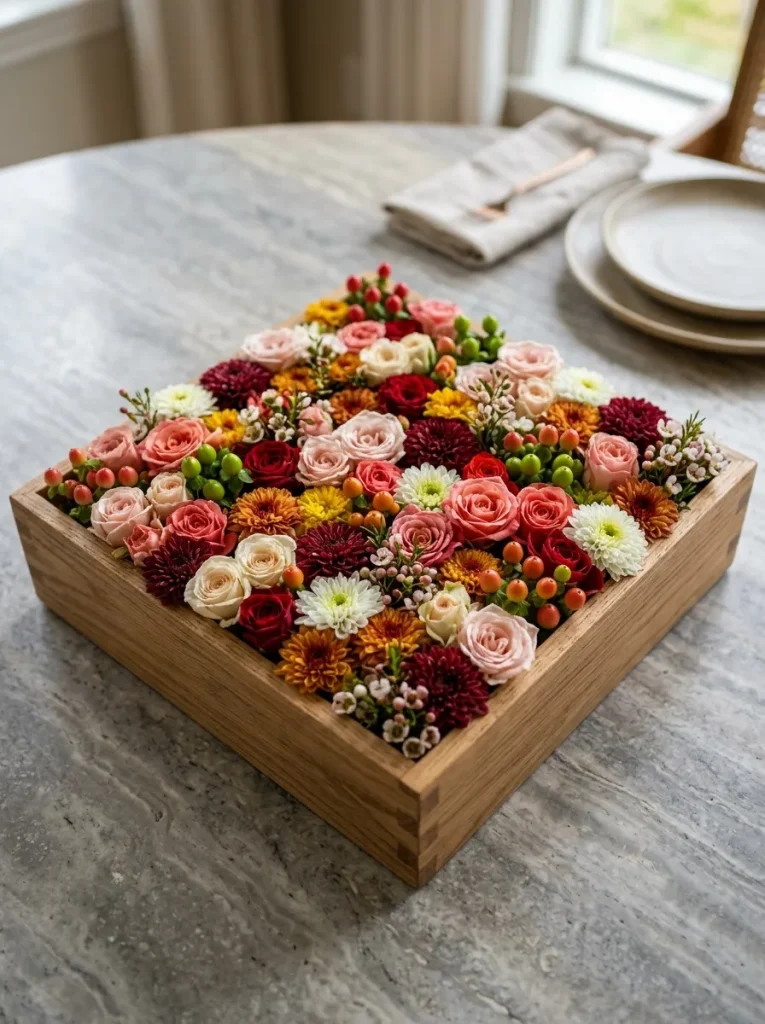
Botanical Grid Box Centerpiece
Construction Plan
A botanical grid box centerpiece incorporates a shallow square or rectangular wooden box equipped with an internal grid mechanism to hold short, dense floral clusters. This design concept combines warm, natural wood textures with tightly packed, low-profile flower blooms, offering a cozy yet structured aesthetic for family dining tables. Using a low wooden vessel prevents tipping hazards and ensures the overall arrangement remains well below eye level for seated diners. Tightly packed flowers such as spray roses, carnations, mums, and hypericum berries create a dense, mosaic-like carpet of texture and color that feels neat, orderly, and highly deliberate. The sturdy wood exterior provides structural framing, making it an ideal choice for rustic, modern farmhouse, or craftsman dining room aesthetics.
Building a wood box centerpiece requires preparing a completely leak-proof internal environment before placing any fresh flowers. Line the interior of a low-profile square wooden box with heavy-duty plastic sheeting, securing the edges with a staple gun or waterproof tape below the top rim. Insert a fitted plastic liner dish or pre-soaked floral foam block flush with the upper edge of the wooden container. Apply waterproof floral tape across the top opening in a crisscross pattern, creating a grid with one-inch square openings to hold individual stems securely. Cut flower stems very short—approximately two to three inches—and insert them vertically through the grid into the water source, packing blooms closely together to conceal the tape completely. Alternate floral colors and textures evenly across the square grid to achieve a uniform, lush floral tile effect.
Single Stem Glass Bottle Lineup
Arrangement Method
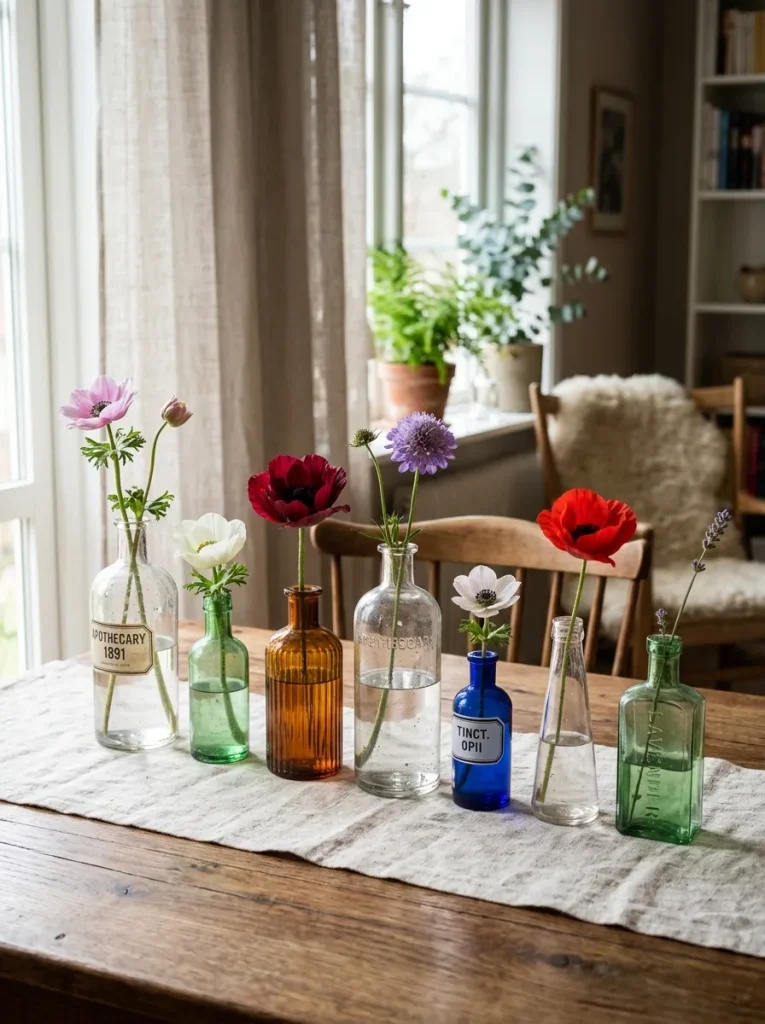
The single stem glass bottle lineup is a whimsical, budget friendly floral arrangement technique that utilizes a series of slender glass bottles arrayed down the table center. By isolating individual flower stems in separate vintage glass bottles, bud vases, or repurposed apothecary jars, this approach highlights the unique beauty and form of every single blossom. This design is exceptionally versatile, accommodating mismatched vintage glassware, clear medicine bottles, or colorful glass jars collected over time. The lightweight, airy presentation avoids overwhelming smaller dining tables while offering an interactive, creative project that can be adapted instantly to match any seasonal theme. It allows decorators to purchase fewer total flowers while achieving a charming, expansive visual footprint across the dining surface.
Setting up an impactful bottle lineup begins with collecting seven to eleven narrow-necked glass bottles of varied heights, shapes, and clear tones. Space the bottles along the center axis of the dining table, arranging them either in a strict, straight line or a slightly meandering zigzag pattern. Fill each bottle two-thirds full with fresh water treated with liquid plant food using a small funnel or narrow-spout watering pitcher. Select a variety of interesting individual blooms, such as single anemones, ranunculus, scabiosa, poppy stems, or small sprigs of green foliage. Trim each floral stem to a unique height, ensuring that adjacent bottles showcase flowers at varying vertical elevations across the lineup. Insert just one primary stem per bottle, adjusting the angle so the blossoms face slightly outward toward seated guests down both sides of the table.
Citrus and Floral Summer Bowl
Styling Method
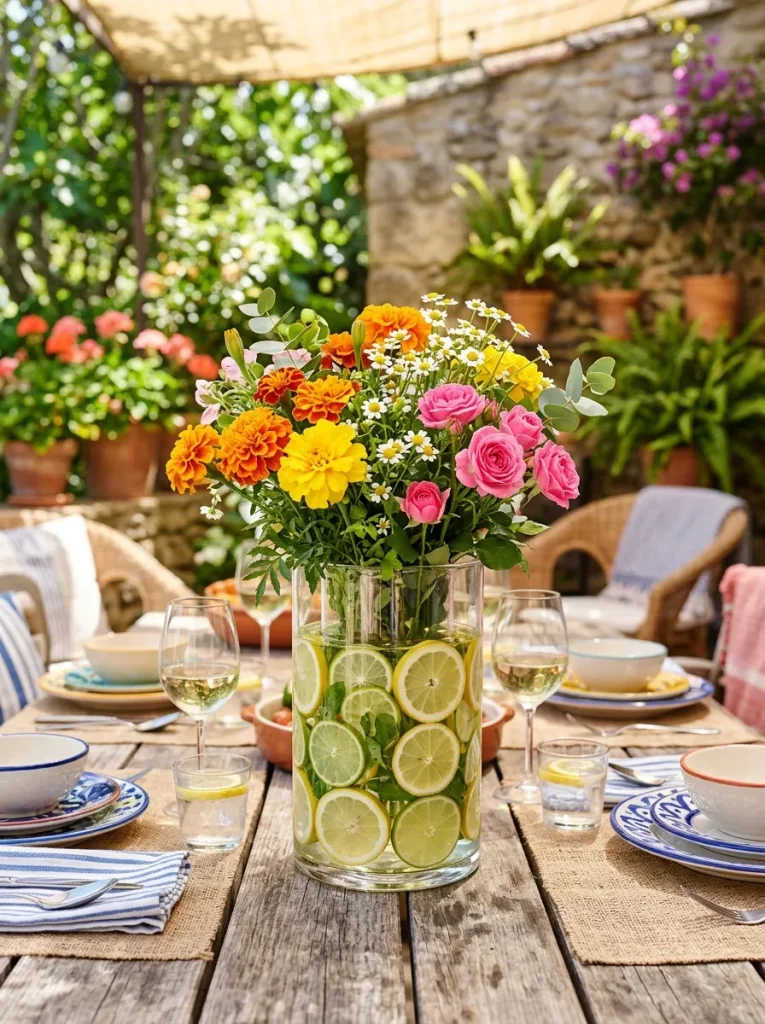
Incorporating fresh sliced or whole citrus fruits into a fresh floral arrangement introduces bright, energetic colors and refreshing natural aromas to summer dining tables. A citrus and floral summer bowl pairs vibrant yellow lemons, deep orange oranges, or green limes with sunny seasonal flowers like marigolds, roses, and chamomile. The smooth, glossy skins and cheerful colors of citrus fruits provide dynamic visual contrast against soft, feathery floral petals and green leaves. Utilizing a dual-vase technique—placing a smaller glass vase inside a larger transparent glass container—allows sliced fruit to be displayed along the outer ring without contaminating the inner water reservoir holding the flower stems. This creative idea adds an interactive, festive dimension to daytime brunches, summer dinner parties, and sunny patio dining spaces.
Constructing a citrus floral centerpiece requires two nested clear glass containers of identical shape but differing diameters, such as a six-inch and an eight-inch cylinder vase. Center the smaller glass vase inside the larger vessel, ensuring a uniform one-inch gap remains between the two glass walls around the entire perimeter. Slice fresh lemons, limes, or oranges into thin, uniform rounds, stacking them tightly inside the outer gap between the two glass containers. Fill the outer ring with fresh water to submerge and preserve the fruit slices, holding them firmly against the exterior glass wall. Fill the inner central vase with water and flower preservative, then arrange your selected warm-toned flowers inside the core vessel. The inner arrangement should extend upward and outward, framing the fruit-lined base below with a rich canopy of fresh summer blossoms.
Common Beginner Mistakes and How to Avoid Them
Creating fresh floral dining room centerpieces often involves common missteps that can compromise arrangement longevity and visual balance. One major error is building arrangements that are too tall, which obstructs sightlines across the table and disrupts conversation during meals. To avoid this, keep the main body of centerpiece arrangements under nine to twelve inches in height, or elevate tall displays well above head level on slender pedestals. Another frequent mistake is neglecting stem preparation; failing to remove lower foliage causes leaves to decay underwater, encouraging bacterial growth that clogs stem pathways and causes premature wilting. Always strip leaves from the lower two-thirds of every stem before submerged placement. Additionally, using dull scissors instead of sharp floral shears crushes stem vascular systems, impeding proper water absorption. Investing in dedicated, sharp cutting tools ensures clean, angled cuts that maximize water intake and prolong flower freshness. Finally, placing fresh floral centerpieces in direct sunlight or near warm heating vents accelerates evaporation and wilting, so position your arrangement in cool, shaded areas when the dining table is not actively in use.
Practical Tips for Better Results
Achieving professional florist quality results with DIY dining table arrangements relies on implementing subtle structural and care techniques. Always cut floral stems at a steep forty-five-degree angle under running water, which increases the surface area for water absorption and prevents stems from resting flat against the container bottom. Utilizing a structural grid made of clear waterproof floral tape across vessel rims provides stability, allowing precise control over stem placement without requiring dense packing. Refreshed water is vital for longevity; change the water completely every two days, rinsing the vase interior and re-trimming stem ends by half an inch each time. Mixing commercial floral preservative into fresh water supplies essential carbohydrates while inhibiting bacterial growth, extending flower life significantly. When selecting blooms, mix three primary elements: structural foliage bases, large round focal flowers, and delicate filler sprigs to build depth and textural variety. Lastly, assembling arrangements one day prior to hosting allows tight buds time to open fully, ensuring maximum visual impact during your event.
Styling, Presentation, or Organization Ideas
Integrating a fresh floral centerpiece seamlessly into your overall dining room decor requires thoughtful coordination with surrounding table elements. Frame your centerpiece using an appropriate table runner made of natural linen, woven jute, or crisp cotton to visually anchor the botanical vessel to the tabletop. Complement the color palette of your flowers by selecting dinnerware, cloth napkins, or place mats that echo subtle accent tones found within the arrangement petals. Incorporate varied textures by mixing organic floral elements with smooth glass, brushed metals, woven woods, or glazed ceramics across your table setting. When styling long rectangular tables, balance a main central arrangement by placing smaller companion accent elements, such as low votive candles, small bud vases, or smooth river stones, along the central axis. Keep lighting soft and warm; placing low pillar candles or tea lights near floral displays highlights delicate petal textures without generating excessive heat that could damage live blooms.
Budget or Time Planning
Designing beautiful dining room table centerpieces can easily adapt to modest budgets and tight schedules with smart planning and resourcefulness. Purchasing locally grown, seasonal flowers from neighborhood farmers markets or grocery stores drastically reduces costs compared to importing out-of-season exotic blooms. Foraging for hardy foliage, flowering branches, ornamental grasses, or berry stems from your own backyard garden adds lush volume to arrangements completely free of charge. Time efficiency improves by gathering all necessary tools, vessels, and supplies into a portable floral kit prior to starting your creative project. Basic stem trimming and foliage stripping can be completed in fifteen minutes, while actual arrangement assembly typically takes twenty to thirty minutes once prep work is finished. To stretch your decor budget further, invest in versatile neutral vessels—such as clear glass cylinders or white ceramic bowls—that pair effortlessly with any seasonal flower variety throughout the entire year.
Creative Expansion and Advanced Inspiration
Once you master basic dining centerpiece techniques, expanding your design scope offers endless opportunities for seasonal customization and artistic experimentation. Transition your floral styling across seasons by swapping delicate spring bulbs like tulips and narcissus for bold late-summer dahlias, autumn chrysanthemums, or winter evergreen boughs paired with pinecones. Experiment with advanced floral mechanics, such as reusable kenzan metal flower frogs or non-toxic biodegradable floral mesh, to create dramatic gravity-defying stem angles without relying on single-use floral foam. Consider incorporating unexpected organic non-floral elements into your centerpieces, such as trailing ivy vines, pomegranate fruits, artichokes, or fragrant herbs like rosemary and lavender for rich olfactory appeal. Advanced decorators can explore monochromatic foliage-only arrangements, focusing entirely on contrasting leaf structures, variegated tones, and cascading architectural forms. Continuously documenting your floral creations through photography builds a personal inspiration portfolio, helping you refine your home decor aesthetic and master the art of dining table styling over time.