
10 Dark Academia Theme Book Centerpiece Ideas
Dark Academia has established itself as an enduring interior design and event styling theme that celebrates classical literature, scholarly pursuit, historical architecture, and gothic moodiness. Central to this visual aesthetic is the thoughtful arrangement of physical books combined with nostalgic study accents, creating an intellectual yet cozy atmosphere for dining tables, mantelpieces, and coffee tables. Transforming vintage or antiqued volumes into stunning table centerpieces offers an accessible way to introduce warmth, history, and texture into any living space or special occasion. Readers searching for curated Pinterest ideas will find that book-based table decor bridges the gap between literary charm and practical home ornament. This comprehensive guide provides step by step tutorials, structural styling methods, and creative inspiration to help crafters of all skill levels execute sophisticated displays. By exploring diverse compositions involving brass brassware, pressed flora, glass cloches, and vintage inkwells, you will learn how to balance proportions, color tones, and historical elements effectively. Whether organizing a themed gathering or refining everyday home decor, these beginner friendly projects demonstrate how simple secondhand finds can become breathtaking focal points that elevate your interior styling with minimal financial investment.
Why Dark Academia Centerpieces Are Trending and Useful
The rise of Dark Academia across modern Pinterest inspiration stems from its timeless aesthetic and sustainable design philosophy. Unlike trends that require purchasing mass-produced plastic decorations, this style prioritizes repurposed items, aged textiles, and thrifted heirlooms that carry character and historic weight. Decorators appreciate the practical versatility of book centerpieces because hardcovers provide structural height, stable bases, and rich textural variety that standard floral arrangements often lack. Building a centerpiece around literature allows hosts and homemakers to customize displays for seasonal changes, formal dinners, or cozy study nooks without overhaul. Furthermore, these arrangements offer high visual impact while remaining remarkably budget friendly, making them ideal for individuals seeking elevated style on a modest spending plan. The aesthetic seamlessly blends minimalist style principles of balanced spacing with the rich, maximalist textures of aged paper, leather, and weathered wood. Beginners can easily achieve professional results because books provide solid, predictable geometry that anchors loose elements like candles, vines, and brass instruments. Ultimately, these creative project designs provide an engaging DIY outlet that converts functional reading material into artistic installations, adding narrative depth and intellectual sophistication to any residential space.
Essential Materials and Preparation Steps
Proper planning and material gathering ensure a seamless crafting experience when constructing Dark Academia arrangements. Begin by sourcing vintage or antique-style hardcovers from secondhand shops, estate sales, or local thrift stores. Look for volumes featuring deep tones such as burgundy, forest green, navy, brown, and charcoal, ideally with gold foil lettering or embossed spines. Remove bright dust jackets to reveal the textured cloth or leather covers beneath. Core craft materials include beeswax or LED pillar candles, brass candlesticks, dried botanical sprigs, jute twine, glass cloches, small wooden trays, and antique accents like inkwells, quills, or pocket watches. Preparation involves cleaning book surfaces gently with a dry microfiber cloth to remove surface dust without damaging fragile spines or paper edges. Inspect older volumes for loose pages or weakened bindings, securing vulnerable areas with archival paper tape if necessary. Measure your display table or surface area before arranging items to maintain comfortable clearance for sightlines and dining utensils. Grouping items by color palette and height variation during the planning phase prevents visual clutter and streamlines the final assembly, ensuring every decorative element contributes harmoniously to the overarching dark aesthetic.
Idea 1: Vintage Leather-Bound Stack with Brass Candlesticks
Execution Process
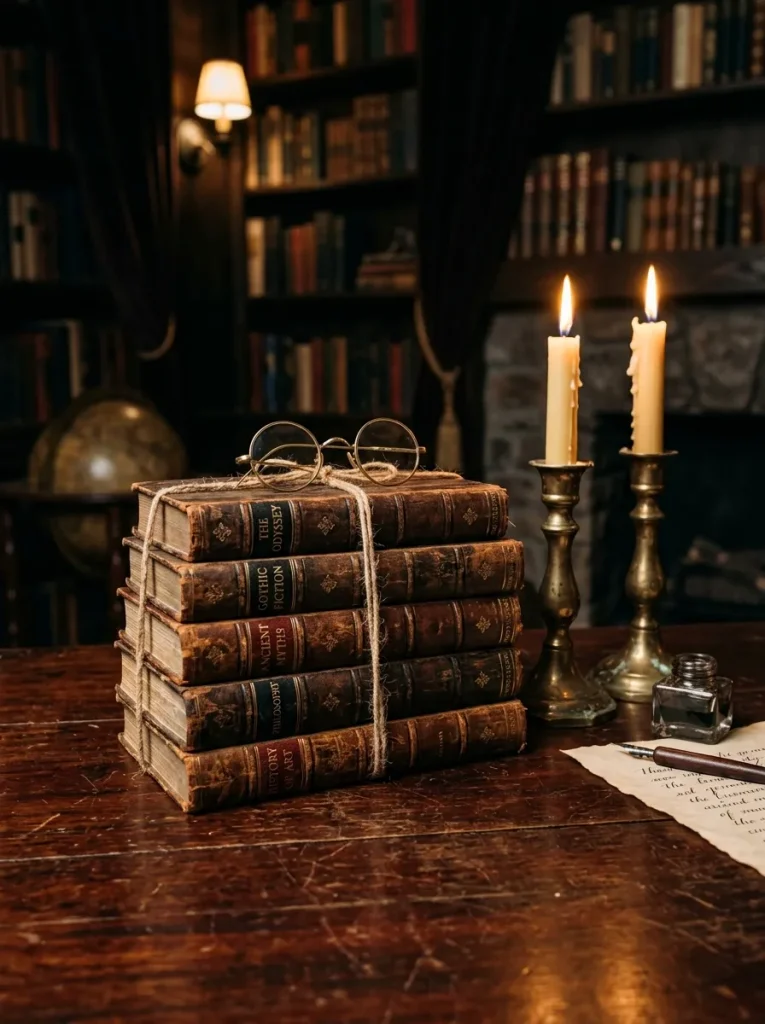
The combination of worn leather volumes and tarnished brass candlesticks serves as a foundational motif within scholar-inspired interior design. This arrangement relies on contrasting textures—the soft matte surface of aged animal hide or faux-leather book covers paired with the reflective, metallic surface of antique brass. Stacking books horizontally creates a structured podium that elevates lighting elements, drawing the eye upward while grounding the centerpiece on the table. Choosing books with varying cover thicknesses and rich hues of dark espresso, oxblood, and forest green builds immediate visual interest. The warmth emitted by burning beeswax taper candles or realistic flame-free LED candles enhances the warm undertones of old paper, creating a cozy atmosphere suitable for autumn gatherings or formal evening dinners. Incorporating varying heights of candlesticks adjacent to the book stack establishes an asymmetrical balance that feels deliberate yet natural, reminiscent of an old university library desk.
To construct this arrangement step by step, begin by placing your largest, thickest leather-bound volume flat in the center of your table to serve as the foundation. Stack two to three additional books on top in descending order of size, aligning the spines toward the primary viewing angle or staggering them slightly for an organic look. Wrap a length of natural jute twine or dark velvet ribbon around the stack, tying a crisp bow on top to secure the books while adding visual texture. Position two brass taper candle holders directly beside the stack, ensuring one holder stands taller than the highest book while the second sits lower. Insert cream or deep crimson taper candles into the brass holders, securing them tightly at the base. To finalize the setup, place a pair of vintage reading glasses or an ornate brass bookmark resting across the open top cover of the highest book.
Idea 2: Botanical Pressing Layered Over Antiqued Volumes
Step-by-Step Guide
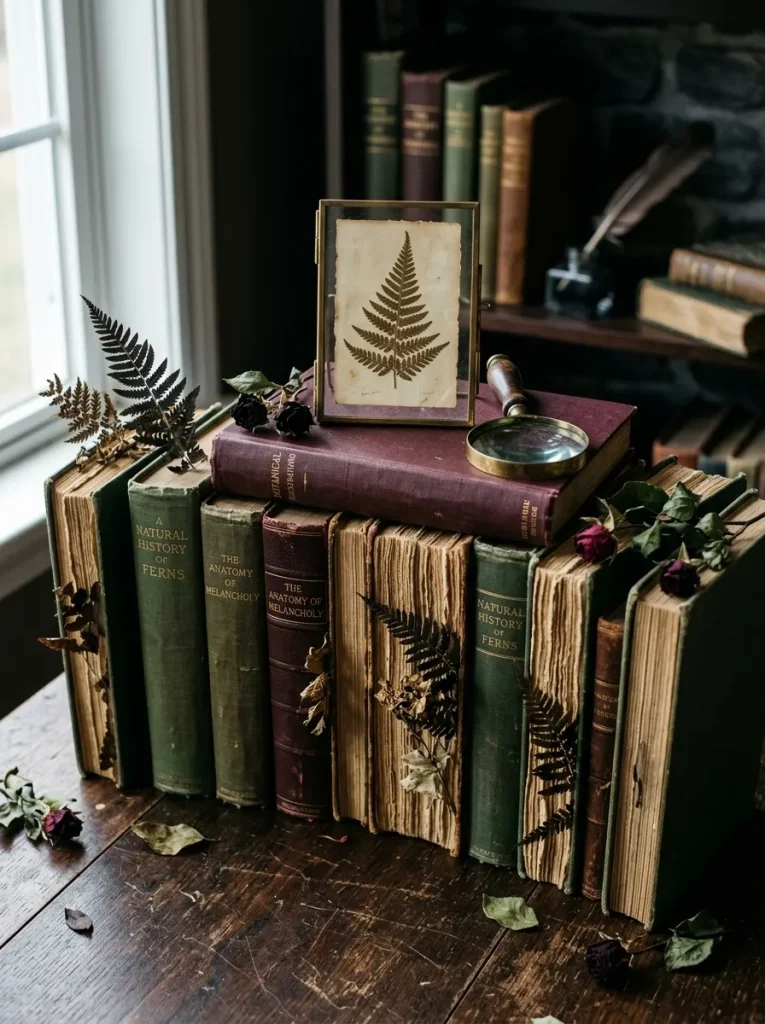
Merging botanical elements with aged literature introduces a refreshing, natural dynamic to the moody Dark Academia palette. This concept highlights pressed ferns, dried eucalyptus, and dark flora alongside vintage field guides or poetry collections, evoking the atmosphere of a Victorian naturalist’s study. The contrast between rigid, structured paper bindings and delicate, organic leaf structures creates visual harmony on any table setting. By utilizing dried botanicals, this centerpiece offers long-lasting durability without requiring water or continuous maintenance. Dark green, faded sage, and muted earth tones in the foliage complement the muted paper shades of older books, producing an aesthetic that feels historical, scholarly, and serene. Incorporating pressed specimens under glass frames or draped loosely across open book spines adds layers of texture that invite closer inspection from guests.
Begin by selecting three medium-sized hardcover books with muted spine colors, placing them horizontally in a slight fan formation across the center of your display surface. Tuck several sprigs of dried eucalyptus, dark preserved ferns, or dried black roses between the pages of the top book, allowing the leaves and stems to spill gracefully over the edges toward the tablecloth. Place a small, clear glass frame containing a pressed botanical specimen on top of the central book stack, leaning it gently against an upright secondary book for stability. Sprinkle loose, dried rose petals or tiny pinecones around the base of the stack to ground the display. For added depth, place a small magnifying glass over one of the outer book covers, framing a pressed leaf underneath its glass lens to complete the naturalist tutorial setup.
Idea 3: Hourglass and Stacked Encyclopedia Vignette
Setup Method
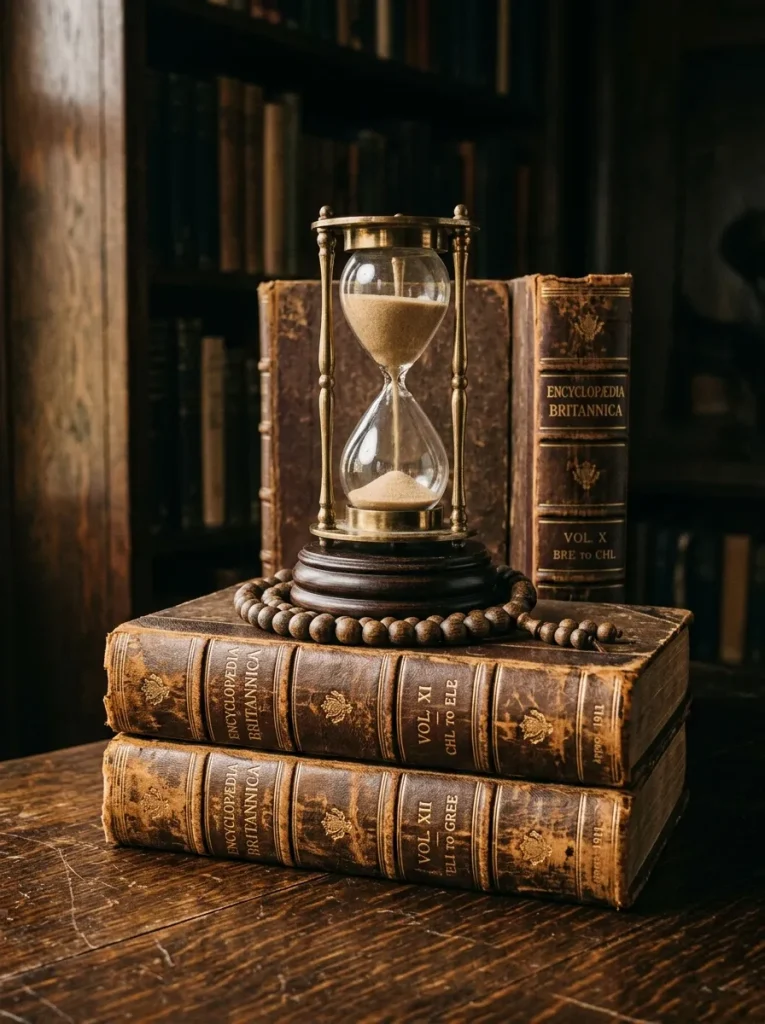
An hourglass paired with heavy, encyclopedic volumes introduces themes of time, history, and academic study to your home decor. Large, thick reference books provide substantial weight and footprint, making them ideal anchor pieces for long dining tables or wide entry consoles. The sleek curved glass and flowing sand of an hourglass provide a striking visual contrast to the rigid, right-angled geometry of traditional book spines. Selecting an hourglass with dark wooden or brass endplates maintains color cohesion across the display. This setup works exceptionally well because it balances the heavy, dense presence of multiple hardcovers with the light, translucent quality of glass, preventing the table from appearing overly dark or cluttered.
To execute this setup, select three matching or visually similar encyclopedias or thick reference hardcovers featuring gold foil lettering along their spines. Lay two of the books flat, stacked neatly on top of one another in the center of your table layout. Take the third book and stand it upright immediately behind the horizontal stack, supporting it with a hidden metal bookend or leaning it securely against an adjacent wall or structure. Place the wooden or brass hourglass firmly on top of the horizontal book stack, positioning it slightly off-center to maintain visual dynamic. Wrap a thin strand of dark wooden beads around the base of the hourglass, allowing the tail of the strand to drape down over the spines of the lower books onto the table surface.
Idea 4: Dried Flora and Faded Cloth-Bound Spine Arrangement
How to Create
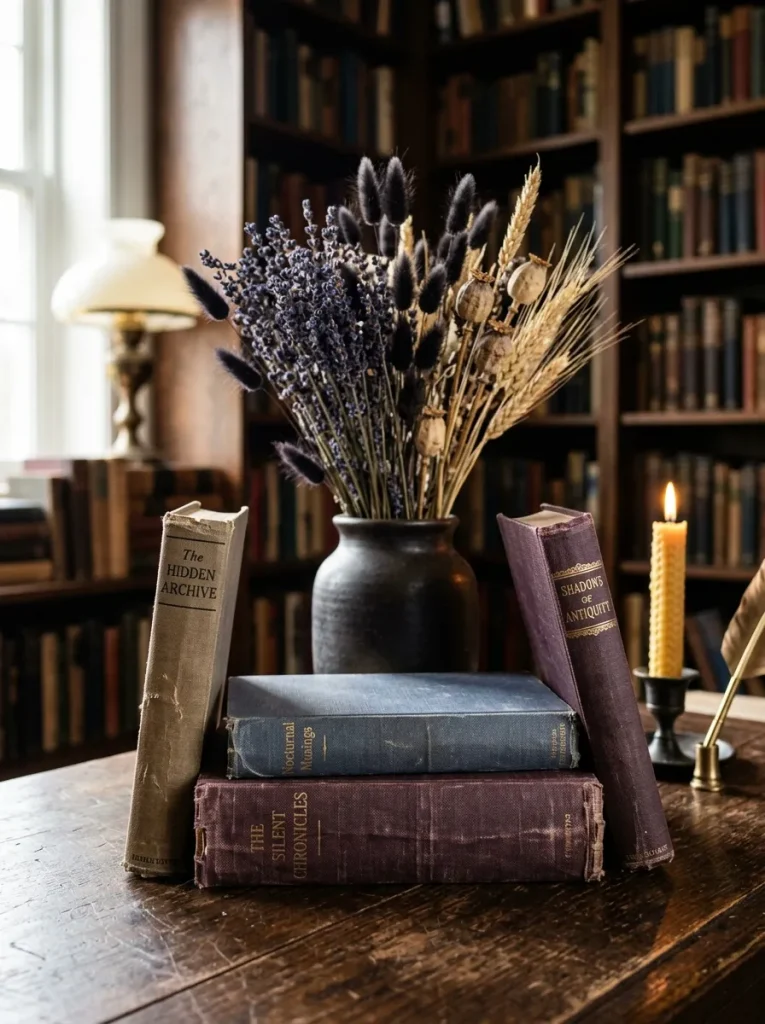
Faded cloth-bound books from the late nineteenth or early twentieth centuries carry an authentic patina that manufactured items cannot replicate. Combining these delicate, textured cloth covers with rustic dried floral arrangements produces a romantic, gothic aesthetic that fits seamlessly into modern rustic or dark academic homes. The muted blues, faded plums, and dusty tans typical of vintage cloth bindings offer a soft color palette that pairs beautifully with dried lavender, baby’s breath, and wheat stalks. This design relies on layering different physical textures—rough cloth, coarse dried stems, and smooth wooden accents—to create a multi-dimensional centerpiece that looks impressive from every angle around the table.
Start by gathering four vintage cloth-bound books of varying pastel or muted dark shades. Arrange two books horizontally stacked in the center, and lean the remaining two books vertically against each side of the stack, creating a triangular composition with the highest point in the middle. Place a small, dark ceramic or terracotta vase directly behind the horizontal stack, filling it with a dense bouquet of dried lavender, dark bunny tails, and dried floral sprigs. Adjust the stems so the dried flowers overhang the tops of the leaning books, softening the hard edges of the covers. Complete the project by placing a small brass dish filled with dried cloves or star anise near the front of the display, adding an subtle aromatic detail that enhances the atmospheric feel of the centerpieces.
Idea 5: Glass Cloche Enclosing Open Classic Literature
Execution Process
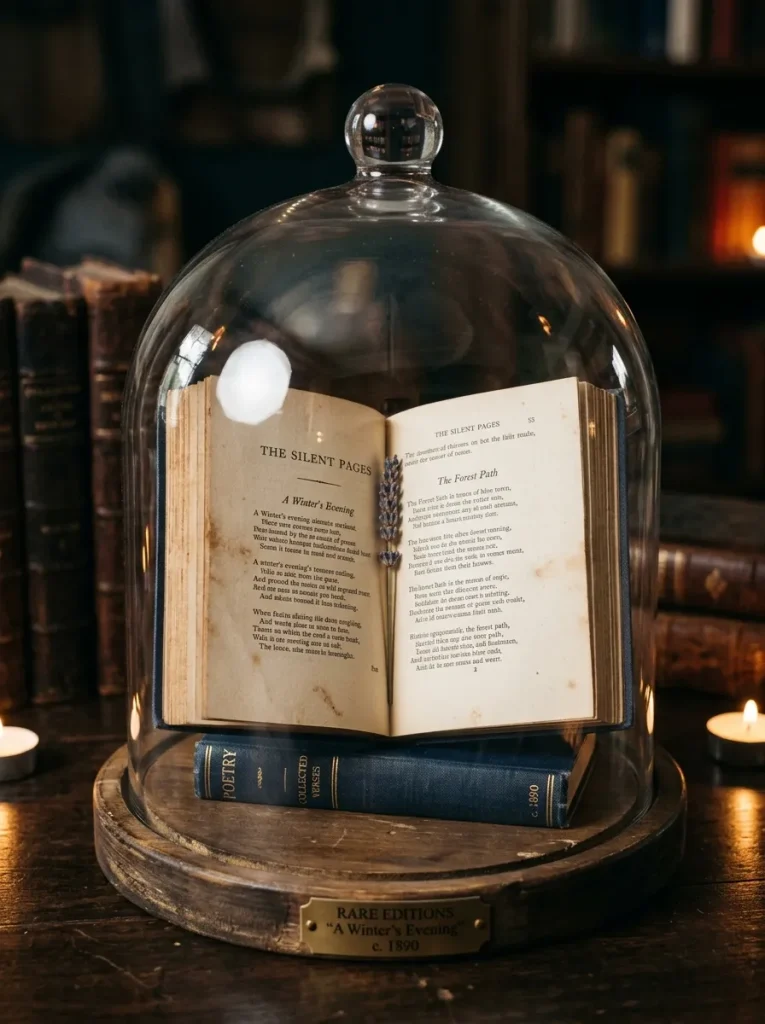
Enclosing vintage books beneath a glass cloche instantly transforms everyday reading materials into a museum-worthy exhibit piece. The glass dome catches ambient room light, highlighting the intricate details of yellowed pages, vintage typography, and delicate ribbon markers. Opening a vintage edition of classic literature or poetry to a specific page allows hosts to showcase meaningful quotes, illustrations, or historical prints within the centerpiece itself. The cloche also serves a practical purpose by protecting fragile antique paper from dust, spills, and accidental damage during dining events or daily household activities. This clean, contained structure appeals to fans of minimalist style while preserving the rich historical context of the dark academia aesthetic.
Begin by selecting a flat wooden or slate base that fits the circumference of your glass cloche dome. Choose a small or medium-sized hardcover book with attractive typography, open it to an aesthetically pleasing page spread, and lay it open upon the base. Fold the pages gently down, using a clear acrylic strip or a small vintage key to weigh the pages flat so they do not spring shut. Position a tiny sprig of dried lavender or a small brass bookmark flat across the page gutter for subtle color contrast. Carefully lower the glass cloche dome over the open book display, ensuring the edges of the glass sit securely inside the groove of the wooden base without pinching the book corners. Place two small tea light holders with warm lights outside the cloche base to illuminate the glass from the sides.
Idea 6: Gothic Arch Wooden Tray with Staggered Tome Heights
How to Make
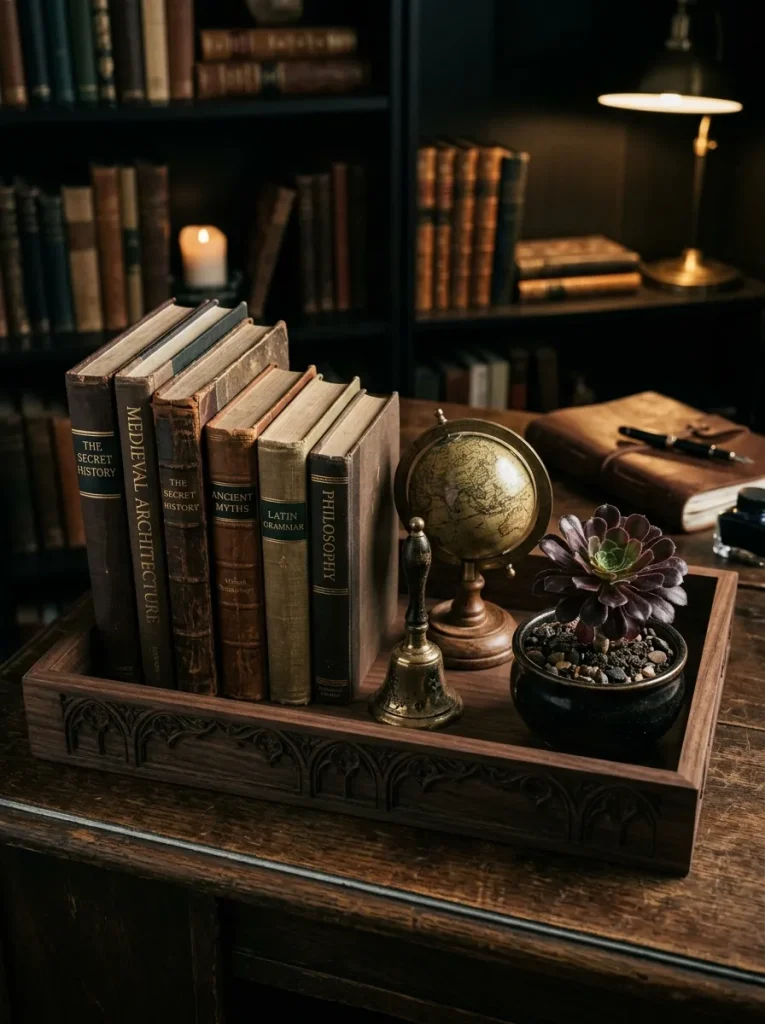
Organizing centerpieces within a wooden tray provides structure, portability, and clean boundaries, making it an excellent method for multi-use tables. Utilizing a tray shaped with gothic arch motifs or dark stain finishes reinforces the academic architectural aesthetic. Staggering book heights within the tray prevents the arrangement from looking monotonous, creating a step-like visual rhythm that guides the viewer’s eye across all decorative elements. Trays allow you to lift and move the entire centerpiece effortlessly when clearing the table for large meals or practical daily tasks, blending high visual style with functional practicality.
To assemble this centerpiece, choose a dark walnut or black wooden tray with raised edges. Collect five books of varying dimensions, ensuring a mix of tall folios and compact pocket editions. Place two books flat inside the tray to create elevated platforms at different ends. Stand two other books vertically on their bottom edges along the back wall of the tray, utilizing the tray’s rim for support. Lay the final book open on top of one of the flat stacks inside the tray. Fill the remaining open spaces inside the tray with small decorative items, such as a miniature globe, a brass bell, and a small potted dark succulent. The contained boundary of the tray holds all elements together, producing a neat, cohesive aesthetic that works on dining tables and sideboard buffets alike.
Idea 7: Calligraphy Feather Quill and Inkwell Display
Setup Method
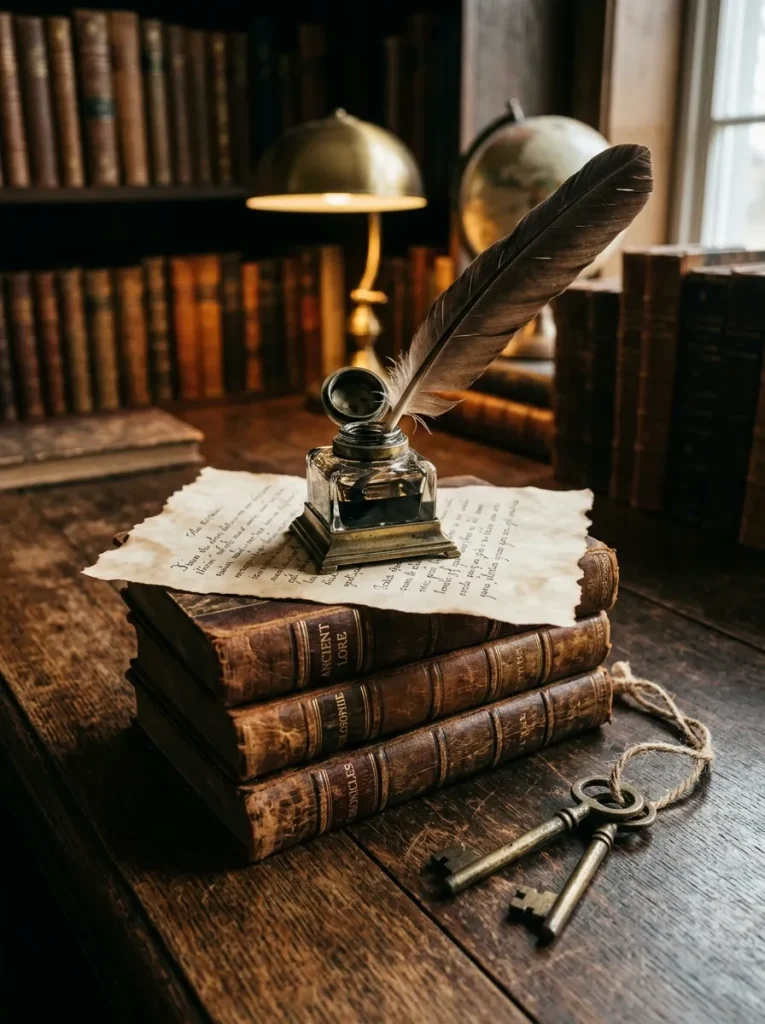
A calligraphy feather quill paired with a traditional glass or stoneware inkwell brings an air of historic authorship and literary creation to your decorative arrangement. This theme focuses on the tangible tools of historical scholars, combining hand-written script elements with aged paper and leather bindings. The long, elegant line of a natural feather quill introduces diagonal directionality to a table arrangement, breaking up the horizontal and vertical lines formed by stacked books. Pairing these items with tea-stained parchment paper or handwritten calligraphy letters enhances the storytelling dimension of your decor, making it ideal for creative writing spaces, literary clubs, or themed dinner parties.
Position a stack of three thick, dark-colored books in the center of your table surface, angling the stack slightly off-parallel from the edges of the table for an informal layout. Place a sheet of tea-stained or deckle-edged paper on top of the uppermost book cover, allowing one corner of the paper to hang over the book’s edge. Set a heavy glass or pewter inkwell onto the paper to hold it securely in place. Insert a natural dark feather quill into the inkwell, leaning the shaft of the feather across the top of the book stack. To finish the arrangement, stack two vintage brass keys tied together with hemp string beside the inkwell, providing an additional layer of historical texture and charm.
Idea 8: Tilted Open Book Table Runner with LED Votives
Step-by-Step Guide
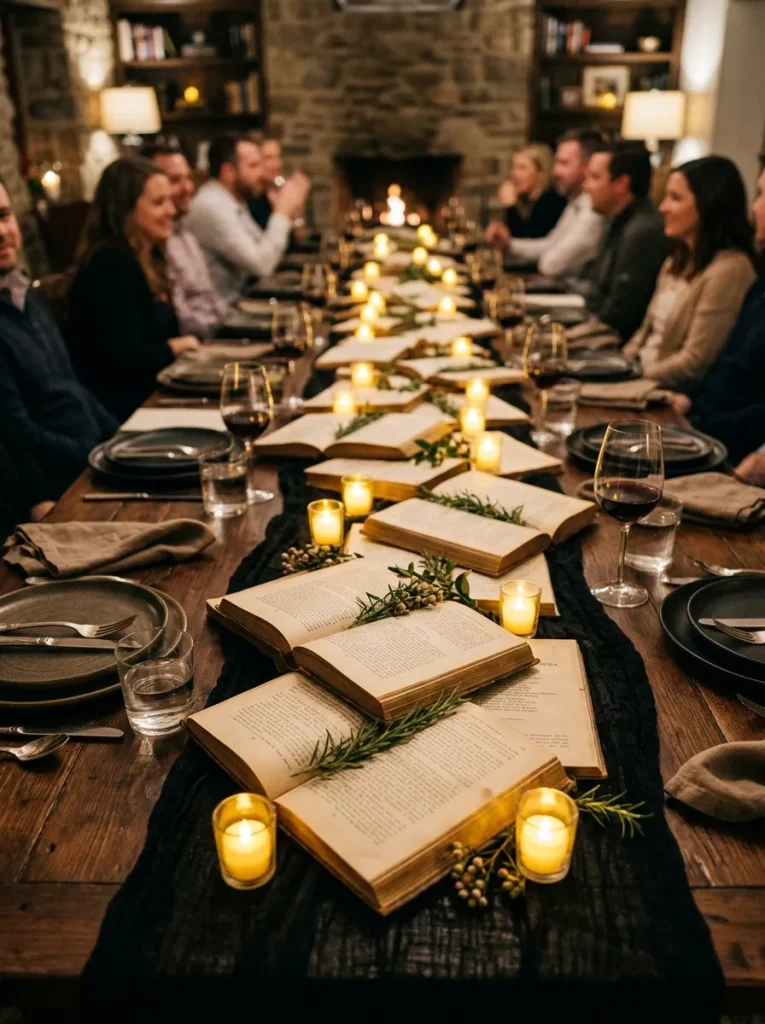
Creating a continuous runner using open and overlapped books provides an impactful centerpiece design along the entire length of a rectangular dining table. Instead of concentrating decor in a single central pile, this concept distributes visual interest across the surface, connecting every seat at the table to the overarching theme. Interlocking open books with overlapping pages creates a cascading wave effect made entirely of paper and print. Integrating safe, flameless LED votive candles along the paper runner provides ambient, soft illumination that highlights text and paper textures without creating fire hazards near delicate vintage pages.
To create this continuous runner, begin by placing a dark fabric runner—such as black cheesecloth or deep green velvet—down the center length of your dining table. Gather six to eight inexpensive secondhand hardcovers of similar sizes. Open the first book near its middle and lay it flat at one end of the runner. Take the second book, open it, and overlap its left pages under the right pages of the first book. Continue this cascading overlay process down the entire length of the table until you reach the opposite end. Nestled within the folds between adjacent books, insert warm LED battery-operated votive candles and small sprigs of fresh rosemary or dried eucalyptus. This creates a low-profile runner that allows guests across the table to converse easily without sightline obstruction.
Idea 9: Celestial Astrolabe and Stained Page Stacks
Execution Process
Integrating celestial navigation instruments—such as armillary spheres, astrolabes, or vintage brass compasses—with aged book stacks introduces a nautical and astrological scholarly motif. Dark Academia frequently incorporates historical sciences, mapping, and astronomy alongside classic literature. Metal instruments with rings, gears, and degree markings add intricate geometric complexity when displayed against the solid, broad surfaces of hardcovers. Staining page edges with coffee or tea gives newer secondhand books an authentically aged appearance, allowing them to blend seamlessly with antique scientific tools for a cohesive, dark aesthetic.
Begin by selecting three medium-sized books and aging their page edges with brewed black tea or coffee using a foam brush if they appear too bright or modern. Once dry, stack the three books neatly in the center of the table, placing the largest on the bottom and the smallest on top. Position a brass astrolabe or metal armillary sphere directly on the center of the top book. Flank the main stack with two small brass compasses placed on the table surface. Scatter small wooden star shapes or celestial constellation maps around the base of the book stack. The reflection of ambient light off the brass rings against the warm brown paper edges produces a captivating visual depth suitable for evening dining settings.

Idea 10: Terrarium and Moss Embedded Antique Books
How to Create
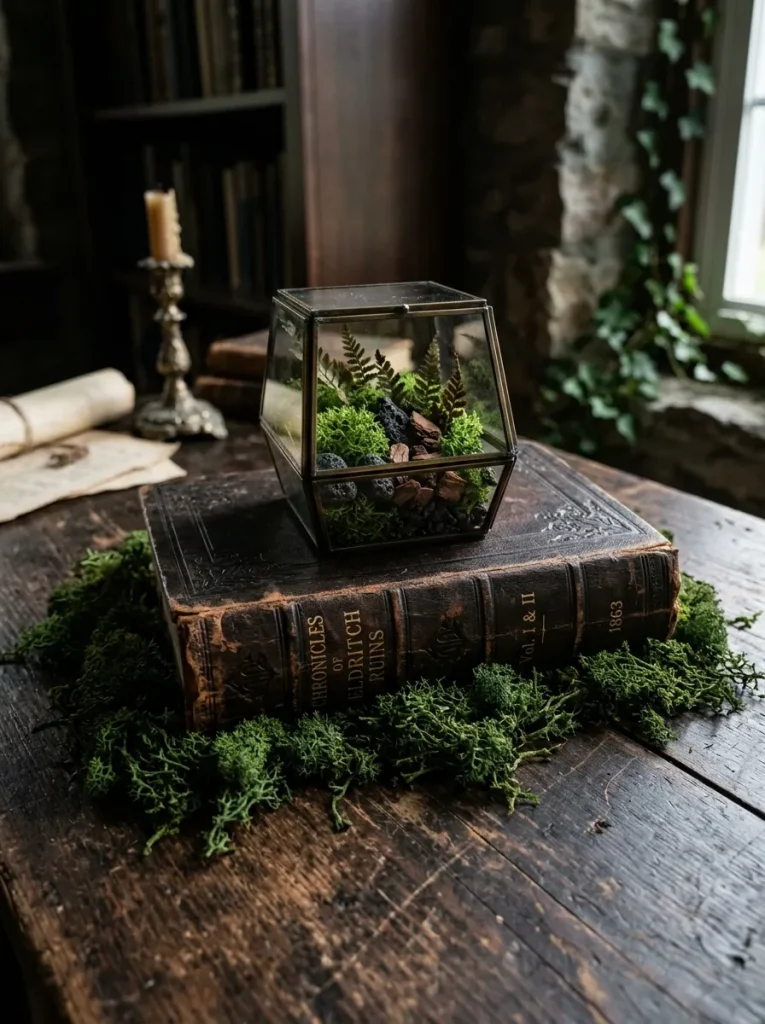
Combining living green moss and glass terrariums with weathered antique books introduces a moody, overgrown library aesthetic reminiscent of gothic ruins. The contrast between living organic matter and historic paper elements offers a unique, fresh take on traditional book displays. Utilizing small glass geometric terrariums filled with preserved moss, dark stones, and miniature ferns keeps moisture contained, protecting the dry paper beneath. This setup works exceptionally well for springtime table decorations or eco-inspired home designs that balance indoor greenery with intellectual decor motifs.
Start by placing a large, dark brown or black hardcover volume flat on the center of the dining table. Lay a piece of clear protective plastic or acrylic sheeting cut slightly smaller than the book cover onto its center to guard against moisture. Position a small geometric glass terrarium containing preserved green moss, dark pebbles, and small faux succulents directly onto the protective sheet. Tuck small clumps of dried sheet moss into the crevices around the bottom edge of the book where it meets the table, making the moss appear as if it is growing around the literature. Add a few small polished dark river stones along the table surface adjacent to the book stack to smooth the transition between the display and the tabletop.
Common Beginner Mistakes and How to Avoid Them
Creating dark-themed literary centerpieces requires a delicate balance between moody sophistication and cluttered disarray. A common error beginners make is overcrowding the display with too many small, unrelated knick-knacks, which creates visual noise instead of a intentional focal point. To avoid this, limit decorative accents to two or three distinct types per arrangement, such as combining only books, brass candlesticks, and dried flora. Another mistake is using books with modern, bright dust jackets or shiny plastic covers that clash with the aged, historical aesthetic. Always remove glossy dust jackets to reveal the underlying textured cloth or faux leather bindings, or wrap modern covers in brown Kraft paper or dark linen. Fire safety is another critical concern when working with paper and wooden elements. Placing real open-flame candles directly adjacent to fragile dry paper pages presents a fire hazard; always use tall pillar holders, glass hurricane chimneys, or realistic LED flameless candles to ensure safety during events. Finally, pay attention to proportions and table sightlines. Building a centerpiece that is excessively tall or wide can block conversation between guests seated across from each other. Keep central arrangements under eye level when guests are seated, or use slender, raised elements like tall tapers that preserve open lines of sight across the dining space.
Practical Tips for Better Styling Results
Achieving professional-grade results with DIY book centerpieces involves paying close attention to color harmony, structural balance, and fine textural details. When selecting books for a project, stick to a tight, cohesive color palette containing three complementary shades—such as deep burgundy, dark forest green, and gold-embossed charcoal—to create a unified look. Varying the orientation of books within a single centerpiece by mixing horizontal stacks with vertically leaning volumes adds dynamic structural interest without requiring extra decorative items. Utilizing odd-numbered groupings, such as displaying items in clusters of three or five, naturally pleases the human eye and creates a balanced visual composition. Textural contrast is equally important; combine hard, metallic surfaces like brass or pewter with soft, matte textures like aged paper, velvet ribbons, or dried foliage. If your secondhand books look too clean or modern, you can easily age white page edges by dabbing them lightly with a damp sponge dipped in strong black tea or diluted brown acrylic paint. Additionally, incorporating subtle lighting elements—such as fairy lights hidden beneath overlapping pages or low-wattage warm LED votives—enhances the cozy, atmospheric glow of the setup during evening hours, bringing the intricate details of vintage bindings and paper typography to life.
Styling, Presentation, and Display Placement Ideas
The versatile nature of book-based centerpieces allows them to adapt seamlessly to various surfaces throughout the home beyond the central dining table. On a long dining table, position a large primary centerpiece in the middle, flanked by two smaller, secondary arrangements at either end to create a balanced, symmetric runner effect. For coffee tables, opt for low-profile horizontal book stacks topped with low trays or single decorative objects, maintaining clear sightlines toward televisions or sitting areas. Mantelpieces benefit from linear arrangements where books are lined vertically with heavy brass bookends, interspersed with cascading dried ivy or drooping taper candles that draw the eye along the architecture of the fireplace. Entryway console tables offer an ideal canvas for dramatic, tall arrangements featuring high cloches or tall candlestick pairings that establish an inviting, sophisticated tone as guests enter the house. When styling tables for specific events, such as autumnal dinner parties or Halloween gatherings, subtle seasonal adjustments—like adding small dark pumpkins, dried autumn leaves, or antique wax seals—can shift the overall mood while keeping the core literary structure intact. Ensure the surrounding tablecloth or table surface complements the display; dark wood surfaces, linen runners, and rich velvet cloths provide ideal backdrops for scholarly arrangements.
Budget Planning and Efficient Time Management
Executing high-end literary table decor does not require a large financial budget or extensive crafting time if planned efficiently. Secondhand stores, library liquidation sales, flea markets, and thrift shops are prime sources for affordable hardcover books, often priced at a fraction of retail cost. Focus on buying books based on cover texture, spine color, and size rather than title content, as worn bindings are the primary aesthetic asset. Brass candlesticks, glass cloches, and decorative trays can similarly be thrifted over time or substituted with budget friendly modern reproductions spray-painted with antique metallic finishes. Gather natural materials like fallen pinecones, dried branches, and colorful autumn leaves from outdoor spaces to incorporate organic elements at no cost. In terms of time management, assembling these centerpieces is exceptionally quick once materials are gathered. Most 10-idea setups detailed in this guide can be built in fifteen to thirty minutes. To optimize preparation for events, prep your books in advance by removing dust jackets, aging page edges, and bundling stacks with twine days ahead of time. On the day of your event, simply place the pre-bundled stacks onto the table surface and position your lighting and floral accents, allowing you to focus on other hosting responsibilities while delivering an aesthetic, handmade presentation.
Creative Expansion and Advanced Inspiration
Once you have mastered basic book stacking and arrangement techniques, you can explore advanced variations that expand the boundaries of paper crafting and interior design. One creative approach involves altering old, damaged books into structural art pieces by folding individual pages inward to create three-dimensional geometric patterns, arches, or fan shapes along the exposed book edge. Another advanced idea is creating hollowed-out book boxes from thick vintage volumes, converting them into secret containers that house hidden floral foam arrangements, fairy lights, or thematic treasures inside the centerpiece itself. Advanced decorators can also experiment with incorporating customized wax seals, custom calligraphed place cards tucked into page margins, or hand-drawn vintage maps laid beneath glass display trays. Transforming these centerpieces across seasons is equally simple; transition a dark academic setup into winter by adding faux frost to dried foliage, silver accents, and white taper candles, or shift into spring by introducing soft pressed pastel blossoms alongside light-colored linen ribbon. By viewing books as both structural building blocks and artistic canvases, you can continuously invent fresh, sophisticated display concepts that bring literary elegance and timeless charm into every room of your home.