
10 Home Library Decor Ideas

A home library is a dedicated space designed for reading, studying, and organizing books in a structured and visually appealing way. Unlike general living spaces, a library requires intentional planning to ensure comfort, accessibility, and long-term usability. Pinterest ideas for home library decor often focus on combining minimalist style with functional storage, allowing the space to remain both practical and aesthetically consistent.
A well-designed home library uses clear zoning, where seating, shelving, and lighting are arranged to support focused reading. Color choices, materials, and furniture placement all contribute to creating a calm and organized environment. The goal is to reduce distractions while maintaining visual interest through carefully selected decor elements. DIY approaches can be used to customize shelving, wall decor, or reading corners without requiring complex tools.
By prioritizing organization, lighting, and comfort, a home library becomes more than just a storage area for books. It transforms into a purposeful space that supports concentration, learning, and relaxation in a structured and efficient way.
Why Home Library Decor Ideas Are Gaining Popularity in Modern Homes
Home library decor ideas are becoming more popular due to the increasing need for quiet and organized spaces within the home. Modern lifestyles often involve multiple activities in shared areas, making it important to create dedicated zones for focused tasks such as reading and studying. Pinterest inspiration highlights how structured and aesthetically pleasing libraries can improve productivity and reduce visual clutter. Another factor driving this trend is the shift toward intentional home design, where each room serves a clear purpose. A home library supports this approach by providing a defined space for books and learning materials. Budget ideas and DIY projects also contribute to the popularity of this concept, as many library setups can be created using simple materials and basic planning. Additionally, minimalist and modern design trends emphasize clean lines and organized storage, which align well with library layouts. As a result, home libraries are no longer considered luxury additions but practical spaces that enhance both functionality and visual harmony in everyday living environments.
Materials and Preparation for Building a Functional Home Library
Creating a home library begins with selecting the right materials and preparing the space effectively. Essential materials include shelving units, storage boxes, seating furniture, lighting fixtures, and basic tools such as measuring tape and wall mounts. The first step is to assess the available space and determine how much storage is needed. This helps in planning the layout and ensuring that shelves are positioned for easy access. Choosing a consistent color palette is important for maintaining visual cohesion. Neutral tones combined with natural materials such as wood often work well for creating a calm and inviting environment. Lighting should be planned carefully, with a combination of ambient and task lighting to support reading. Seating should be comfortable and positioned to receive adequate light. Decluttering the space before starting allows for better organization and efficient use of materials. Proper preparation ensures that the library design remains functional, aesthetically pleasing, and easy to maintain over time.
Floor-to-Ceiling Bookshelf Statement Design
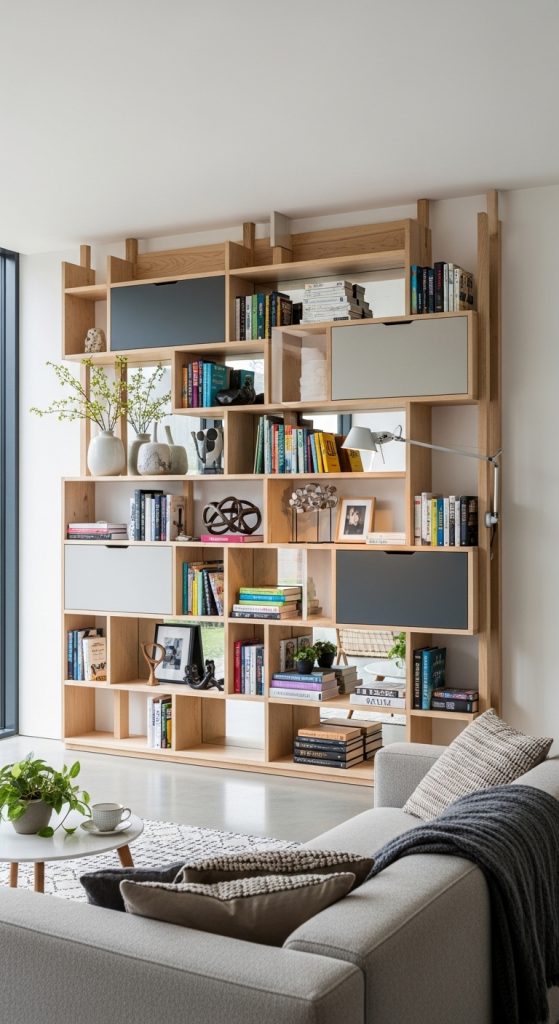
How to Create a Structured and Space-Efficient Library Wall
A floor-to-ceiling bookshelf design maximizes vertical space while creating a strong visual focal point. This approach is ideal for storing a large number of books without occupying additional floor area. Begin by measuring the wall height and width to determine the appropriate shelf dimensions. Shelves should be evenly spaced to accommodate books of different sizes. Secure installation is essential to ensure stability and safety. Neutral colors such as white, beige, or light wood tones help maintain a clean and organized appearance. Books can be arranged by category, size, or color to enhance visual structure. Decorative elements should be minimal to avoid clutter. Lighting can be added above or within shelves to improve visibility. This setup is practical and beginner friendly when using pre-made shelving or simple DIY methods. By utilizing vertical space effectively, this design creates a functional and aesthetically balanced home library.
Cozy Reading Nook Corner Setup

Step-by-Step Guide to Building a Comfortable Reading Space
A reading nook corner creates a dedicated area for relaxation within the home library. Begin by selecting a quiet corner with sufficient natural or artificial light. Add a comfortable chair or cushion seating to support extended reading sessions. A small side table can be included for convenience. Shelving or storage should be placed nearby to keep books accessible. Soft textiles such as rugs or cushions can enhance comfort without overwhelming the space. Lighting should be adjustable to suit different reading conditions. This setup focuses on comfort and accessibility while maintaining organization. By creating a defined reading area, the library becomes more functional and inviting.
Minimalist Neutral Tone Library Design
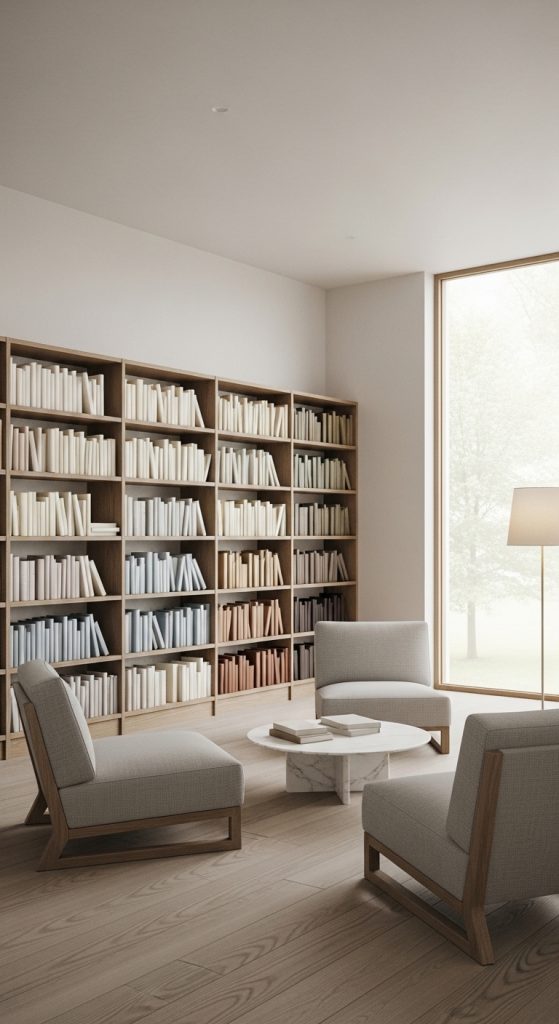
How to Maintain Simplicity and Visual Balance
A minimalist library design focuses on simplicity, using neutral tones and clean lines. Begin with a base color such as white, gray, or beige for walls and shelves. Furniture should have simple shapes and minimal detailing. Books should be organized neatly to maintain a clutter-free appearance. Decorative elements should be limited to a few carefully selected items. Lighting should be soft and evenly distributed. This design is easy to maintain and supports focus by reducing distractions. By keeping the layout simple and structured, the library remains functional and visually appealing.
Built-In Wall Library with Hidden Storage

Execution Process for a Seamless and Organized Look
A built-in wall library combines open shelving with hidden storage to create a clean and organized design. Begin by designing shelves that fit seamlessly into the wall. Include cabinets or drawers at the bottom for storing less frequently used items. This approach keeps the visible area uncluttered. Choose a consistent color palette to maintain cohesion. Lighting can be integrated into the shelves for added functionality. This design is ideal for maintaining organization while maximizing storage capacity. By combining open and closed storage, the library remains both practical and aesthetically balanced.
Industrial Style Home Library Concept
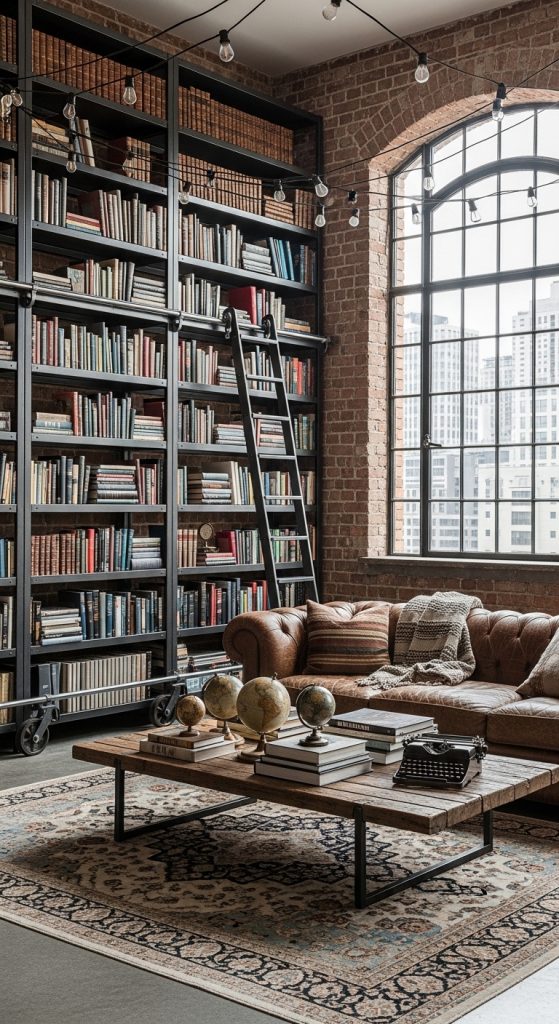
How to Create a Modern and Durable Setup
An industrial style library uses materials such as metal and wood to create a structured and durable design. Begin by selecting shelves with metal frames and wooden surfaces. Walls can remain neutral or include subtle textures. Furniture should be simple and functional. Lighting can include exposed bulb fixtures to enhance the industrial aesthetic. Storage should be organized and accessible. This design focuses on durability and practicality while maintaining a modern appearance. By using raw materials and simple structures, the library achieves a clean and functional look.
Window-Side Natural Light Library Layout
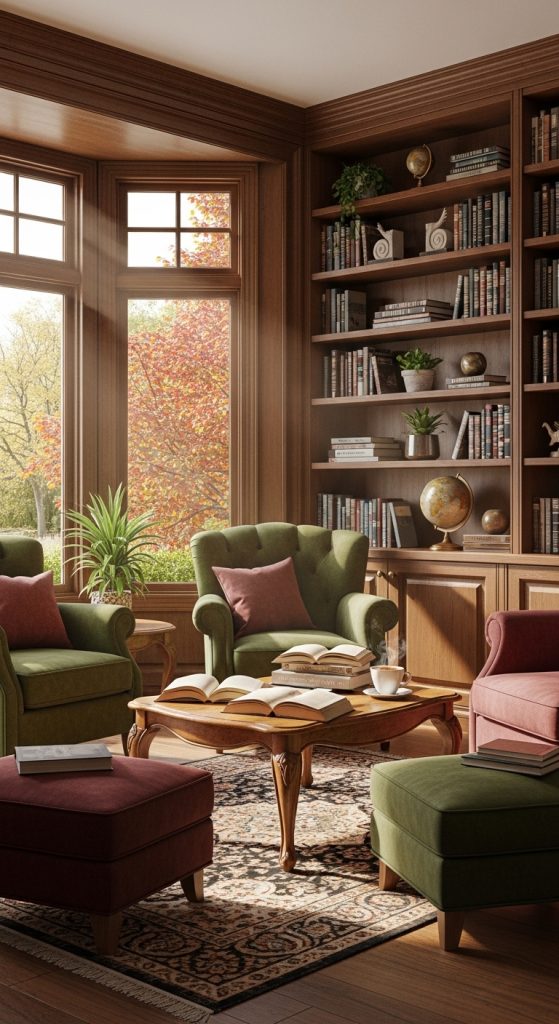
Step-by-Step Guide for Optimal Lighting Placement
A window-side library takes advantage of natural light to create a comfortable reading environment. Begin by positioning shelves near a window while ensuring they do not block light. Seating should be placed where natural light is strongest. Curtains or blinds can be used to control brightness. Additional lighting should be included for evening use. This setup enhances visibility and reduces reliance on artificial light during the day. By utilizing natural light effectively, the library becomes more energy-efficient and visually appealing.
Color-Coded Book Organization Display

How to Create a Visually Structured Arrangement
A color-coded book arrangement organizes books based on their cover colors to create a visually appealing display. Begin by grouping books into color categories. Arrange them on shelves in a gradient or segmented pattern. This method enhances visual organization while making books easy to locate. Shelves should remain simple to highlight the arrangement. Decorative elements should be minimal. This approach combines functionality with aesthetic appeal, making it a popular choice for Pinterest ideas. By organizing books by color, the library gains a structured and modern look.
Small Space Compact Library Design
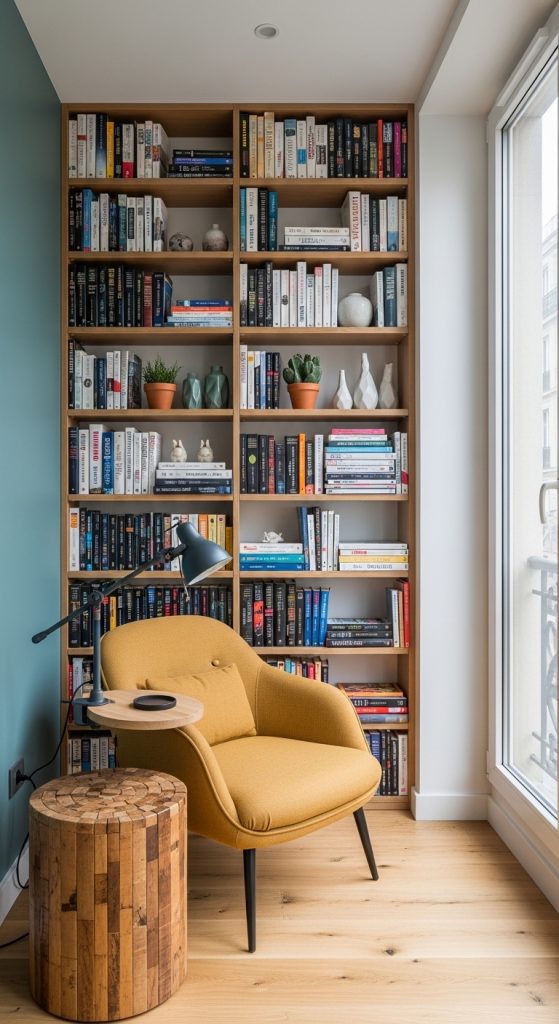
Execution Process for Efficient Use of Limited Space
A compact library design focuses on maximizing space efficiency. Begin by selecting multi-functional furniture such as shelves that also serve as room dividers. Use vertical space for storage to reduce clutter. Keep the color palette light to create the illusion of a larger area. Avoid overcrowding the space with unnecessary items. Lighting should be bright and evenly distributed. This setup ensures that even small spaces can function as effective home libraries. By focusing on efficiency and organization, the design remains practical and visually appealing.
Floating Shelf Modern Library Setup

How to Create a Clean and Contemporary Look
Floating shelves provide a modern and minimalistic way to store books. Begin by installing shelves securely on the wall at appropriate heights. Arrange books neatly to maintain balance. Keep spacing consistent to enhance visual structure. This design works well in smaller spaces or as an addition to existing setups. Lighting should be positioned to highlight the shelves. By using floating shelves, the library maintains a clean and open appearance while remaining functional.
Multi-Functional Library and Workspace Design
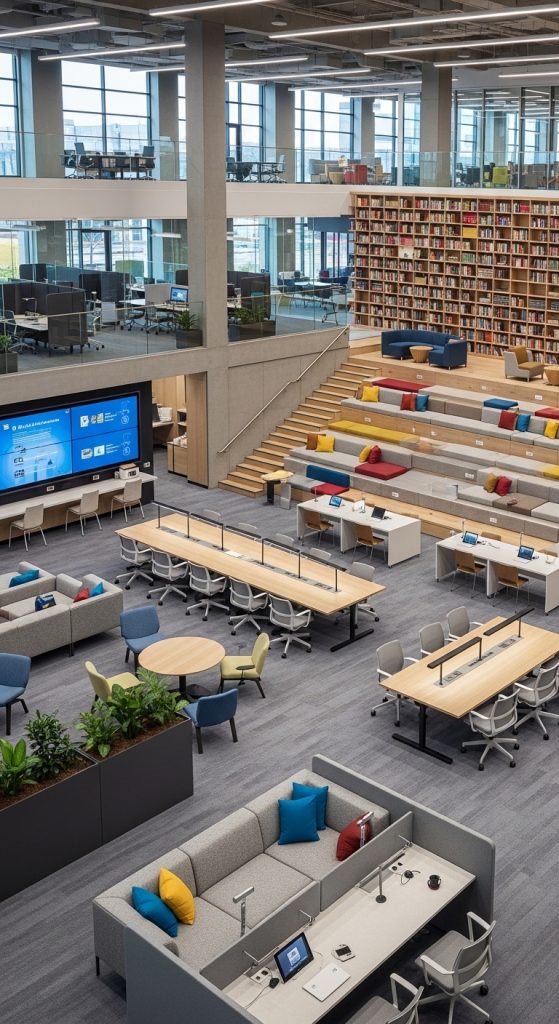
Step-by-Step Guide for Combining Reading and Productivity
A multi-functional library combines reading and workspace areas in a single layout. Begin by dividing the space into two zones: one for shelving and one for a desk. Ensure that both areas have adequate lighting. Storage should be organized to support both activities. Keep the color palette consistent to maintain cohesion. This design is ideal for maximizing space while supporting multiple functions. By combining reading and work areas, the library becomes more versatile and efficient.
Common Home Library Design Mistakes and How to Avoid Them
A common mistake in home library design is overcrowding shelves with too many items, which reduces accessibility and creates visual clutter. To avoid this, it is important to organize books systematically and leave some open space. Another issue is poor lighting, which can make reading difficult. A combination of natural and artificial lighting should be used. Ignoring storage needs can also lead to disorganization. Including both open and closed storage helps maintain balance. Choosing furniture that does not fit the space can create inefficiency. Measuring the area before installation helps prevent this problem. By focusing on planning and organization, these mistakes can be minimized.
Practical Tips for Improving Home Library Functionality
Improving functionality requires careful planning and consistent organization. Start by categorizing books and arranging them logically. Use storage solutions that are easy to access. Ensure that lighting supports reading without causing strain. Regular maintenance helps keep the space organized. Small adjustments such as rearranging shelves can improve efficiency. By focusing on practical steps, the library becomes more effective and user-friendly.
Styling and Organization Techniques for a Clean Library Look
Styling and organization are essential for maintaining a visually appealing library. Use containers and shelves to keep items neatly arranged. Choose decor that complements the overall theme. Avoid mixing too many styles. Books should be arranged in a way that enhances visual balance. Regular cleaning helps maintain the design. By focusing on organization, the library remains functional and aesthetically consistent.
Budget and Time Planning for Library Decor Projects
Planning a library project requires managing both budget and time effectively. Start by prioritizing essential elements such as shelving and seating. DIY projects can reduce costs while allowing customization. Break the project into smaller steps to ensure steady progress. This approach prevents delays and ensures better results. By planning carefully, it is possible to create a high-quality library without exceeding budget or time limits.
Expanding Creativity with Advanced Library Decor Ideas
Advanced design ideas can enhance a home library once the basic setup is complete. This may include experimenting with textures, adding layered lighting, or incorporating unique decor elements. It is important to maintain consistency with the main design theme. Personal touches can add character while preserving balance. By gradually expanding the design, the library can evolve while maintaining its functional and aesthetic qualities.