
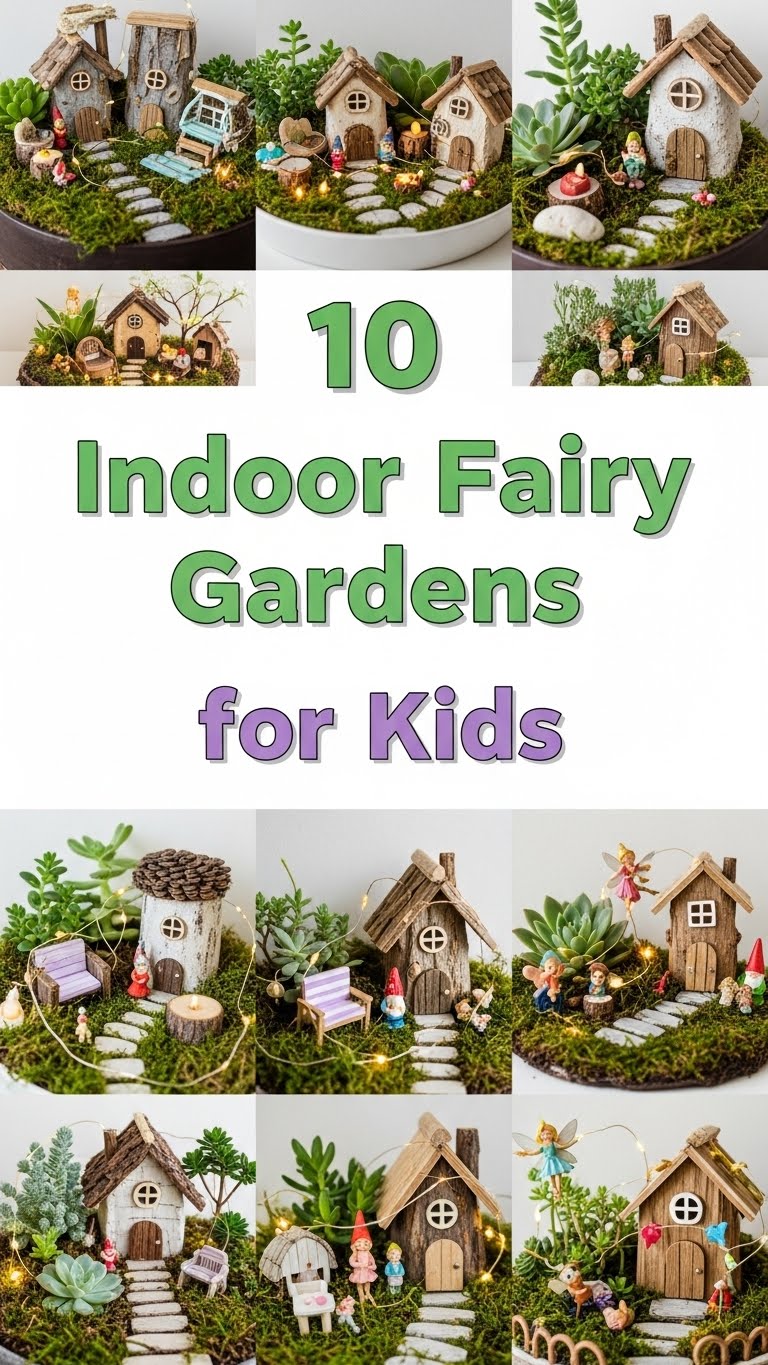
10 Indoor Fairy Gardens for Kids
Indoor fairy gardens offer children something increasingly rare in a screen-filled world: open-ended imagination. They are not just crafts or decorations; they are miniature environments where storytelling, creativity, and emotional expression come together. For children, an indoor fairy garden becomes a place to invent stories, solve tiny problems, and explore gentle fantasy within a safe, familiar space.
Unlike outdoor fairy gardens, indoor versions are accessible year-round and easier to maintain. They fit comfortably on shelves, tabletops, windowsills, or playroom corners. This makes them ideal for apartments, classrooms, and homes without outdoor space. More importantly, indoor fairy gardens allow children to interact closely with their creations—moving figures, changing layouts, and inventing narratives without weather or dirt limitations.
Fairy gardens also support developmental growth. They encourage fine motor skills through arranging small objects, language development through storytelling, and emotional regulation through imaginative play. Children often use fairy worlds to process feelings, experiment with social scenarios, and express creativity in ways that feel safe and magical.

The following ten indoor fairy garden ideas are designed specifically for kids. Each one balances whimsy with practicality, imagination with safety, and fantasy with structure. These ideas can be adapted to different ages, interests, and spaces, making them flexible tools for play, learning, and wonder.
1. Storybook Fairy Garden in a Shallow Tray
A shallow tray fairy garden is one of the most versatile indoor options for kids. It provides clear boundaries while still allowing creative freedom.
Use a wooden, plastic, or metal tray with raised edges to contain materials. Cover the base with moss, felt grass, or soft fabric instead of soil to keep things clean indoors. Add miniature fairy figures, tiny houses, pebbles, and soft faux plants.
This setup is perfect for storytelling. Children can easily move characters around, rearrange scenes, and invent new plots. Because everything is visible and accessible, it invites daily interaction rather than passive display.
Tray fairy gardens work well for playrooms and low shelves, making them ideal for younger children who want hands-on engagement.

2. Teacup Fairy Garden for Gentle Play
A teacup fairy garden introduces children to the magic of miniatures while encouraging careful, focused play. Because of its small size, it promotes mindfulness and gentle interaction.
Choose a sturdy ceramic or plastic teacup. Fill it with moss, soft faux greenery, or craft foam. Add one or two tiny fairy figures and a simple accessory like a mushroom or ladder.
This type of garden is best for older children who enjoy detailed play rather than active movement. It fits well on desks or bedside tables and encourages quiet storytelling moments.
Teacup fairy gardens are also excellent gifts, allowing children to feel ownership over a small, personal magical world.

3. Indoor Fairy Garden in a Glass Terrarium
Glass terrariums create a sense of enchantment by framing the fairy garden like a tiny museum exhibit. For kids, this adds excitement and a feeling of importance to their creation.
Use an open terrarium for safety and airflow. Line the base with stones and moss or artificial grass. Add fairy houses, figures, and decorative elements like shells or crystals.
Because the terrarium is visually contained, it helps children focus on composition and balance. It also keeps materials neatly enclosed, which parents often appreciate.

This fairy garden works well in shared family spaces, blending play with décor.
4. Felt Fairy Garden for Soft, Safe Play
A felt fairy garden is ideal for younger children who need soft, safe materials. Instead of hard objects, this garden uses fabric and texture.
Create a base from a felt mat or board. Cut out felt shapes for trees, flowers, houses, and pathways. Use Velcro or simple placement to allow rearrangement.
Felt fairy gardens are highly interactive and portable. Children can take them to different rooms or even bring them along on trips. They encourage imaginative storytelling without the risk of small, hard pieces.
This option is especially good for toddlers and preschool-aged children.

5. Shelf Fairy Garden Display That Evolves
A shelf fairy garden turns a bookshelf or wall shelf into a magical landscape. It is less about active play and more about ongoing creative evolution.
Set up a scene using fairy houses, plants, and figures arranged along the shelf. Over time, children can add new elements, change layouts, or introduce seasonal themes.
This approach teaches patience and planning. The garden becomes a long-term project rather than a one-time activity. It also encourages observation, as children notice how small changes affect the whole scene.
Shelf fairy gardens work well in bedrooms and encourage pride of ownership.

6. Fairy Garden in a Toy Bin or Box
A toy bin fairy garden is perfect for kids who enjoy immersive play. The container provides depth, allowing for layered landscapes.
Use a shallow storage bin or sturdy box. Line it with paper, fabric, or felt. Build hills using foam or folded cloth. Add fairy figures, bridges, and paths.
This setup allows children to sit on the floor and play more actively, moving figures through different levels. When playtime ends, the lid can close, keeping everything tidy.
This type of fairy garden suits children who enjoy imaginative role-play and longer play sessions.

7. Nature-Inspired Indoor Fairy Garden with Faux Plants
This fairy garden brings the outdoors inside without the mess. Faux plants, moss mats, and artificial flowers create a lush environment that stays clean and manageable.
Arrange plants to form “forests” and “meadows.” Add stones, bark pieces, and fairy accessories. Encourage children to name areas of the garden and invent stories about who lives there.
This setup helps children connect with nature symbolically, even when outdoor access is limited. It fosters curiosity and respect for natural forms.
It is ideal for classrooms or shared family areas.

8. Reading Nook Fairy Garden for Quiet Play
A fairy garden placed near a reading nook creates a powerful connection between stories and imagination. The garden becomes a visual extension of the books children read.
Place the garden on a small table or shelf near bookshelves. Use characters and settings inspired by fairy tales, forests, or magical lands.
After reading, children often incorporate story elements into their fairy garden, blending narrative and play. This supports literacy and comprehension in a natural, enjoyable way.
This setup encourages calm engagement rather than high-energy play.

9. Seasonal Indoor Fairy Garden for Creative Change
A seasonal fairy garden changes throughout the year, reflecting holidays, weather, and nature’s cycles. This keeps the activity fresh and engaging.
In spring, add flowers and pastel colors. In summer, include butterflies and bright greens. Autumn brings warm tones, leaves, and tiny pumpkins. Winter can feature snow-like textures and cozy fairy homes.
Seasonal changes teach children about time, cycles, and adaptation. They also encourage creativity, as kids invent new stories for each season.
This type of fairy garden works well as a family project.

10. Collaborative Family Fairy Garden
A collaborative fairy garden invites siblings, parents, or caregivers to create together. Each person contributes elements, making the garden a shared world.
Set rules gently—each person gets a section or role. Children learn cooperation, compromise, and shared storytelling. The garden becomes a reflection of family dynamics and creativity.
This approach emphasizes connection rather than perfection. It turns the fairy garden into a living symbol of togetherness.
Collaborative fairy gardens are especially meaningful in shared living spaces.

Conclusion: Growing Imagination Indoors
Indoor fairy gardens for kids are more than crafts or décor. They are environments where imagination grows gently and naturally. Within these miniature worlds, children practice creativity, empathy, storytelling, and problem-solving—all while feeling safe and engaged.
The beauty of an indoor fairy garden lies in its flexibility. It can be quiet or playful, structured or free-form, simple or elaborate. It evolves as the child grows, reflecting changing interests and emotional landscapes.
By creating an indoor fairy garden, you offer children a space that values imagination over instruction, curiosity over perfection, and wonder over noise. In these small worlds, big ideas take root—and magic becomes part of everyday life.